Hydrangeas: A Guide to Growing and Caring for Beautiful Hydrangeas
Hydrangeas are prized for their bold foliage, long-lasting blooms and ability to thrive in areas where many other flowering plants struggle, they have become a firm favourite in gardens of all sizes.
From classic pink and blue mopheads to elegant white lacecaps, dramatic paniculata varieties and climbing hydrangeas for shady walls, there is a hydrangea to suit almost every garden. Their flowers provide colour throughout summer and often remain attractive well into autumn, while dried flowerheads add structure and interest through winter.
Best of all, hydrangeas are surprisingly easy to grow when given the right conditions. Understanding the different types and their pruning requirements is the key to years of reliable flowering.
🌿 Choosing the Right Hydrangea
Hydrangeas are available in several different forms, each with its own flower shape, growth habit and seasonal interest. Understanding the main hydrangea groups will help you choose the best plant for your garden and care for it correctly, as pruning requirements can vary between different types.
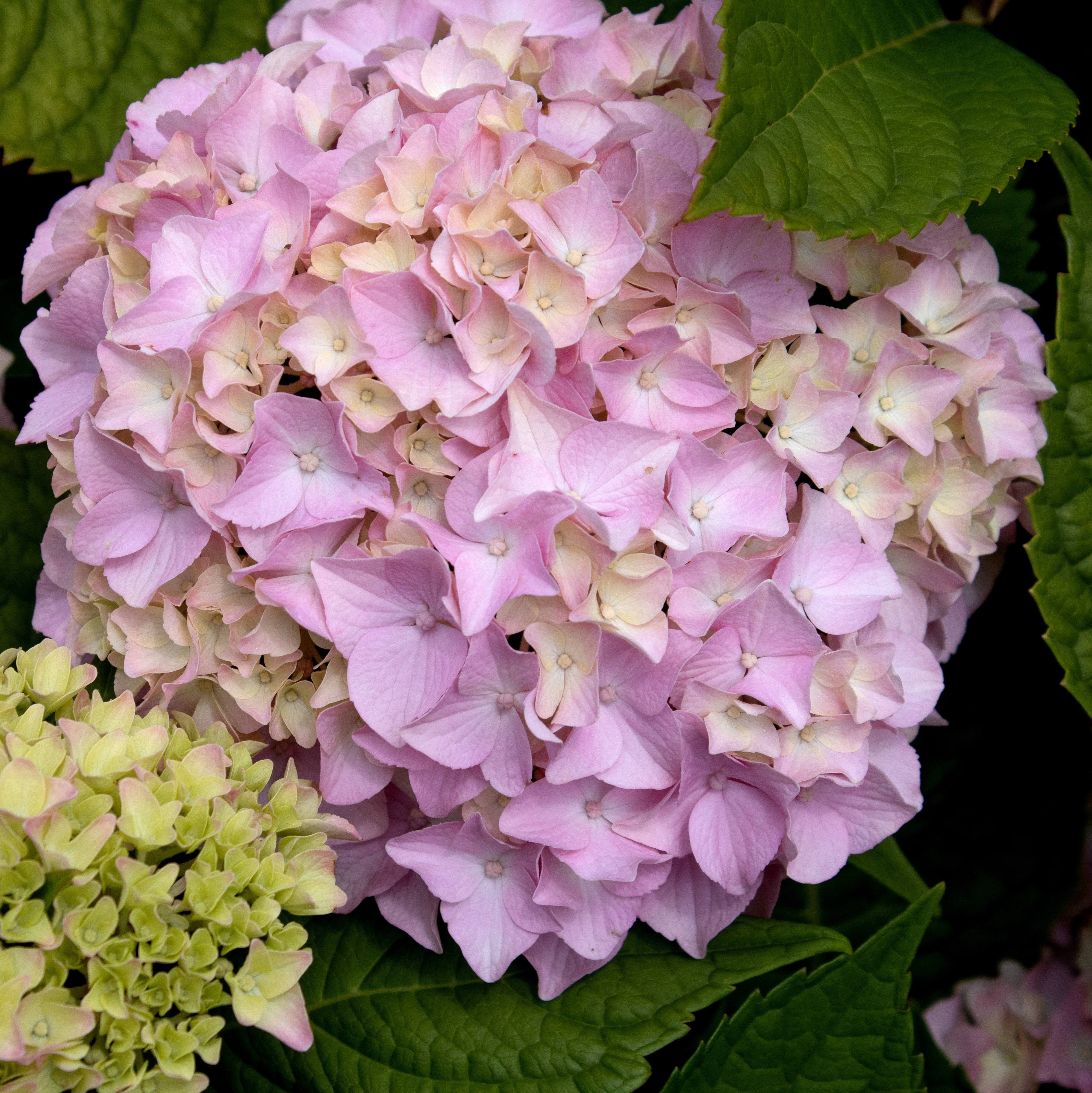
Hydrangea macrophylla (Mophead and Lacecap Hydrangeas)
These are the traditional hydrangeas most gardeners recognise.
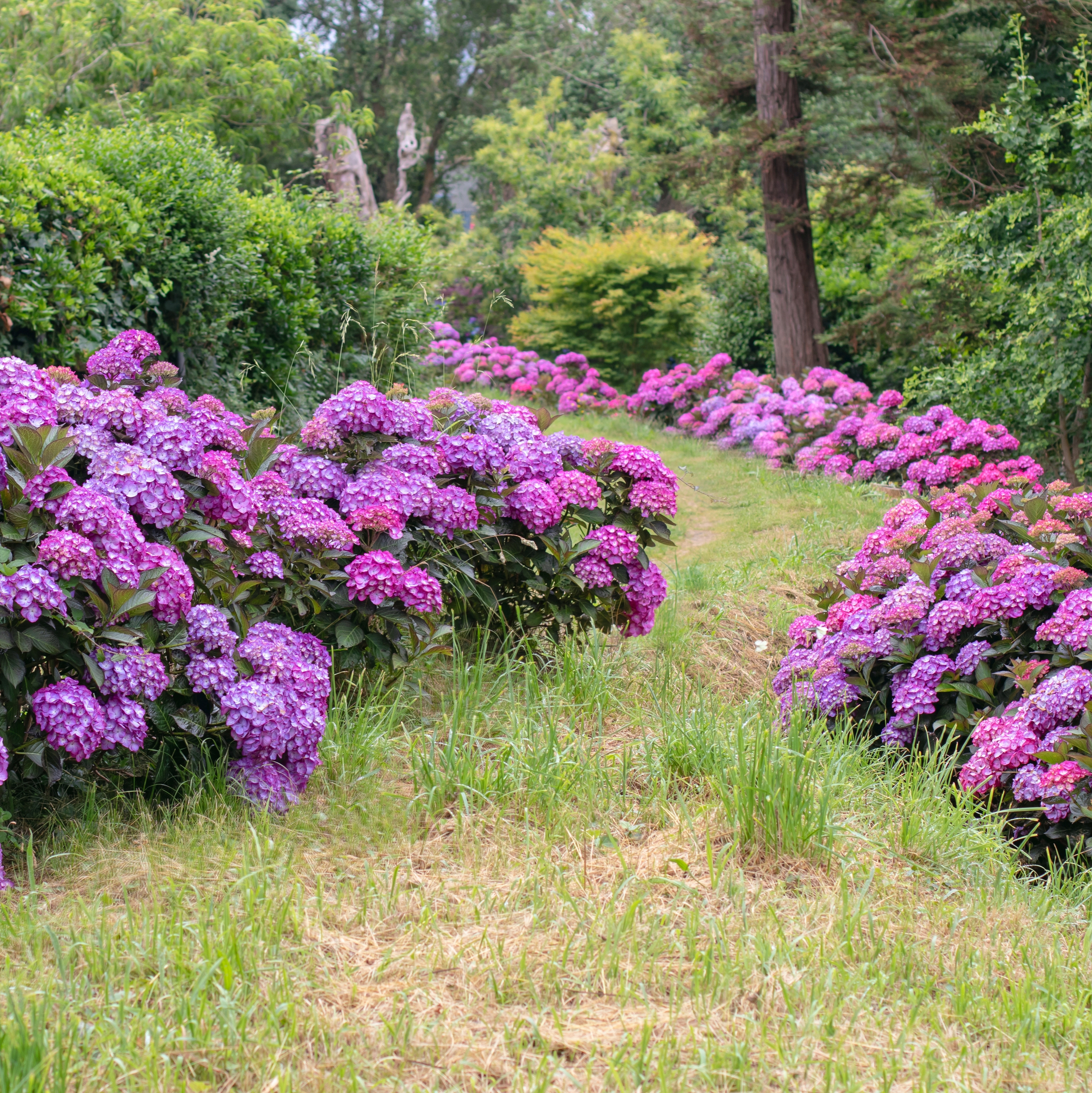
Mophead hydrangeas produce large rounded flowerheads packed with colourful florets, while lacecap hydrangeas have flatter flowerheads with a ring of larger flowers surrounding a delicate centre.
Depending on soil conditions, flowers may be pink, blue or white.
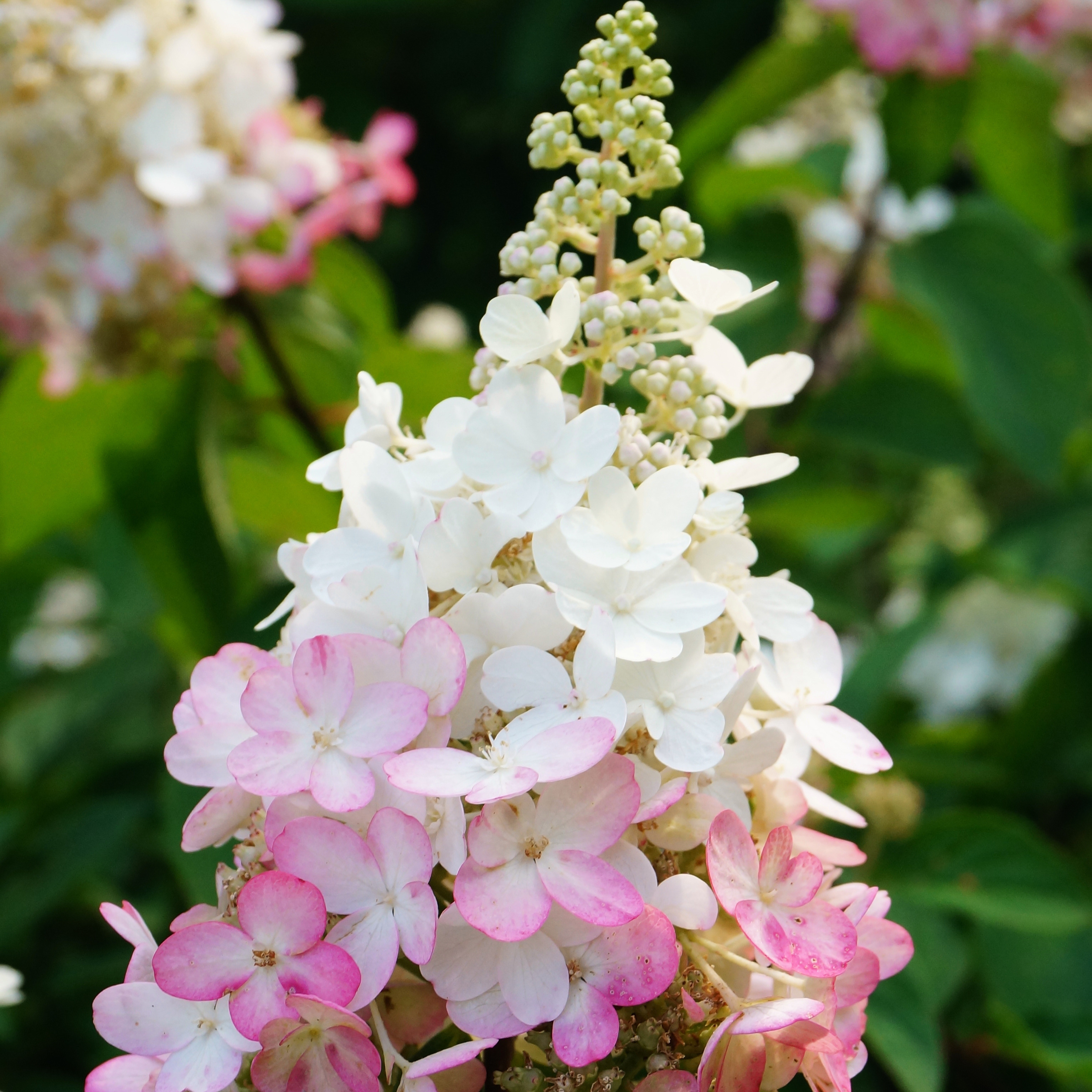
Hydrangea paniculata
Paniculata hydrangeas produce large conical flowerheads on strong upright stems. Many varieties gradually change colour as the season progresses, creating a multi-toned display.
They are among the easiest hydrangeas to prune and are excellent for larger borders.
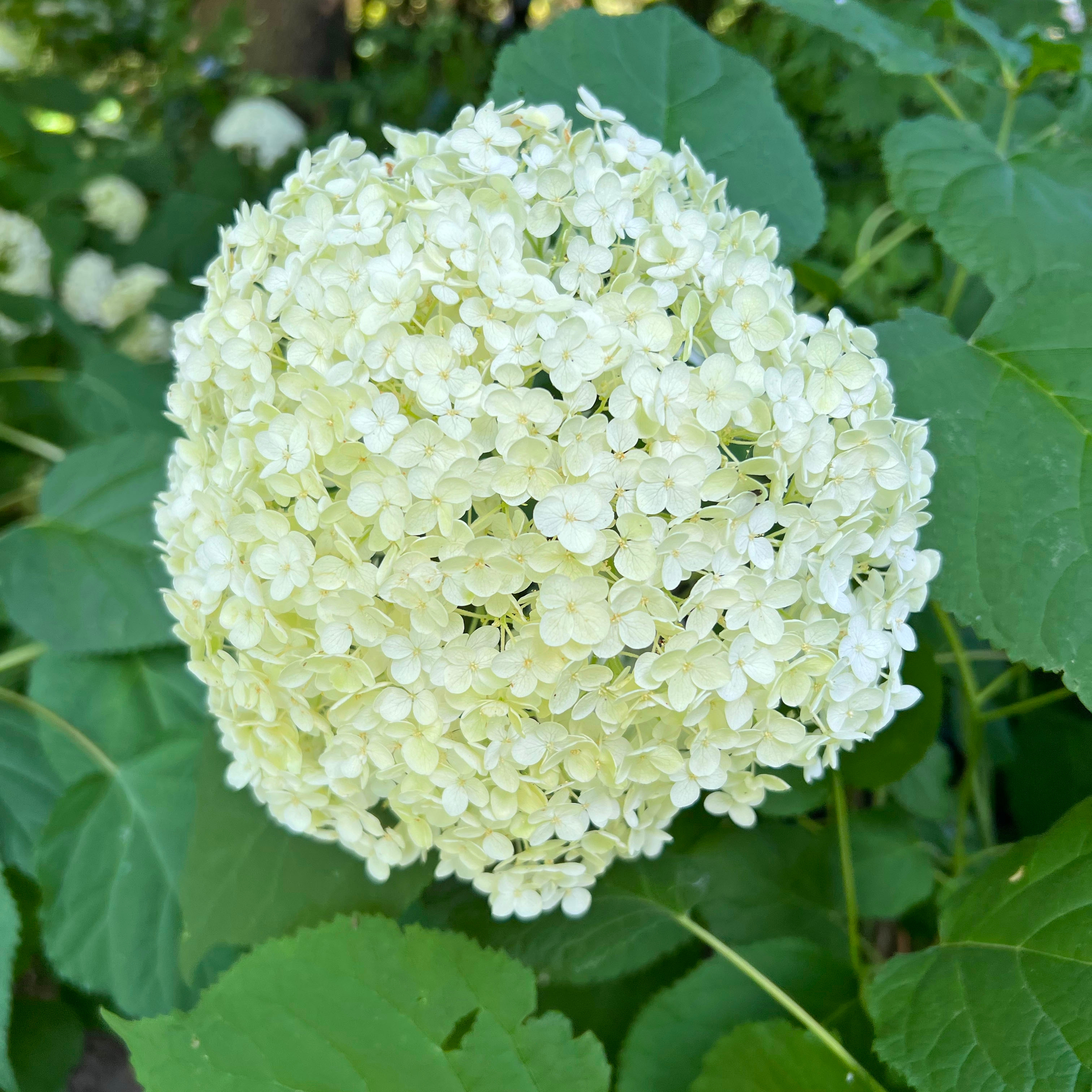
Hydrangea arborescens
Known for their enormous rounded flowerheads, Hydrangea arborescens varieties such as ‘Annabelle’ create spectacular summer displays.
Their soft white blooms can become remarkably large, making them standout feature plants.
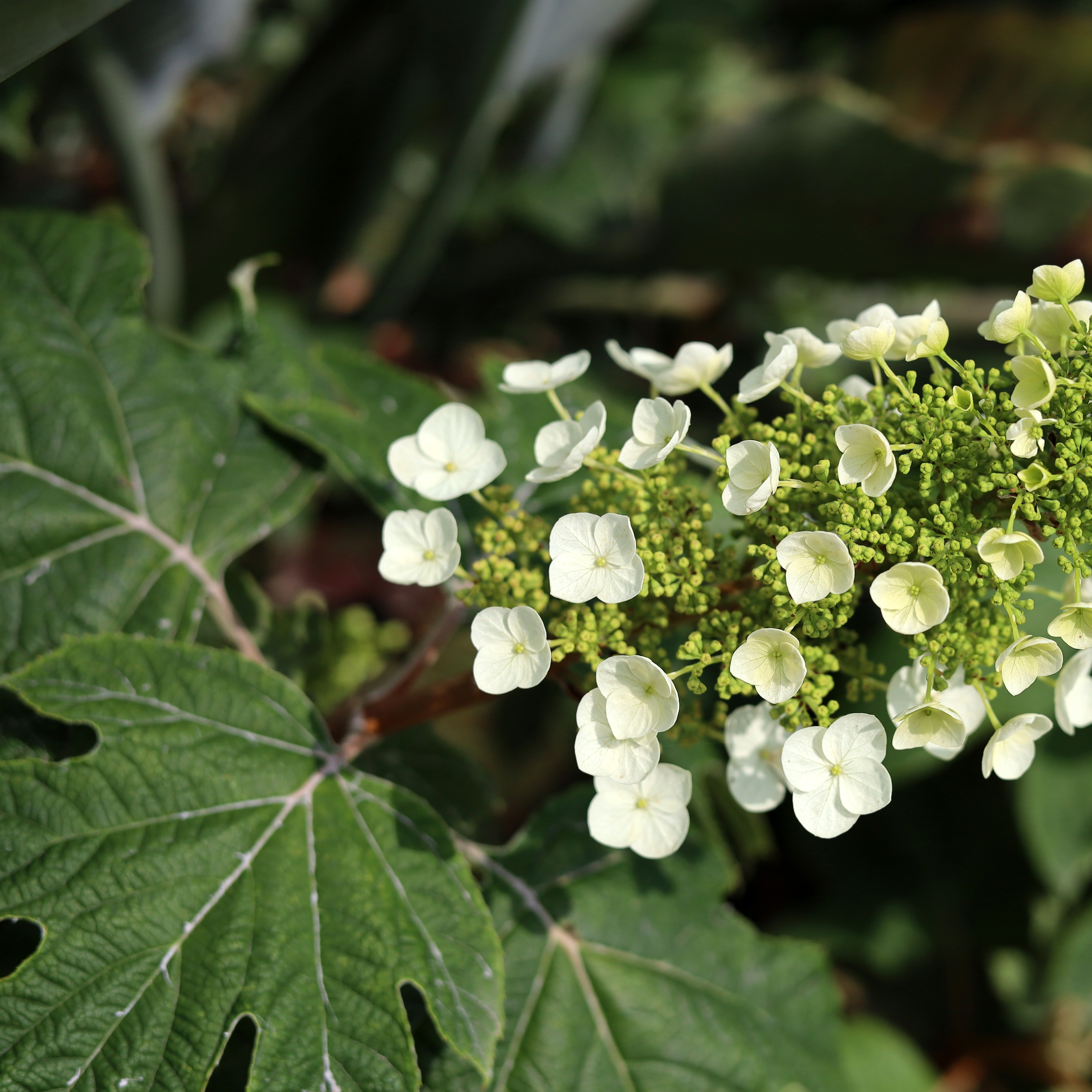
Hydrangea quercifolia (Oakleaf Hydrangea)
Oakleaf hydrangeas offer interest beyond their flowers. Their distinctive lobed foliage develops rich shades of red, orange and bronze during autumn.
The elongated flowerheads provide a more naturalistic appearance than traditional mopheads.
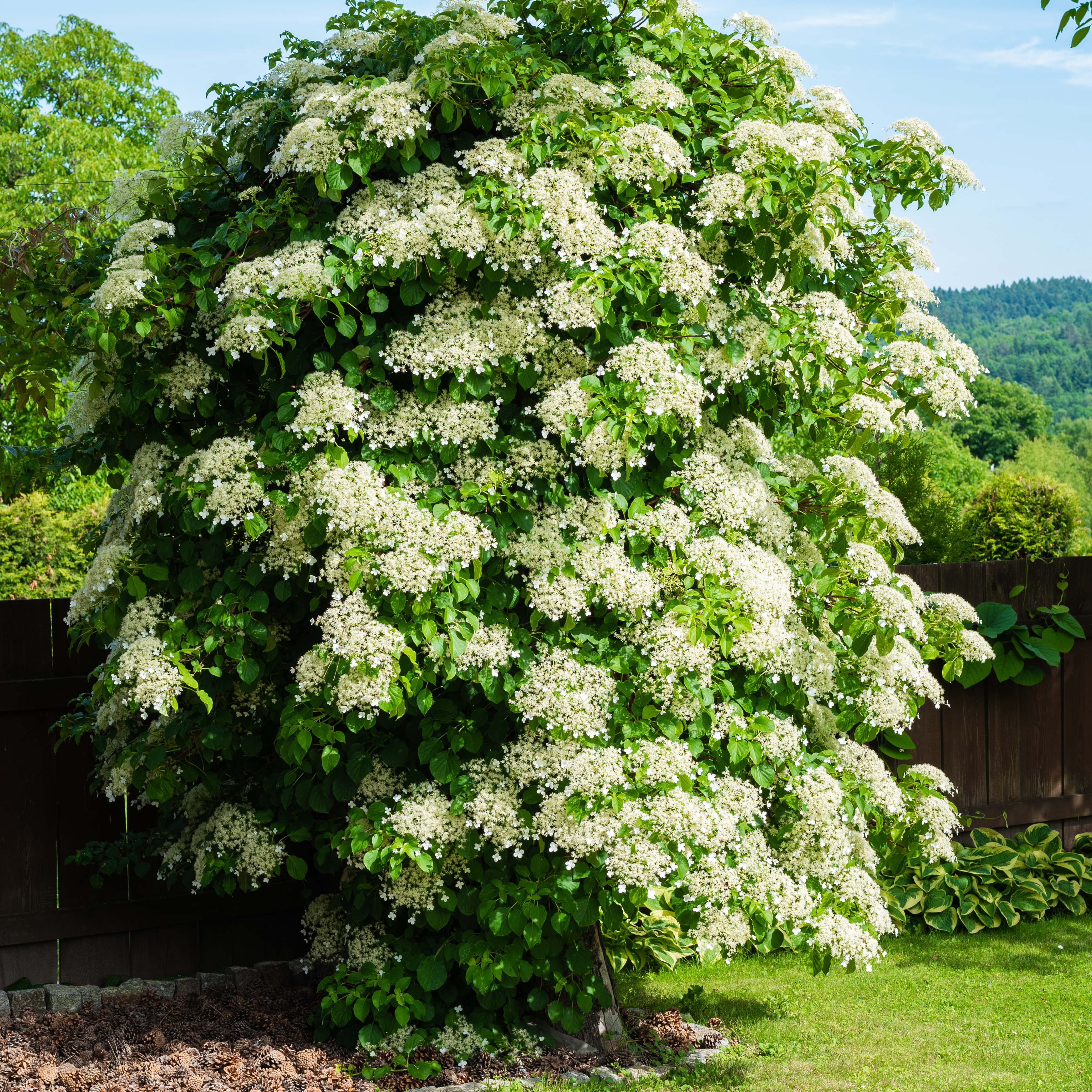
Climbing Hydrangeas
Climbing hydrangeas are excellent choices for shady walls, fences and buildings.
Although they can take a few years to establish, mature plants eventually cover large areas with attractive foliage and delicate lacecap-like flowers.
🌱 Where and How to Grow Hydrangeas
Most hydrangeas thrive in moist, fertile, well-drained soil and perform best in light or dappled shade.
While some varieties tolerate more sunshine, prolonged exposure to hot afternoon sun can lead to stress and excessive drying, particularly during summer.
The ideal position provides:
Morning sun with afternoon shade
Shelter from drying winds
Consistently moist soil
Good drainage
Before planting, improve the soil with plenty of garden compost or well-rotted organic matter. This helps retain moisture while improving soil structure.
Hydrangeas benefit from regular watering during dry weather, especially during their first few years after planting.
👉 Expert Tip: Hydrangeas growing in full sun can perform well if the soil remains consistently moist. Dry soil combined with intense afternoon sunshine is often the cause of poor growth and scorched foliage.
🎨 Why Hydrangea Flowers Change Colour
Perhaps the best-known characteristic of Hydrangea macrophylla hydrangeas is their ability to change flower colour depending on the acidity or alkalinity of the soil.
In acidic soils, flowers typically develop blue tones.
In alkaline soils, flowers become pink.
Some white-flowered varieties remain white regardless of soil conditions.
A blue hydrangea may gradually turn pink after planting if it is grown in neutral or alkaline soil. This is usually the result of differences between the compost or nursery conditions and the soil in the garden.
👉 Expert Tip: Old gardening advice often recommends burying nails or metal objects near hydrangeas to encourage blue flowers. There is little evidence that this reliably changes flower colour. If you want to keep blue hydrangeas blue, grow suitable varieties in acidic soil or containers filled with ericaceous compost.
✂️ Pruning Hydrangeas
Hydrangea pruning varies according to the type you are growing. Some hydrangeas flower on stems produced the previous year, while others flower on new growth and can be pruned much harder.
As a general guide, mophead and lacecap hydrangeas are pruned lightly in spring, with the old flowerheads removed back to a strong pair of buds. Hydrangea paniculata and Hydrangea arborescens can be cut back more firmly in early spring to encourage strong new flowering stems.
Oakleaf hydrangeas need very little pruning beyond removing dead or overlong stems, while climbing hydrangeas are usually trimmed after flowering to keep them within bounds.
👉 Expert Tip: Before pruning, always identify your hydrangea correctly. Pruning at the wrong time, or cutting back too hard, can remove developing flower buds and reduce flowering.
Hydrangeas are among the most versatile shrubs for garden design.
Their rounded habit, bold foliage and long flowering season make hydrangeas valuable structural plants within the garden.
They work particularly well:
In woodland-style planting schemes
Along north- or east-facing borders
As focal points in shaded gardens
Planted in groups for a bold summer display
As informal flowering hedges and boundary plantings
Combined with ornamental grasses and delicate perennials for contrast
White-flowered varieties are especially valuable in darker areas of the garden, where they help brighten shaded corners.
Large paniculata and arborescens varieties create impressive focal points, while compact mopheads work well in mixed borders, around seating areas and as low informal hedges.
🌸 Enjoying Hydrangeas Beyond the Garden
Hydrangeas can continue to provide interest long after their summer display has peaked. Their long-lasting blooms are useful both indoors and outdoors, making them one of the most versatile flowering shrubs.
Ideas for making the most of hydrangea flowers:
Cut fresh blooms for vases and floral arrangements.
Dry mature flowerheads for long-lasting indoor displays.
Use dried blooms in wreaths and seasonal decorations.
Leave flowerheads on the plant over winter for texture and seasonal interest.
👉 Expert Tip: Older hydrangea blooms often last longer indoors than freshly opened flowers and develop attractive vintage tones as they dry naturally.
🌿 Visit Our Garden Centre
Whether you are looking for a compact mophead for a patio, a dramatic paniculata for a mixed border or a climbing hydrangea for a shady wall, choosing the right variety can make a real difference to the success of your planting scheme.
We stock a wide range of hydrangeas, together with specialist composts, mulches and pruning tools, and our team is always happy to offer practical advice on selecting and caring for your plants.
Visit usin Kington to explore our range of hydrangeas and let our team help you choose the perfect variety for your garden.
We use cookies to ensure that we give you the best experience on our website. If you continue to use this site we will assume that you are happy with it.