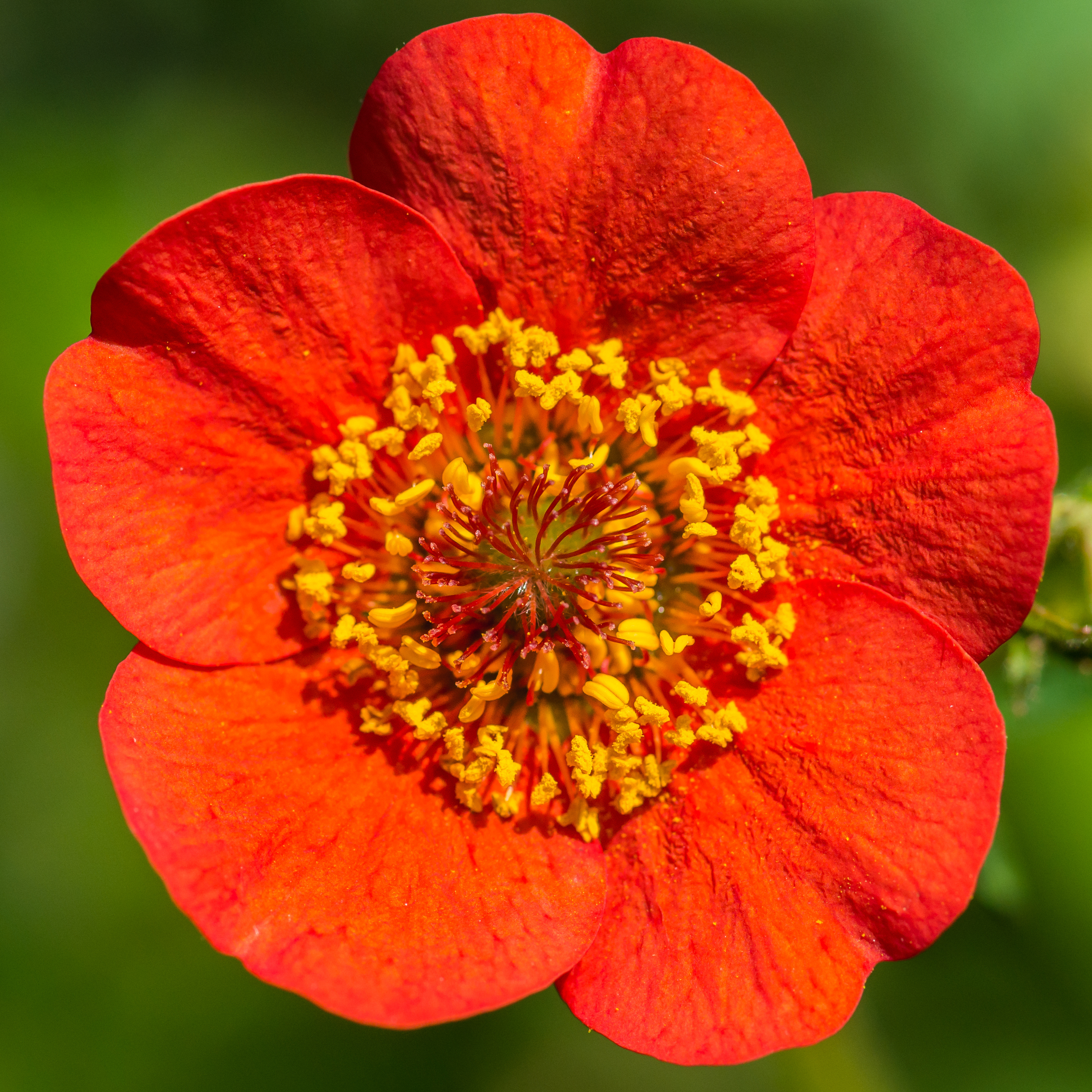
Geums, commonly known as avens, are hardy perennials grown for their colourful flowers and attractive, low-growing foliage. Their delicate-looking blooms appear on slender stems above leafy clumps, bringing shades of yellow, orange, peach, pink and red to borders from late spring into summer.
Most garden varieties are compact, making them particularly useful towards the front or middle of mixed borders, in cottage gardens and alongside ornamental grasses. Although they share a similar appearance, different species and cultivars have slightly different growing requirements, particularly when it comes to soil moisture.
When Does It Flower?
Most garden geums begin flowering in May or June, continuing into July or August. Some varieties flower for considerably longer, especially when faded blooms are removed regularly.
Flowers may be single, semi-double or double, held above rosettes of lobed or scalloped leaves. Most border varieties reach around 40–75cm when flowering, although compact and alpine forms can be much shorter.
Popular choices include ‘Totally Tangerine’, with its long-lasting apricot-orange flowers, and ‘Mrs J. Bradshaw’, known for its vivid scarlet-red blooms.
How to Grow
Choosing the Right Position
Most garden geums thrive in a sunny position with soil that retains some moisture without becoming waterlogged.
Sunlight: Full sun or partial shade. Light afternoon shade can be beneficial where soil dries quickly.
Soil: Fertile, moisture-retentive soil suits most border varieties.
Drainage: Avoid prolonged winter waterlogging, which can damage crowns and roots.
Spacing: Allow approximately 30–45cm between plants, depending on the variety.
There are some important exceptions. Water avens (Geum rivale) prefers cooler, damper conditions and tolerates wetter soil, while alpine species such as Geum montanum need sharper drainage.
Planting
Spring and autumn are ideal times to plant geums, allowing their roots to establish before periods of extreme weather.
Prepare the soil by incorporating well-rotted compost or organic matter where needed. Position plants at the same depth as they were growing in their pots, keeping the crown level with the surrounding soil.
Water thoroughly after planting and maintain moisture during the first growing season, particularly in dry weather.
Caring for Established Plants
Geums need relatively little maintenance once established in suitable conditions.
Water during prolonged dry spells, especially on lighter soils. Applying a mulch of garden compost in spring helps retain moisture and improve soil structure, but avoid covering the crown.
Additional feeding is rarely necessary in reasonably fertile soil. Most varieties have sufficiently strong stems to grow without support.
Encouraging More Flowers
Regular deadheading is one of the simplest ways to extend flowering.
Remove faded flower clusters by cutting their stems back towards the base. This encourages many varieties to produce further flowering stems rather than putting energy into seed production.
Some cultivars, particularly ‘Totally Tangerine’, have naturally long flowering periods. Others may produce a smaller second flush after their main display.
After Flowering
Once flowering has finished, remove spent stems and any damaged or untidy foliage. Healthy basal leaves should generally be left in place, as many geums retain a rosette of foliage through winter.
There is no need to cut the entire plant back to ground level.
Autumn and Winter Care
Most commonly grown garden geums are hardy in UK conditions, although prolonged winter wet can be more damaging than cold temperatures.
Keep crowns clear of accumulated dead leaves and avoid heavy, damp mulches directly over the plants. Where soil remains saturated throughout winter, improving drainage or moving susceptible varieties to a better position may be necessary.
Dividing and Propagation
Geums benefit from division every few years, particularly when older clumps become congested or begin to die out in the centre.
Early to mid-spring is generally the best time. Lift the plant carefully and separate healthy leafy rosettes, ensuring each section has a good root system. Replant into refreshed soil and water well.
Division also provides an opportunity to increase your plants. Named cultivars should be divided rather than grown from seed if you want new plants with the same characteristics.
Common Problems
Geums are generally reliable, but a few problems are worth recognising.
Poor flowering: Often caused by excessive shade, dry soil or overcrowded, ageing clumps.
Powdery mildew: May appear during dry conditions. Maintaining adequate soil moisture can help.
Leaf damage: Geum sawfly larvae and leaf miners can occasionally damage foliage. Remove badly affected leaves if necessary.
Winter losses: Susceptible varieties may deteriorate in persistently waterlogged soil.
Why Grow Geum (Avens)?
Geums bring bright, often warm-toned flowers to the garden at a time when many summer perennials are only beginning to develop. Their airy flowering stems combine beautifully with hardy geraniums, salvias, nepeta and ornamental grasses.
With a suitable planting position, regular deadheading and occasional division, they can provide colour over many weeks while requiring relatively little attention.
Visit us in Kington for inspiration and advice on choosing perennials for your garden.
We use cookies to ensure that we give you the best experience on our website. If you continue to use this site we will assume that you are happy with it.