
Open today 9:00 - 17:00
Box hedging (Buxus sempervirens) has been used for centuries to create neat garden edging, formal hedges and topiary. Its small evergreen leaves, dense growth and ability to cope with regular clipping made it particularly useful wherever gardeners wanted strong, permanent structure.
Unfortunately, box blight and box tree caterpillar have made box hedging much more challenging to grow successfully. For gardeners faced with repeatedly damaged plants, choosing a different shrub can provide a more practical long-term solution.
The right choice depends on the effect you want to create, how closely you want to reproduce the appearance of box and the conditions in your garden.
Before choosing a plant, think about the job you want the hedge to perform. A 30cm-high border edging doesn’t necessarily need the same qualities as a more substantial formal hedge.
Consider:
👉 Expert Tip: Don’t start by asking which plant looks most like box. Start by deciding what you need the replacement to do. This immediately narrows down the most suitable choices.
If the familiar appearance of box is important, look for an evergreen shrub with relatively small leaves and dense growth that responds well to clipping.
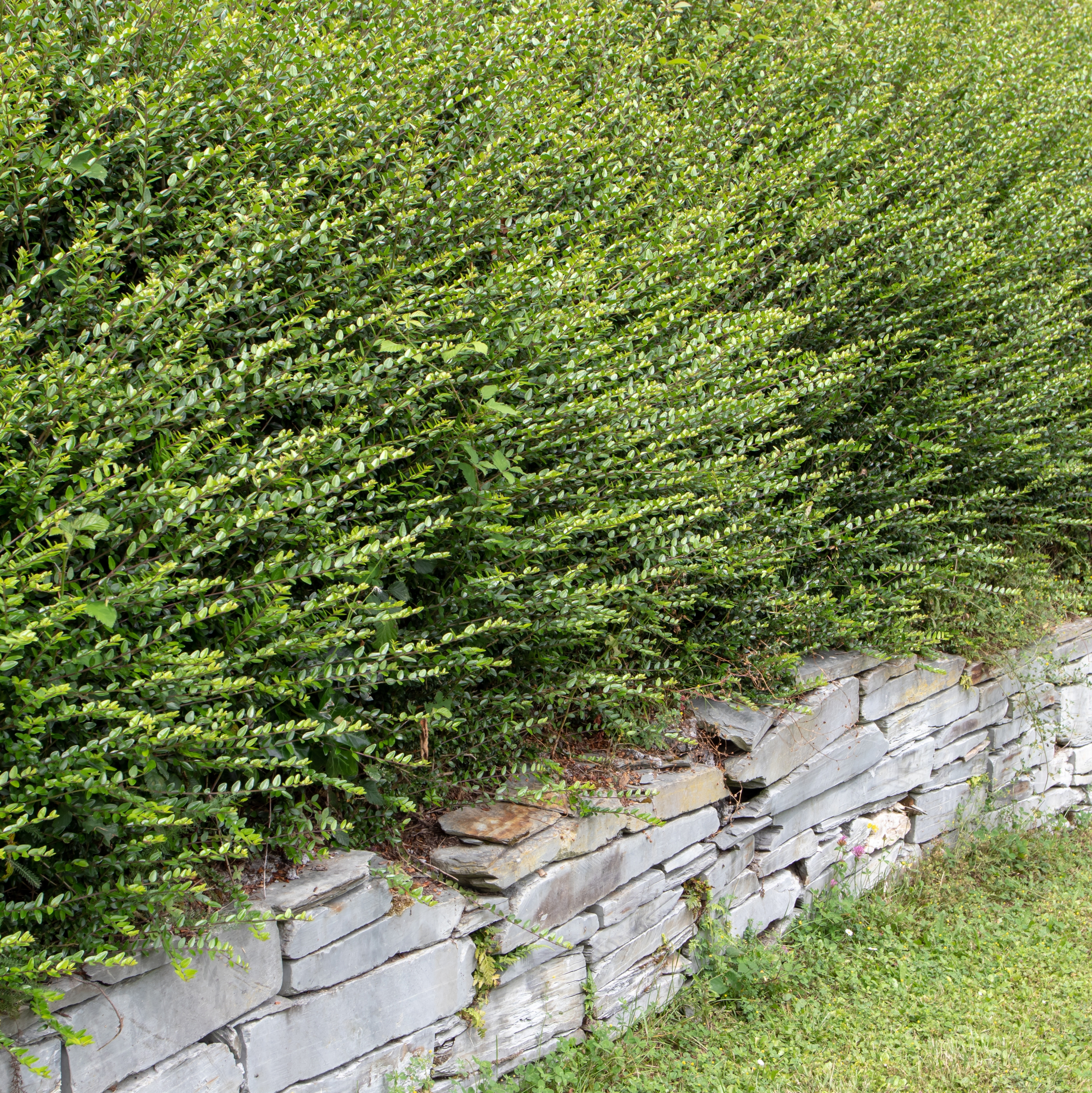
Lonicera nitida, commonly known as shrubby or box-leaved honeysuckle, is one of the most familiar alternatives. Its small leaves and dense growth allow it to create the neat, continuous appearance associated with traditional box hedging.
It is adaptable, growing in sun or partial shade and in a range of soils. Green-leaved varieties provide the closest visual substitute for box, while golden and variegated forms offer a different effect.
The main difference is vigour. Lonicera nitida grows considerably faster than box, which can be useful when you want a new hedge to establish quickly, but a tightly clipped hedge will need more regular attention.
A good choice for: low hedges, formal edging, small-leaved evergreen structure and quicker establishment.
Compact forms of evergreen euonymus are another useful option for gardeners looking for neat, dense foliage.
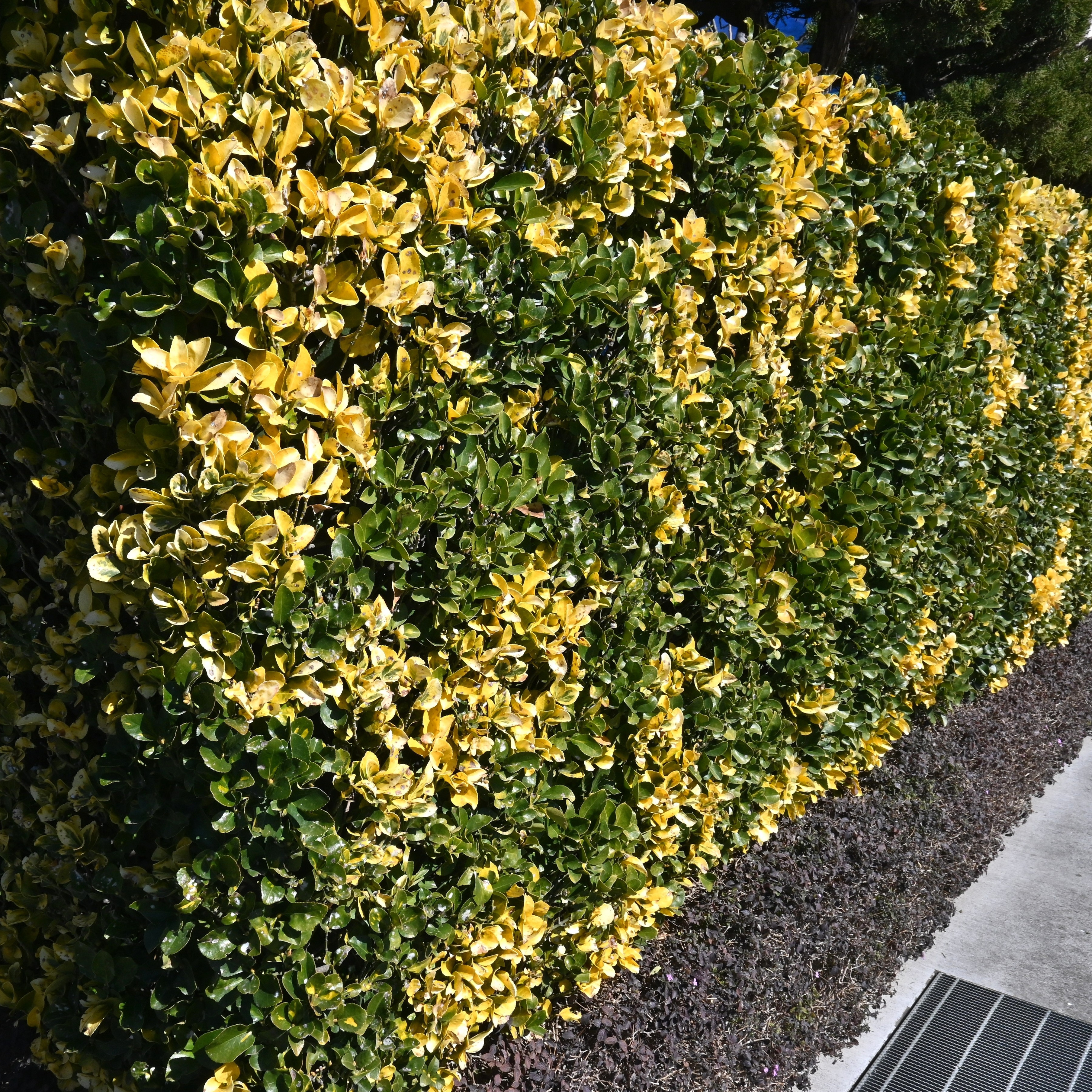
Euonymus japonicus has glossy evergreen leaves and responds well to clipping. Green-leaved cultivars can give a restrained formal effect, while variegated forms introduce cream, white or yellow foliage if you want to move away from the traditional dark-green box hedge.
Euonymus can grow in sun or partial shade and is particularly useful in coastal gardens, where suitable varieties cope well with exposed, salt-laden conditions.
A good choice for: low evergreen hedging, coastal gardens and gardeners who want a choice of foliage colours.
A plant intended for formal clipping or topiary needs to tolerate repeated pruning and form sufficiently dense growth to hold a defined shape.
Yew is one of the strongest choices for formal evergreen structure. It has been used for clipped hedges and topiary for centuries and can produce beautifully defined shapes once established.
It also has an important advantage over many conifers: yew can regenerate from old wood. This means an established plant that has become too large can usually be renovated by harder pruning.
Yew grows in sun or shade and tolerates a wide range of soils, but good drainage is important. It is not suitable for ground that remains waterlogged.
Its natural proportions also need considering. Yew is capable of becoming a very large plant, so it is particularly useful for substantial clipped shapes and hedges rather than very low edging.
A good choice for: formal hedging, topiary, shaded positions and long-term evergreen structure.
👉 Expert Tip: If you’re choosing a plant for topiary, think about the finished size of the shape before making your choice. A shrub that makes an excellent clipped hedge isn’t automatically suitable for a small ball or compact parterre.
Sometimes the priority is getting a new hedge established relatively quickly, particularly if old box has been removed and has left an obvious gap in the garden.
Privet is robust, adaptable and considerably faster growing than box. It tolerates most soils and some shade and responds well to clipping once established.
That vigour is both its advantage and its drawback. Privet can create a dense hedge relatively quickly, but maintaining a very formal shape requires regular pruning.
It also doesn’t replicate box exactly. The leaves are larger, and depending on the species, variety and growing conditions, some foliage may be lost during colder winters. If allowed to grow more freely, privet can also produce small white flowers in summer, although regular clipping usually removes much of the flowering growth.
A good choice for: faster-growing hedges, urban gardens and gardeners who don’t need an exact visual substitute for box.
If you want evergreen structure but aren’t tied to the traditional small-leaved appearance of box, choosing a plant with different foliage opens up more possibilities.
Pittosporum is a good example, offering attractive evergreen foliage in a range of greens, purples and variegated combinations.
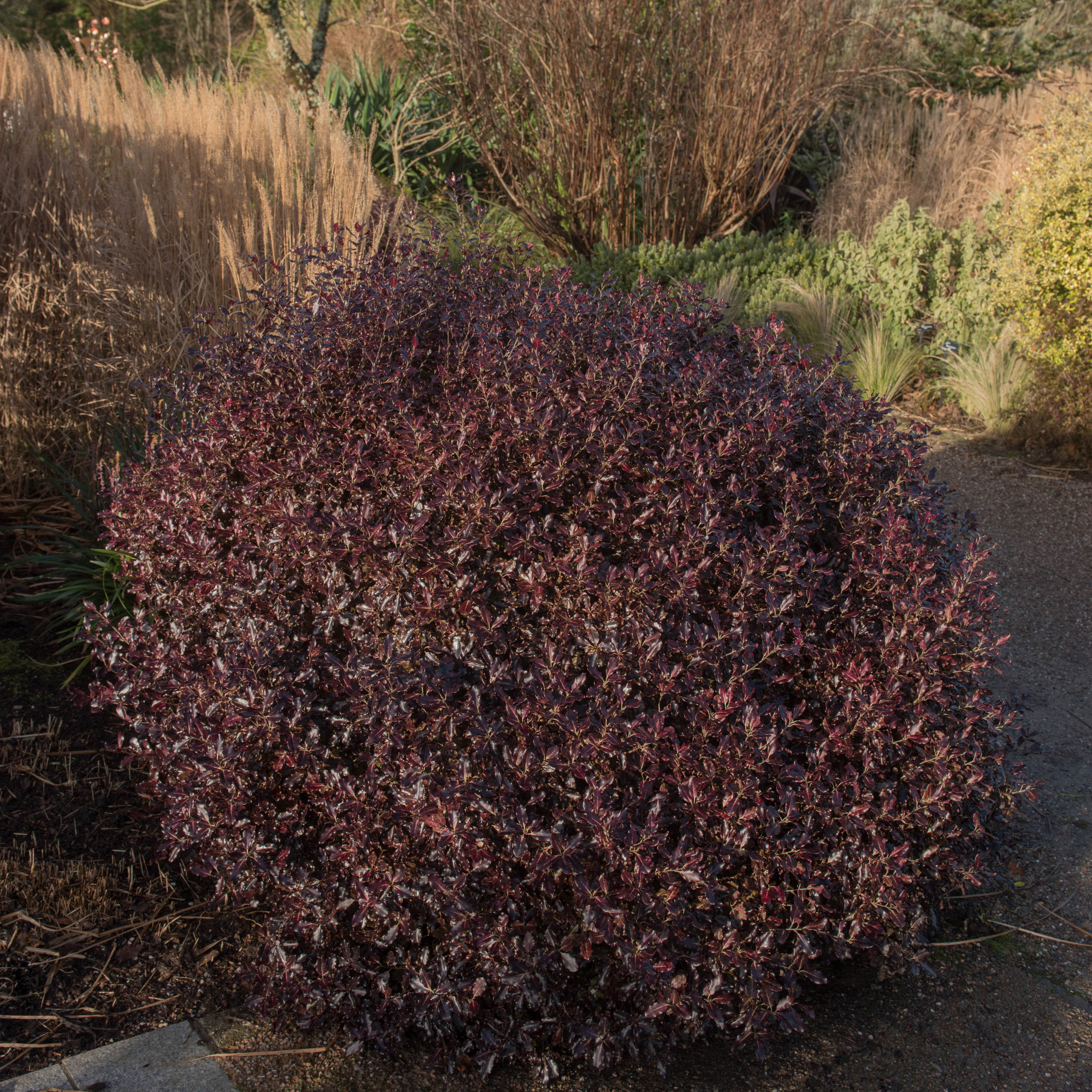
Pittosporums offer attractive evergreen foliage in a range of greens, purples and variegated combinations. Many respond well to clipping, and compact cultivars can make attractive low hedges or individual clipped specimens.
They are particularly useful where foliage colour is part of the planting design, but they need a little more thought about position than some other box alternatives. Pittosporums generally perform best in well-drained soil and a sheltered position. Hardiness varies between cultivars, making them less suitable as a universal replacement in very cold or exposed gardens.
A good choice for: sheltered gardens, colourful foliage and gardeners who want an evergreen hedge without trying to imitate box.
👉 Expert Tip: When considering pittosporum, check the eventual size and hardiness of the particular cultivar rather than buying on foliage colour alone. Different varieties can have quite different growth habits.
The conditions in your garden can make the final decision much easier.
For shade, yew is particularly useful and can cope with positions where many evergreen shrubs struggle. Lonicera nitida, euonymus and privet can also tolerate some shade.
For exposed coastal gardens, suitable forms of Euonymus japonicus are worth considering because of their tolerance of coastal conditions.
For cold or exposed sites, be more cautious with pittosporum and check the hardiness of individual cultivars.
For poorly drained ground, yew should be avoided. Improving drainage or choosing a plant better suited to the conditions will give a new hedge a much better chance of establishing successfully.
Matching the plant to the site is more important than finding the alternative that most closely resembles box.
If you’re looking for an alternative because an existing box hedge has been repeatedly affected by box blight or box tree caterpillar, replacing it with a different species can reduce the need for continued monitoring and treatment.
Where box blight has been present, remove affected plants and fallen infected material carefully and clean tools after use. Rather than immediately replanting box in the same position, choosing an unrelated alternative can provide similar structure without recreating the same disease risk.
There is no single best replacement for box. The right choice depends on the effect you want to create, how quickly you want the hedge to establish and the conditions in your garden.
Use this quick guide to compare the main alternatives:
| If you want… | Consider… |
|---|---|
| A traditional box-like appearance | Lonicera nitida, Euonymus |
| Formal clipping or topiary | Yew |
| Faster establishment | Lonicera nitida, Privet |
| Colourful evergreen foliage | Pittosporum, Euonymus |
| A hedge for shade | Yew, Lonicera nitida |
| A coastal-tolerant option | Euonymus japonicus |
The best alternative to box is one that suits both the style of your garden and its growing conditions. From traditional clipped evergreens to plants with different foliage colours and growth habits, there are plenty of options for creating lasting structure.
Visit us in Kington to explore our range of hedging plants and find the right alternative to box for your garden.