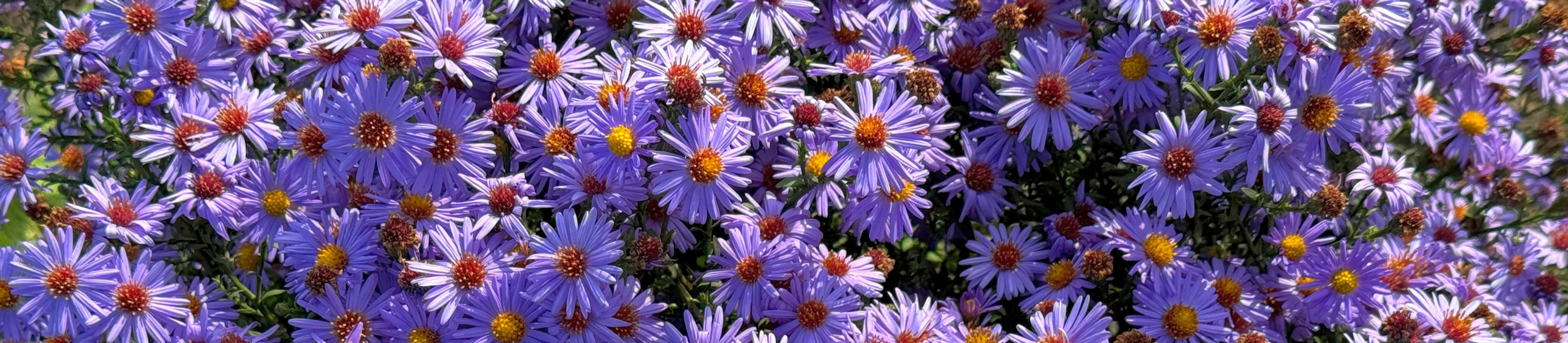
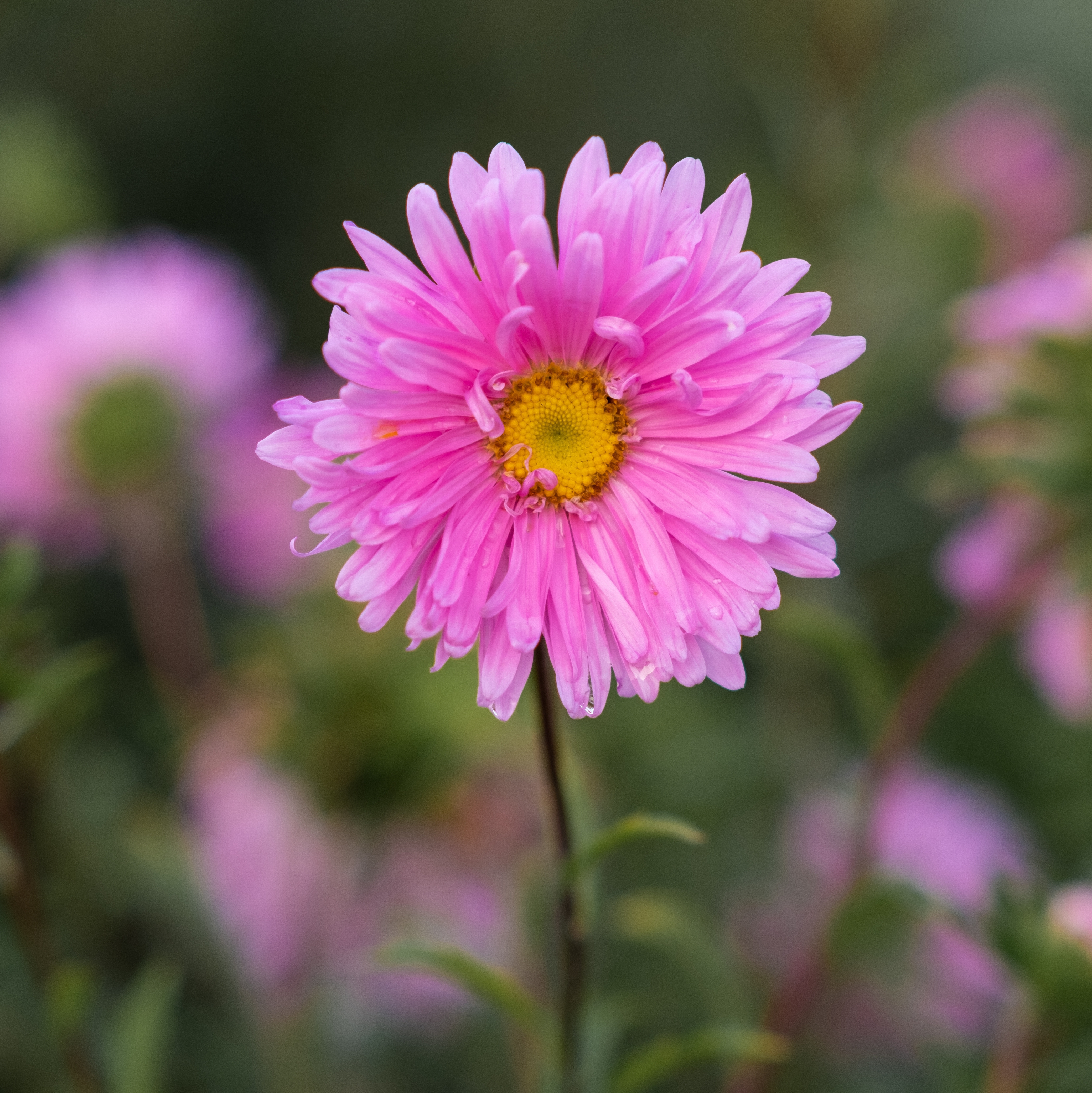
Asters bring a welcome burst of colour to the garden from late summer into autumn, often continuing to flower after many summer perennials have begun to fade. Their daisy-like flowers work well in borders, containers and wildlife-friendly planting, while their late flowering period provides an important source of nectar for pollinating insects.
Flower colours range from white and soft pink through to purple, violet and deeper crimson shades. Asters combine particularly well with ornamental grasses, sedums, Japanese anemones and late-flowering salvias, making them useful for carrying colour and interest into autumn.
When Does It Flower?
Most garden Asters flower from August to October, although some varieties begin in late July and others continue into early November if conditions remain mild.
The flowers resemble small daisies, with brightly coloured petals surrounding golden-yellow centres. Individual blooms are usually 2–5cm across but are produced in such abundance that mature plants can appear almost completely covered in flowers.
Flower colours include:
🤍 White
🌸 Soft pink
💗 Rose pink
🟣 Purple
💙 Violet-blue
💜 Deep lavender
❤️ Rich crimson (selected cultivars)
Many varieties have a light, fresh fragrance, although they are generally grown more for their colour and long flowering season than for scent.
One of their greatest ornamental qualities is their ability to extend interest in the garden well into autumn, when many other perennials have already finished flowering.
How to Grow
Choosing the Right Position
Asters generally flower best in full sun, although many varieties will tolerate some light shade.
They prefer:
Fertile, moisture-retentive soil
Good drainage
Neutral to slightly alkaline conditions, although most tolerate a range of soil types
An open position with good air circulation to reduce the risk of mildew
Many modern cultivars are more tolerant of heat and drier conditions than older varieties, but all appreciate soil that does not dry out completely during prolonged warm weather.
Planting
Plant Asters in either spring or autumn while the soil is warm and workable.
Before planting, incorporate garden compost or well-rotted organic matter into the soil.
Plant at the same depth as they were growing in their nursery pot.
Space plants approximately 40–60cm apart, depending on the mature size of the variety.
Water thoroughly after planting.
Apply a mulch in spring to help retain moisture and suppress weeds.
Asters also grow well in large containers filled with a quality peat-free compost, provided they are watered regularly.
Caring for the Plant
Watering
Keep newly planted Asters well watered during their first growing season.
Established plants are reasonably drought tolerant but flower best when the soil remains evenly moist during prolonged dry spells.
Container-grown plants require more frequent watering, particularly during warm weather.
Feeding
Asters are not heavy feeders but benefit from fertile soil.
A spring application of a balanced slow-release fertiliser or a generous mulch of compost is usually sufficient to support healthy growth and abundant flowering.
Avoid excessive nitrogen-rich feeds, which encourage lush leafy growth at the expense of flowers.
Supporting
Taller varieties may benefit from discreet support, especially in exposed gardens or rich soils where vigorous growth can become top-heavy.
Plant supports placed early in the season are usually hidden by the developing foliage.
Encouraging More Flowers
To keep Asters flowering well:
Grow plants in full sun.
Water during extended dry periods.
Remove faded flowers regularly.
Feed annually in spring.
Divide congested clumps every few years.
Avoid overcrowding, which reduces airflow and flowering performance.
After Flowering
Deadheading
Removing spent flowers encourages the plant to remain tidy and may prolong flowering.
Once flowering has finished completely, stems can be cut back to near ground level.
Foliage
Asters produce attractive green foliage throughout spring and summer before becoming less prominent as winter approaches.
Most garden Asters are herbaceous perennials, with foliage dying back naturally after the first frosts.
Autumn and Winter Care
Leave some seed heads standing into winter if desired, as they can add seasonal interest and provide shelter for beneficial insects.
Apply a mulch around the base of the plant in late autumn or early spring to improve soil structure and conserve moisture.
Dividing or Propagation
Most Asters benefit from division every three to four years.
Lift established clumps during spring and separate them into smaller healthy sections before replanting.
Division:
Rejuvenates older plants.
Improves flowering.
Prevents overcrowding.
Produces additional plants for other parts of the garden.
Asters may also be propagated from soft basal cuttings taken in spring.
Common Problems
Asters are generally straightforward to grow and remain healthy when given suitable conditions.
Occasional problems include:
Powdery mildew
This can develop during dry weather or where plants are overcrowded.
Reduce the risk by:
Providing good airflow.
Watering during prolonged dry spells.
Dividing congested clumps.
Removing affected foliage if necessary.
Slugs and snails
Young spring shoots may occasionally be damaged.
Protect emerging growth where slug populations are high.
Aphids
These sometimes gather on young stems but are rarely serious and are often controlled naturally by ladybirds and other beneficial insects.
Wildlife Benefits
Asters provide nectar and pollen late in the season, when fewer plants may be in flower.
Their nectar-rich blooms attract:
🐝 Bees
🦋 Butterflies
🪰 Hoverflies
Numerous other pollinating insects preparing for winter
The late flowering season makes them especially important when many other nectar sources have disappeared.
Cut Flowers
Asters make excellent cut flowers.
Their long stems and generous sprays of blooms are ideal for informal arrangements, and freshly cut flowers often last well in a vase for over a week when harvested as the first flowers open.
Why Grow Asters?
Asters extend colour through late summer and autumn, with varieties suitable for borders, containers and wildlife-friendly planting. Their long flowering period also makes them useful companions for grasses, sedums and other late-season perennials.
For advice on choosing Asters for your garden, visit us in Kington and take a look at the varieties available at Lyonshall Nurseries.
We use cookies to ensure that we give you the best experience on our website. If you continue to use this site we will assume that you are happy with it.