🌼 Daffodils: Brighten Your Garden with Spring’s Favourite Flower
Nothing announces the arrival of spring quite like cheerful, golden Daffodils. Bursting into flower after the long winter months, these much-loved bulbs bring colour, fragrance, and optimism to gardens, patios, borders, and containers.
At Lyonshall Nursery, we stock a beautiful seasonal range of Daffodils, from early flowering miniatures to elegant late-season varieties, helping you create a display that lasts for weeks — sometimes even months.
Whether you prefer traditional trumpet daffodils, delicate scented blooms, or unusual doubles, there’s a daffodil to suit every garden style.
🌿 Why Grow Daffodils?
Daffodils are one of the easiest and most reliable spring bulbs to grow.
Benefits of planting Daffodils:
🌼 Reliable year-after-year flowering
🐝 Early nectar source for pollinators
🌱 Easy to grow in borders, lawns, and pots
❄ Extremely hardy and low maintenance
🌸 Huge range of colours, heights, and forms
Top Tip: Plant a mix of early, mid, and late-flowering daffodils for a much longer spring display.
🌼 Early Flowering Daffodils
Rijnveld’s Early Sensation
One of the earliest Daffodils to flower — sometimes blooming as early as Christmas in mild winters.
Features:
Brilliant golden-yellow flowers
Strong, upright stems
Height: approx. 35cm
Perfect for:
Containers
Front borders
Brightening winter gardens
February Gold
As the name suggests, this charming variety flowers in late winter and early spring.
Why gardeners love it:
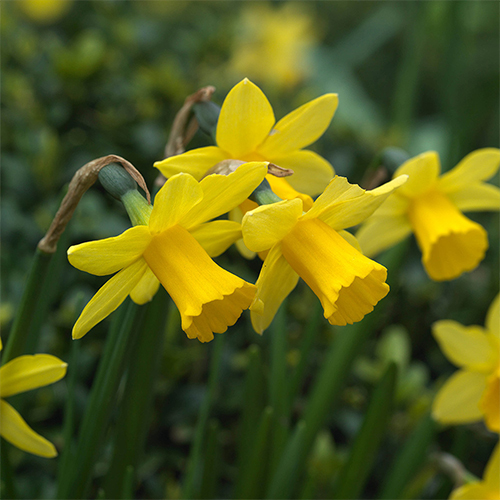
Compact size (around 15cm)
Rich golden-yellow blooms
Excellent for naturalising and pots
Tête-à-Tête
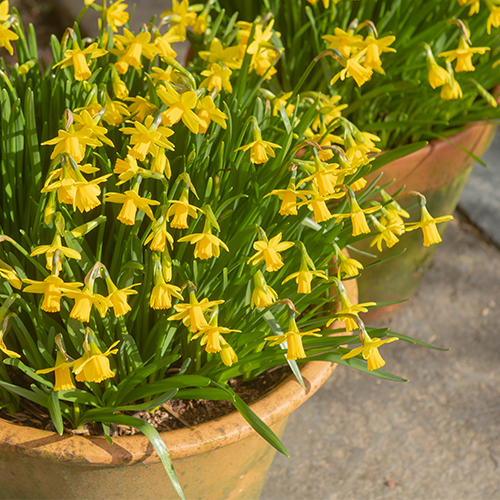
One of the nation’s favourite miniature daffodils.
Features:
Multiple flowers per stem
Swept-back golden petals
Compact and reliable
Ideal for:
Containers
Window boxes
Front-of-border planting
Expert Tip: Miniature daffodils look especially effective planted in large drifts.
🌼 Mid-Season Daffodils
Mid-season varieties provide the heart of the spring display and pair beautifully with tulips and other bulbs.
Tenby Daffodil (Narcissus obvallaris)
A classic heritage-style daffodil associated with traditional spring landscapes.
Features:
Delicate golden blooms
Elegant natural appearance
Height: approx. 25cm
Perfect for:
Naturalising
Cottage gardens
Woodland planting
Rip Van Winkle
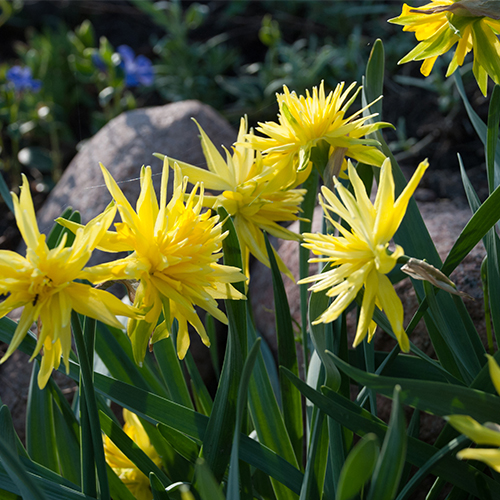
A wonderfully unusual double daffodil with a distinctive, spiky appearance.
Why it stands out:
Green-tinged petals
Almost chrysanthemum-like flowers
Compact size (around 15cm)
Ideal for:
Pots
Rockeries
Collectors of unusual bulbs
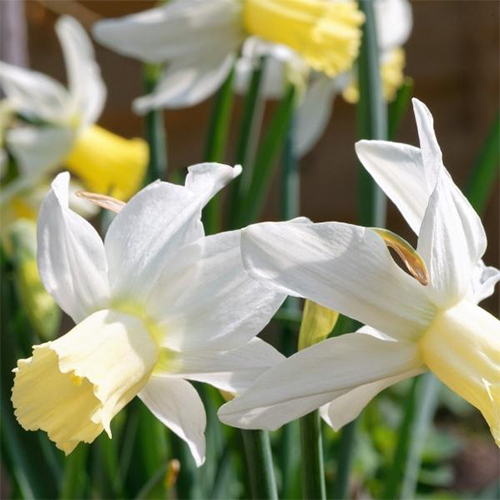
Jenny
Elegant and understated, ‘Jenny’ is a beautiful mid-sized variety.
Features:
Creamy white petals
Soft butterscotch-yellow trumpet
Gracefully swept-back blooms
A perfect choice for:
Sophisticated planting schemes
Mixed spring containers
Soft pastel borders
🌼 Late Flowering Daffodils
Late-season Daffodils extend colour well into spring and early summer.
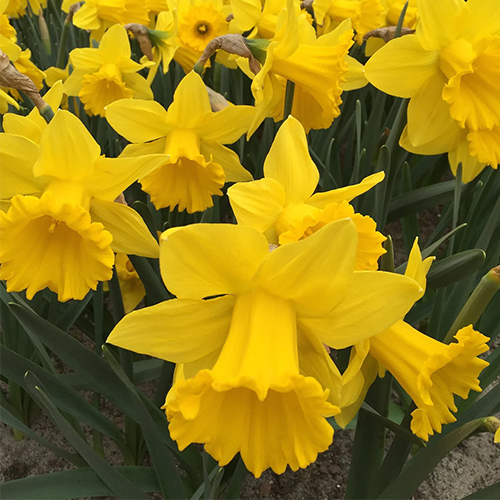
Dutch Master
A true classic and one of the most recognisable daffodils.
Features:
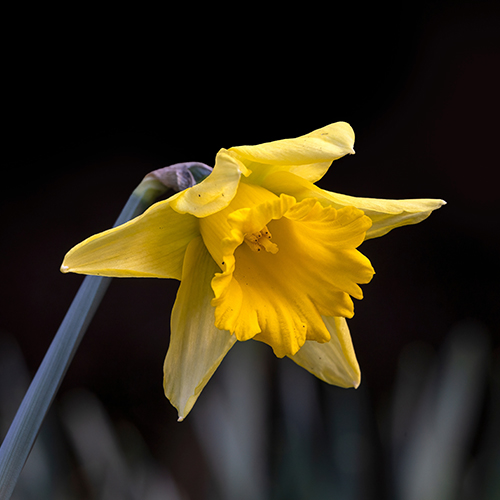
Large golden trumpet flowers
Delicate fragrance
Height: approx. 45cm
Excellent for:
Borders
Cutting gardens
Naturalising in grass
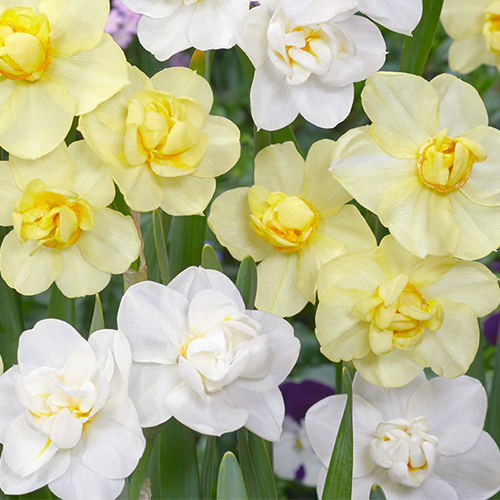
Cheerfulness
A beautifully fragrant double daffodil producing multiple blooms per stem.
Why it’s special:
Sweet scent
Creamy double flowers
Elegant, romantic appearance
Perfect for:
Containers
Cut flower arrangements
Scented gardens
Pheasant’s Eye Daffodil (Narcissus poeticus var. recurvus)
One of the last daffodils to flower — and one of the most graceful.
Features:
White petals with tiny coloured eye
Delicate fragrance
Elegant natural look
Wonderful for:
Wildlife gardens
Meadow planting
Traditional cottage gardens
🌱 When & How to Plant Daffodils
Best time to plant:
September to November
How to plant:
Choose a sunny or lightly shaded spot
Plant bulbs around 2–3 times their depth
Use well-drained soil or compost
Water after planting if conditions are dry
Great planting locations:
Borders
Containers
Lawns
Woodland gardens
Top Tip: Plant daffodils in informal groups rather than straight lines for a more natural effect.
✂️ Caring for Daffodils After Flowering
To ensure strong flowering next year:
Essential aftercare:
Deadhead spent flowers
Leave foliage until it dies back naturally
Feed after flowering with a balanced fertiliser
Avoid tying leaves into knots
The leaves help bulbs store energy for next year’s blooms.
From cheerful miniatures to elegant scented varieties, our range of Daffodils offers something for every garden and every style of planting.
We use cookies to ensure that we give you the best experience on our website. If you continue to use this site we will assume that you are happy with it.

.jpg)
.jpg)
