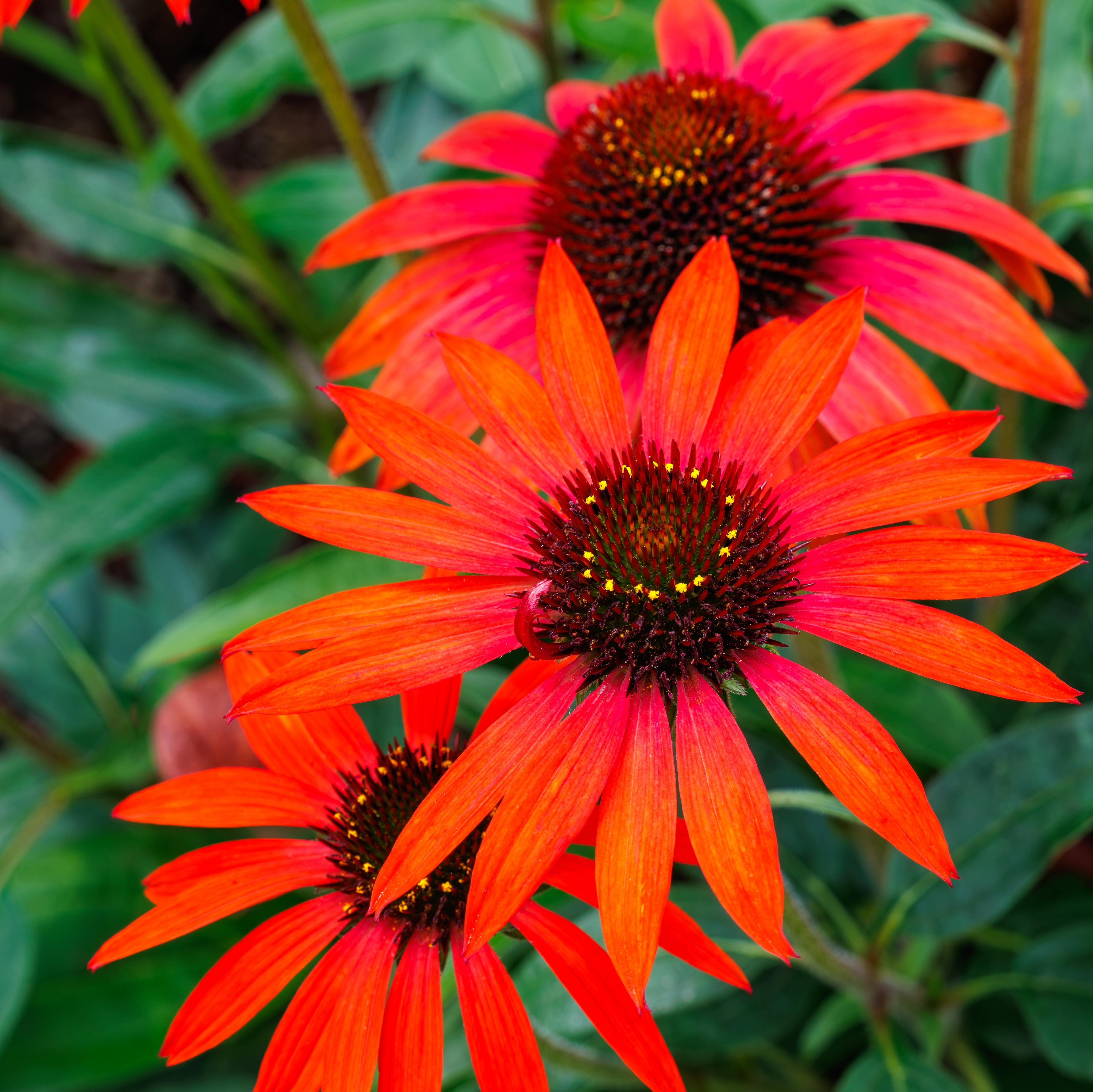
Echinacea, commonly known as coneflower, is a hardy herbaceous perennial valued for its large, daisy-like flowers and distinctive raised central cones. Its upright stems, colourful petals and long flowering season make it a popular choice for sunny borders, prairie-style planting and wildlife-friendly gardens. It also has a long history of traditional medicinal use, although evidence for its effectiveness remains mixed.
The best-known species is Echinacea purpurea, the purple coneflower, which bears pinkish-purple flowers around an orange-brown central cone. Modern varieties offer shades of white, yellow, orange, red and deeper pink, with differences in height, flower shape and vigour. Most form clumps that return each year, although some highly bred varieties can be less reliable in cold, wet conditions.
When Does It Flower?
Echinacea usually flowers from July to September in UK gardens, sometimes continuing into October in favourable weather. The flowers have prominent, bristly central cones surrounded by petals that may spread outwards or curve downwards as they mature.
Depending on the variety, plants generally grow between 40cm and 120cm tall. Taller forms add height and structure to mixed borders, while compact varieties suit smaller spaces and large containers.
The flowers attract bees, butterflies and other pollinating insects. If the seedheads are left standing in autumn, they may also provide food for visiting birds.
Echinacea also makes an attractive cut flower, adding colour and character to summer bouquets. For more inspiration, see our guide to creating a cut flower garden.
How to Grow
Choosing the Right Position
Echinacea thrives in an open, sunny position, where good light encourages strong stems and plentiful flowers.
Sunlight: Full sun is ideal, although some varieties tolerate light partial shade.
Soil: Moderately fertile, well-drained soil is suitable. Established plants tolerate a range of soil types.
Drainage: Avoid ground that remains waterlogged, particularly during winter.
Shelter: Taller varieties may benefit from protection against strong winds.
Planting
Spring is generally the best time to plant, allowing roots to establish before their first winter. Early autumn planting is possible in well-drained soil, but young plants may struggle in cold, wet ground.
Dig a hole approximately as deep as the root ball and sufficiently wide to accommodate the roots. Position the plant at the same depth as it was growing in its pot, firm the soil gently and water thoroughly.
Allow enough space for the mature clump to develop, typically 30–60cm between plants, depending on the variety.
Caring for the Plant
Water regularly during the first growing season. Once established, many varieties tolerate short dry spells, although prolonged drought can reduce flowering.
A light application of compost in spring is usually sufficient in ordinary garden soil. Avoid excessive feeding, which can encourage leafy growth at the expense of sturdy stems.
Plants in containers need more frequent watering and should be grown in a free-draining compost.
Encouraging More Flowers
Removing faded flowers during summer can encourage further blooms and keep plants looking tidy. Cut spent flower stems back to a healthy leaf or developing bud.
In late summer, consider leaving some flowers to develop into seedheads. Their dark, spiky cones provide attractive structure long after the petals have fallen.
Autumn and Winter Care
Echinacea dies back as temperatures fall. Leave dried stems and seedheads standing for winter interest and potential bird food, then cut back in late winter or early spring.
Good drainage is essential. Established E. purpurea is hardy across much of the UK, but young plants and some modern hybrids are vulnerable to prolonged winter wet.
New shoots can appear late in spring, so avoid disturbing the crown.
Dividing and Propagation
Established clumps can be divided in spring as new growth begins, although Echinacea dislikes frequent disturbance. Lift carefully and separate sections with healthy roots and growing shoots.
Echinacea can also be grown from seed, although named varieties may not produce plants identical to their parents. Division is a more reliable way to preserve their characteristics.
Common Problems
Echinacea is generally trouble-free when grown in suitable conditions, but a few issues are worth watching for.
Slugs and snails: May damage tender young shoots, particularly in spring.
Root or crown rot: Most likely in poorly drained soil, especially during winter.
Powdery mildew: Can occasionally affect foliage, particularly where plants are crowded or air circulation is poor.
Why Grow Echinacea?
With its bold summer flowers, distinctive seedheads and value to pollinating insects, Echinacea brings colour and natural character to sunny borders. It combines particularly well with ornamental grasses and other late-flowering perennials.
Visit us in Kington for inspiration and advice on choosing perennials for your garden.
We use cookies to ensure that we give you the best experience on our website. If you continue to use this site we will assume that you are happy with it.