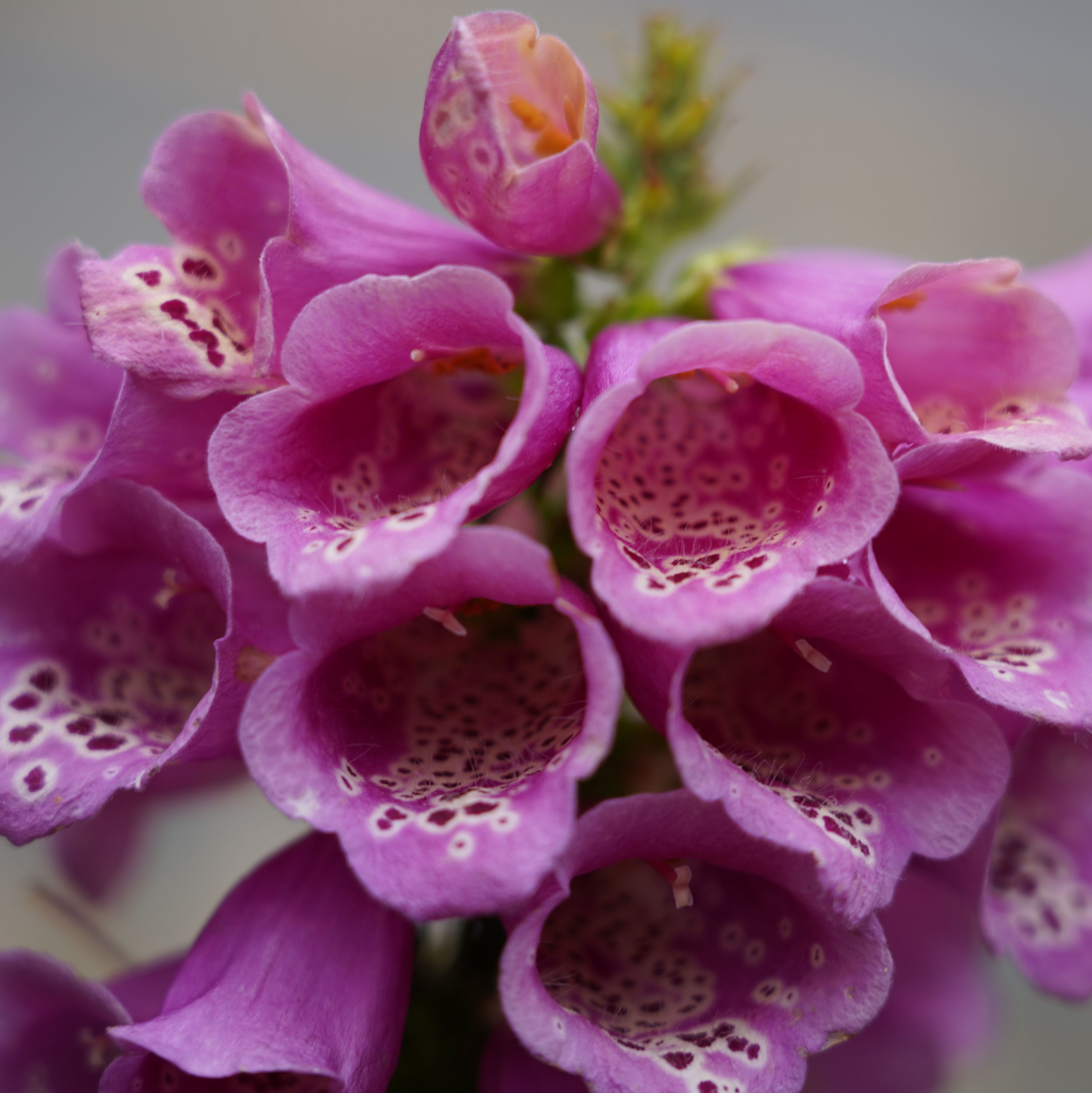
Foxgloves (Digitalis) are graceful, upright plants with tall spires of tubular, bell-shaped flowers. Their distinctive blooms bring height and colour to cottage gardens, woodland edges and partially shaded borders. They look particularly attractive growing among ferns, hardy geraniums and other informal planting.
The familiar common foxglove (Digitalis purpurea) is a native British wildflower, usually grown as a biennial. It produces a leafy rosette in its first year, flowers in its second and then dies after setting seed. Other species are perennial and can return for several years, making it worth understanding the differences when choosing plants.
When Does It Flower?
Common foxgloves generally flower from late May through July in UK gardens, depending on the weather and location. Their tall, often one-sided flower spikes carry numerous hanging bells, frequently decorated with spots inside their throats.
Flower colours include:
🩷 Pink and rose
💜 Purple and mauve
🤍 White and cream
💛 Soft yellow and apricot
Common foxgloves typically reach around 90–150 cm when flowering, although varieties differ considerably in height. Perennial species such as Digitalis grandiflora produce soft yellow flowers, while Digitalis lutea has smaller, pale yellow blooms.
How to Grow
Choosing the Right Position
Most common foxgloves thrive in conditions similar to their natural woodland habitat, although some perennial species prefer sunnier, drier positions.
Sunlight: Partial or dappled shade suits common foxgloves, although they also tolerate sun where the soil remains reasonably moist.
Soil: Fertile, moisture-retentive but well-drained soil is ideal for most varieties.
Drier gardens: Some perennial species, including Digitalis obscura and Digitalis parviflora, tolerate sunnier positions but still prefer well-drained soil that does not become excessively dry.
Growing from Seed
Foxgloves are easy to grow from seed and will often self-seed naturally around the garden.
Sow seeds in trays of moist compost in late spring or summer. Scatter them thinly over the surface and press down gently without covering, as they need light to germinate. Keep the compost moist and, once the seedlings are large enough to handle, transplant them into individual pots ready for planting out.
Alternatively, scatter seeds directly onto prepared soil in late summer, giving young plants time to establish before winter.
As common foxgloves usually flower in their second year, sow seeds in two successive years to enjoy flowers annually. Once established, self-seeding can help maintain the display.
Planting
Foxgloves can be planted in spring or autumn when soil conditions are suitable. Established plants purchased from a nursery or garden centre can be planted directly into borders, while young plants raised from seed should be planted out once they are sufficiently developed, allowing time to establish before winter.
Improve poor soil with well-rotted organic matter where needed. Space plants approximately 30–45 cm apart, depending on the variety, and plant at the same depth as they were growing in their pots.
Water thoroughly after planting and during prolonged dry spells while the roots establish. A light mulch of compost or leaf mould helps retain moisture, keeping it clear of the crowns.
Caring for the Plant
Once established, foxgloves generally require little attention.
Protect young plants from slugs and snails, particularly during spring when fresh growth is vulnerable. Taller flower spikes may benefit from discreet staking in exposed gardens.
Additional feeding is rarely necessary in reasonably fertile soil. Avoid excessive fertiliser, which can encourage soft, leafy growth.
After Flowering
Leave a few flower spikes to develop seed if you want new plants to appear naturally, or remove spent flowers to keep borders tidy. Deadheading may encourage smaller secondary flower spikes, although this is not guaranteed.
Biennial foxgloves usually die after flowering and setting seed, so the old plants can be removed. Perennial varieties may continue growing from their basal foliage, which should be left intact.
Autumn and Winter Care
Young biennial foxgloves normally overwinter as low rosettes of leaves before flowering the following summer.
Keep their crowns clear of heavy accumulations of fallen leaves and avoid waterlogged soil. Perennial species vary in their tolerance of winter cold and wet, particularly those originating from drier Mediterranean regions.
Wildlife Benefits
Foxgloves are particularly valuable to bumblebees, which are well adapted to visiting their deep tubular flowers. The markings inside the blooms help guide visiting insects towards the nectar.
Are Foxgloves Poisonous?
All parts of foxgloves are highly poisonous if eaten, including their leaves, flowers and seeds. They contain cardiac glycosides that can seriously affect the heart.
Wear gloves when handling plants and wash your hands afterwards. Take particular care where children or pets may eat garden plants, and never use foxgloves in homemade herbal preparations or teas.
If ingestion is suspected, seek urgent medical or veterinary advice.
Why Grow Foxglove (Digitalis)?
Foxgloves bring elegant flower spikes and a natural cottage-garden character to borders and woodland planting. With a little planning, biennial and perennial varieties can provide colour and interest year after year.
Visit us in Kington for friendly advice on choosing foxgloves and other plants suited to your garden.
We use cookies to ensure that we give you the best experience on our website. If you continue to use this site we will assume that you are happy with it.