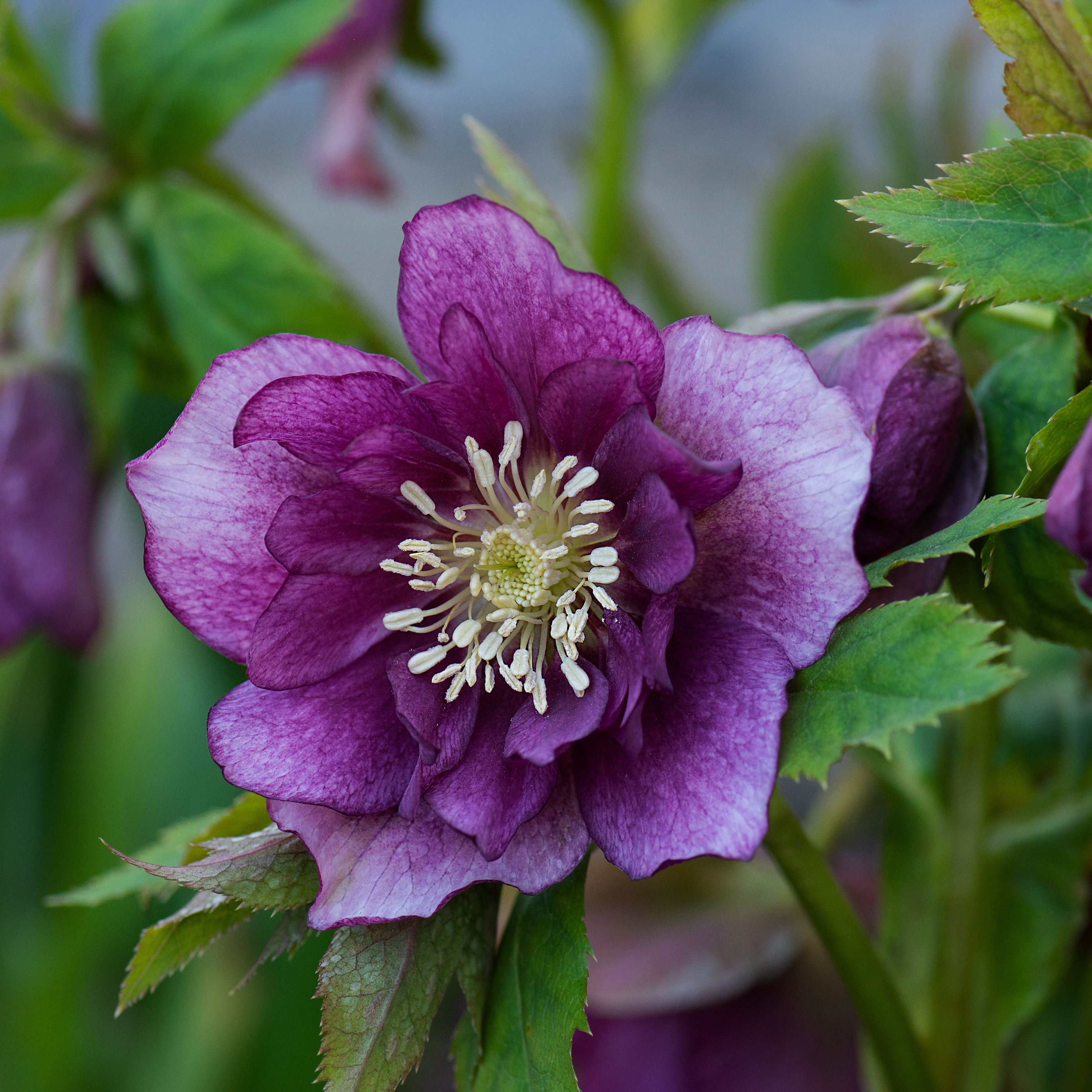
Hellebores (Helleborus) are hardy perennial plants valued for their elegant flowers during winter and early spring, when much of the garden is still dormant. Often called Christmas roses or Lenten roses, they belong to the buttercup family rather than the rose family.
Their nodding, cup-shaped flowers rise above attractive, often evergreen foliage, bringing colour to shaded borders, woodland gardens and areas beneath deciduous trees. Most popular varieties form compact clumps around 30–45cm tall, although some species grow considerably larger.
When Does It Flower?
Hellebores generally flower from January to April in the UK, although some varieties begin in December and others continue into late spring. Flowering depends on the variety, location and winter weather.
There is a wonderful range of flower colours, including:
🤍 White and cream: Fresh, delicate flowers that brighten shaded areas.
🩷 Pink and rose: Soft blush shades through to deeper rosy tones.
💜 Purple and plum: Rich, dramatic flowers, sometimes almost black.
💚 Green: Subtle lime and apple-green shades that blend naturally with surrounding foliage.
💛 Yellow: Pale buttery tones, sometimes with contrasting markings.
Many varieties also have attractive speckled, veined or double flowers. The popular Lenten roses (Helleborus × hybridus) offer particularly varied colours, while the Christmas rose (Helleborus niger) is best known for its white flowers.
How to Grow
Choosing the Right Position
Most hellebores thrive in partial or dappled shade, making them particularly useful beneath deciduous trees or alongside shrubs. They appreciate winter and spring light with some protection from strong summer sunshine.
Sunlight: Partial shade is ideal for most varieties, although some tolerate more sun if the soil remains moist.
Soil: Fertile, humus-rich soil that retains moisture without becoming waterlogged.
Drainage: Good drainage is important, particularly during winter.
Spacing: Allow approximately 35–45cm between typical garden hybrids, with more room for larger species.
Planting
Autumn through to spring is generally the best planting period, provided the ground is not frozen or waterlogged.
Dig a hole slightly wider than the rootball, incorporate well-rotted organic matter where needed and position the plant at the same depth as it was growing in its pot. Firm gently and water thoroughly.
Hellebores dislike being repeatedly disturbed, so choose a position where they can establish and develop into mature clumps.
Caring for Hellebores
Once established, hellebores need relatively little attention.
Watering: Water regularly during establishment and prolonged dry spells, especially in spring and summer.
Feeding: Apply a mulch of garden compost or well-rotted organic matter to improve the soil and provide nutrients.
Mulching: Keep mulch clear of the crown to reduce the risk of rotting.
After Flowering
Once flowering has finished, remove spent flower stems if you do not want seedlings appearing around the parent plant.
Alternatively, leave some seedpods to mature if you would like hellebores to self-seed. Seedlings may produce different flower colours from their parents, especially with hybrid varieties.
Autumn and Winter Care
Most established Lenten roses are fully hardy in UK gardens and require little winter protection.
For Helleborus × hybridus, old leaves can be cut back near ground level in late winter, before the flowers emerge. This improves their appearance and helps reduce the spread of leaf spot disease.
Dividing and Propagation
Established clumps of many hellebores can be divided in early autumn or shortly after flowering in spring.
Lift the plant carefully and separate it into sections, ensuring each has healthy roots and growing buds. Replant promptly and water during establishment.
However, species such as Helleborus foetidus and Helleborus argutifolius are better propagated from seed rather than division.
Fresh seed can be sown in summer, although germination may be slow. Seed-grown hybrids will not necessarily resemble the parent plant.
Common Problems
Hellebore leaf spot: Brown or blackish patches appear on leaves and sometimes stems. Remove affected foliage promptly and clear away infected debris.
Aphids: These may gather on tender shoots and flowers. Small infestations can be removed by hand.
Poor flowering: Excessive shade, drought or recently disturbed roots may reduce flowering.
Hellebore black death: A serious disease causing distorted growth and distinctive black streaking. Suspected cases should be checked carefully, as affected plants must be removed and destroyed.
All parts of hellebores are poisonous if eaten, and their sap may irritate the skin. Wear gloves when handling or dividing plants, and take care around children and pets.
Wildlife Benefits
🐝 Hellebore flowers provide an early source of nectar and pollen for bumblebees and other pollinating insects active during mild winter and early spring weather.
Why Grow Hellebore?
Hellebores bring lasting colour and character to the garden at a time when relatively few other perennials are flowering. Their attractive foliage, wide range of flower colours and preference for partial shade make them particularly useful for winter and early spring displays.
Whether planted beneath trees, along a shaded pathway or among other woodland plants, they provide seasonal interest year after year.
Discover the beauty of hellebores for your own garden and Visit us in Kington for friendly advice and inspiration.
We use cookies to ensure that we give you the best experience on our website. If you continue to use this site we will assume that you are happy with it.