
Open today 9:00 - 17:00
The right garden tools help make gardening safer, more efficient and less physically demanding. Different jobs call for different tools, and choosing the correct one helps you work more effectively while caring for your plants.
Regular cleaning, sharpening and proper storage are just as important. Looking after your tools helps prevent the spread of plant diseases, reduces rust and keeps them working reliably season after season.
Using the correct tool isn’t simply about making gardening easier—it also benefits both your plants and your body.
The right equipment helps you:
Quality tools often cost more initially, but with proper care they can provide decades of reliable service.
👉 Expert Tip: Before buying a tool, pick it up if possible. A comfortable grip, balanced weight and suitable handle length often matter more than buying the biggest or most expensive option.
Most gardens can be maintained with a relatively small collection of versatile tools.
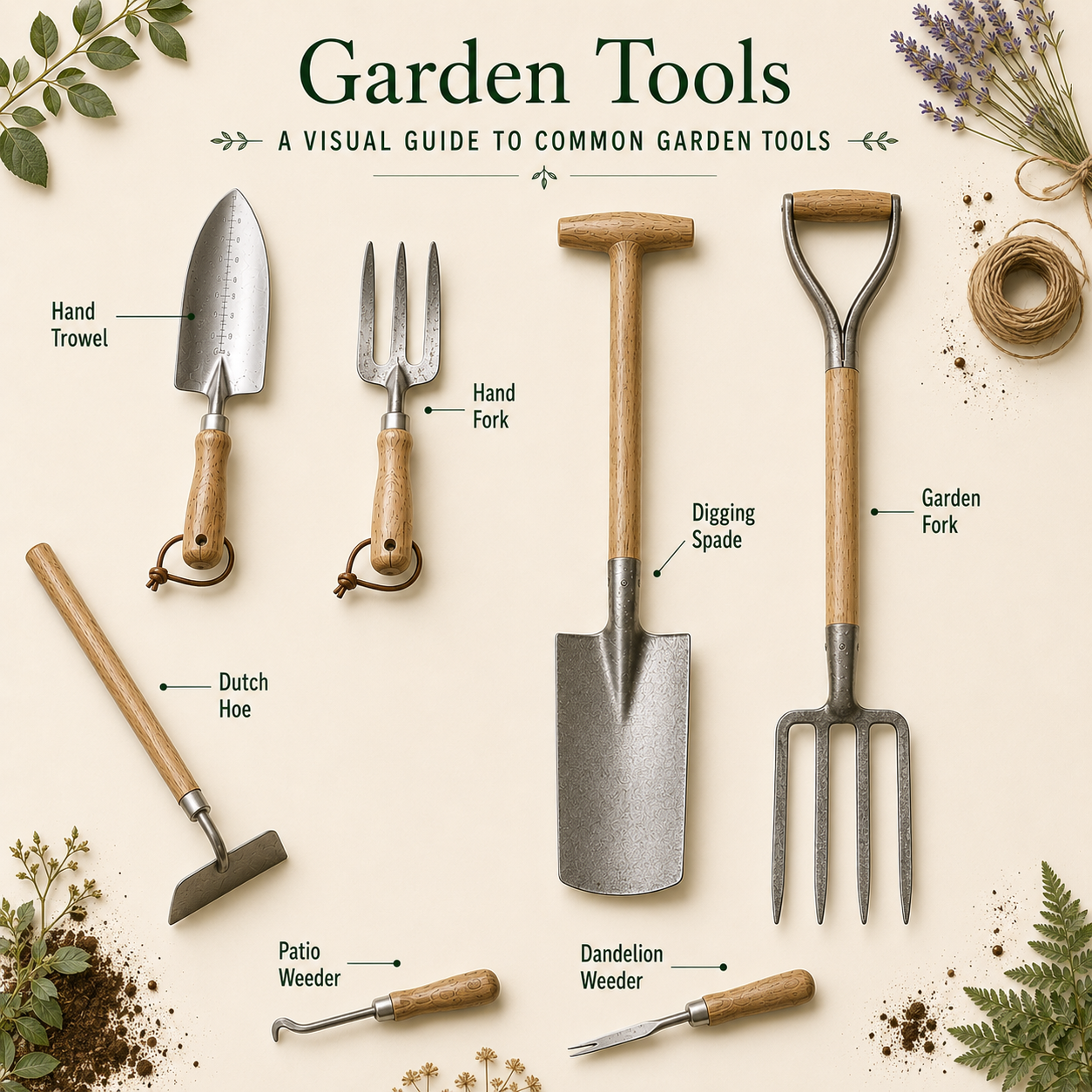
A hand trowel is one of the most frequently used gardening tools.
It’s ideal for:
Choose one with a comfortable grip and a strong stainless steel blade that won’t bend under pressure.
Often overlooked, a hand fork is invaluable for lighter cultivation work.
Use it for:
The narrow tines allow you to work around established plants without causing unnecessary root disturbance.
A Dutch hoe makes keeping annual weeds under control quick and efficient.
Simply push the blade just beneath the soil surface to sever young weeds from their roots.
For best results:
Regular hoeing is far easier than tackling mature weeds later in the season.
Some weeds require specialist tools.
A patio weeder has a hooked blade designed to remove weeds growing between paving slabs without chemicals.
A dandelion weeder features a narrow blade that reaches deep beneath long taproots, helping remove the entire root and reducing regrowth.
A digging spade and garden fork are the main tools for preparing beds and borders. Together they can be used for:
A digging spade is best for cutting and moving soil, while a garden fork excels at loosening compacted ground and breaking up heavy soil.
Border tools are lighter and narrower than standard digging tools.
They’re ideal when:
Many gardeners find border tools more comfortable for regular maintenance because they weigh less.
Different pruning jobs require different cutting tools.
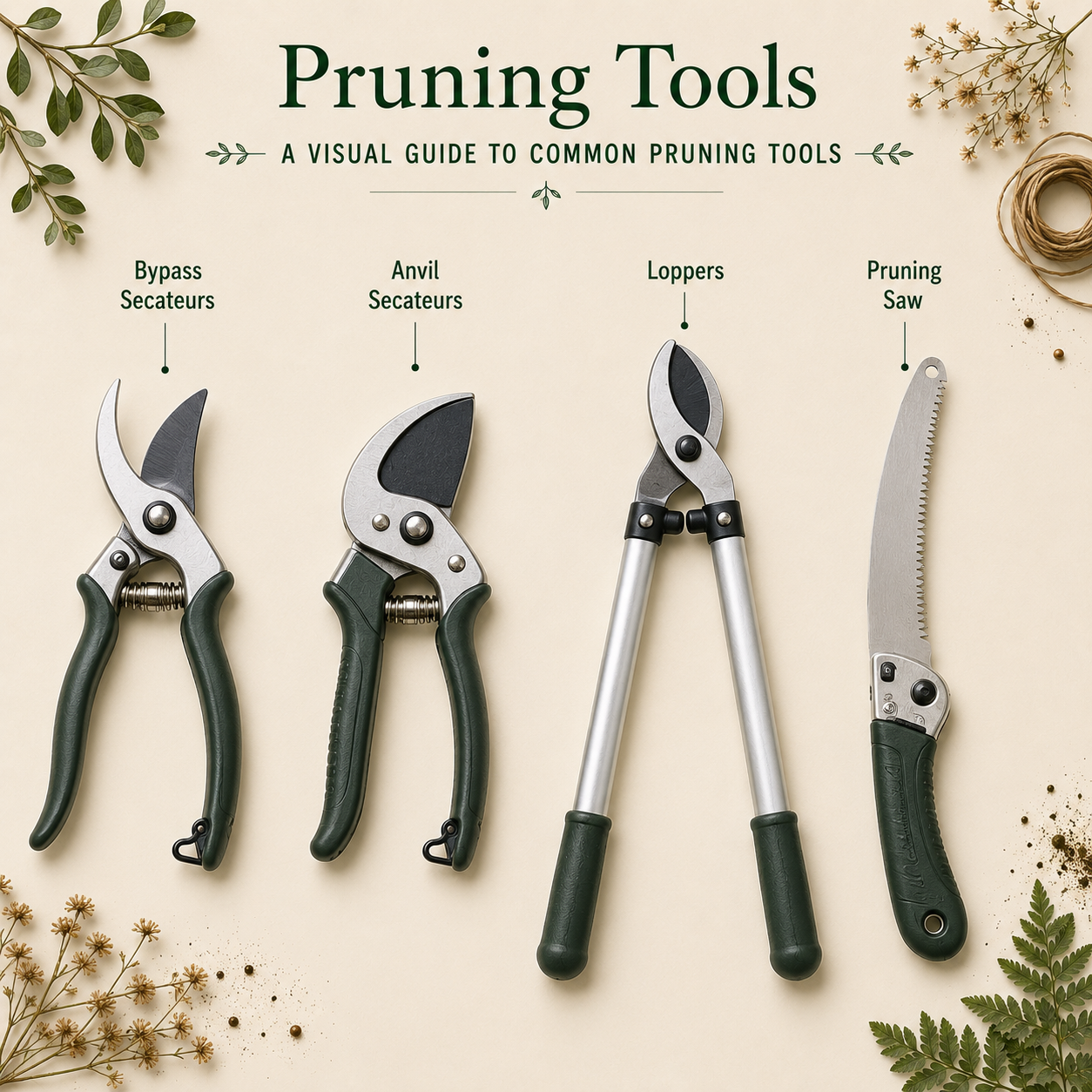
These work like scissors, producing clean cuts that heal quickly.
Ideal for:
These have one cutting blade that closes onto a flat surface.
They’re better suited to:
When branches become too thick for secateurs, loppers provide additional leverage.
Most comfortably cut branches up to around 3–5cm thick.
Ratchet loppers are particularly useful for gardeners with reduced grip strength, as the geared mechanism reduces the effort required.
Once branches exceed the capacity of loppers, a pruning saw becomes the safest and cleanest option.
Unlike ordinary saws, pruning saws are designed to cut efficiently through live wood while allowing you to reach into dense branches.
For formal hedges and topiary, hedge shears remain one of the best finishing tools.
Their long blades allow you to:
Although powered hedge trimmers are useful for larger hedges, hand shears often produce a cleaner finish on smaller hedges and ornamental shrubs.
Rakes are designed for two main jobs: preparing soil for planting and maintaining healthy lawns.
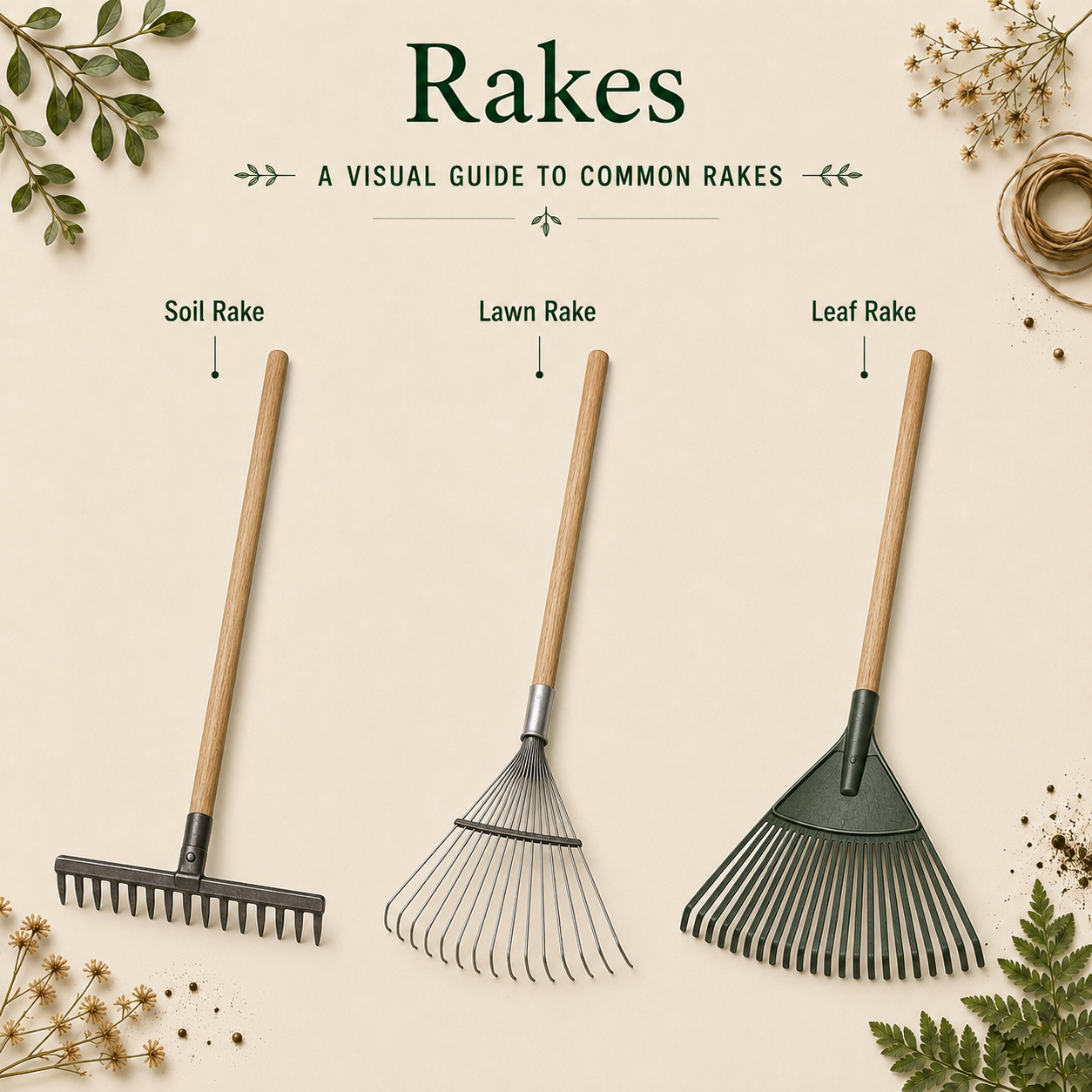
Use strong metal soil rakes for:
Choose the right type depending on the task:
Keeping your garden tools clean isn’t just about appearance. Soil can carry fungal diseases, bacteria and pests between different parts of the garden, while regular maintenance helps prevent rust and extends the life of your equipment.
After each use:
At least once a year, ideally during winter when gardening is quieter, give your tools a more thorough clean and inspection. Check for:
Sharpen cutting tools when needed and lightly oil moving parts such as secateurs and loppers to keep them operating smoothly. Wooden handles will also benefit from an occasional application of linseed oil to help prevent drying and splitting.
How you store your tools is just as important as how you use them. Proper storage helps prevent rust, accidental damage and unnecessary replacement costs.
Whenever possible:
Choosing the right garden tools is easier when you can compare them in person. Different handle lengths, weights and grip styles suit different gardeners, so it’s worth taking the time to find tools that feel comfortable and well balanced.
Visit us in Kington, where our knowledgeable team can help you choose quality garden tools and offer practical advice on keeping them working at their best for many years.