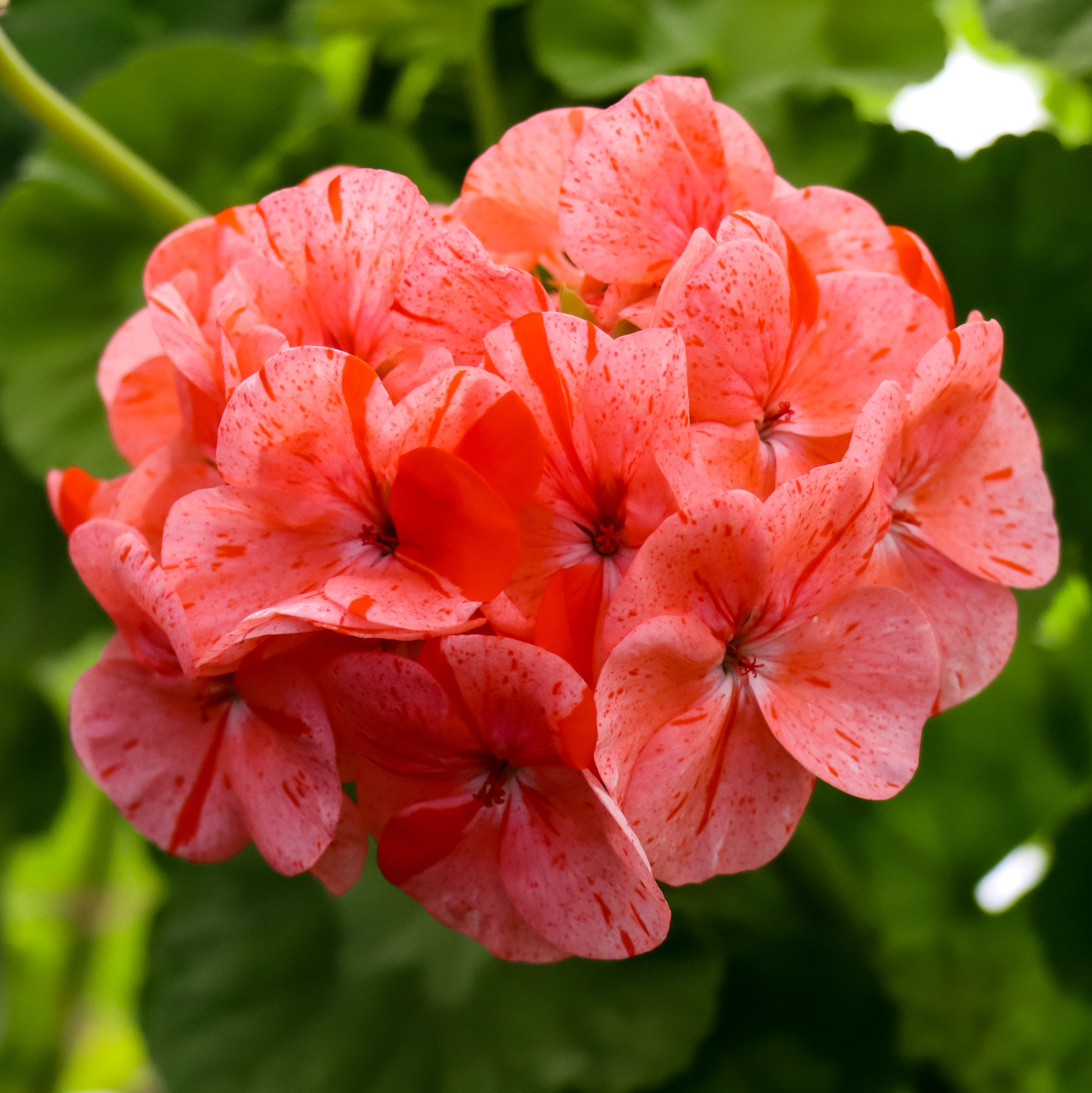
Pelargoniums are popular summer-flowering plants, valued for their colourful blooms, attractive foliage and long flowering season. They are particularly well suited to patio pots, window boxes, hanging baskets and sunny borders, bringing colour to gardens from late spring until autumn.
Often called geraniums, Pelargoniums are botanically different from the hardy perennial geraniums grown in garden borders. Most commonly sold varieties are tender plants that need protection from frost. There are several distinct types, including upright zonal Pelargoniums, trailing ivy-leaved varieties, large-flowered regal types and scented-leaved plants grown for their fragrant foliage.
When Does It Flower?
Most bedding Pelargoniums flower from late spring or early summer until the first autumn frosts, particularly when regularly deadheaded and fed. Flowers come in a wide range of colours, including attractive two-tone varieties:
🔴 Red
🩷 Pink
🟠 Orange and salmon
⚪ White
🟣 Purple and mauve
Flowering and growth habit vary between types. Zonal Pelargoniums produce rounded clusters of flowers above upright foliage, often with distinctive dark, horseshoe-shaped markings on their leaves. Ivy-leaved varieties trail gracefully over the edges of containers, while regal Pelargoniums have particularly showy flowers but often a shorter main flowering period.
How to Grow
Choosing the Right Position
Pelargoniums thrive in warmth and good light, although their requirements vary slightly.
Sunlight: Most prefer full sun, while some regal and scented-leaved varieties appreciate light shade during the hottest part of the day.
Soil: Use a free-draining compost for containers or well-drained soil in borders.
Shelter: Choose a position protected from strong winds and prolonged heavy rain, especially for large-flowered varieties.
Planting
Plant outdoors once the risk of frost has passed, usually during late May or early June in cooler parts of the UK.
For containers, use pots with drainage holes and a suitable peat-free multipurpose compost. Avoid overcrowding plants, allowing enough room for air circulation and growth.
Pelargoniums can also be planted directly into sunny borders, provided the soil drains freely. Heavy, waterlogged ground is unsuitable.
Caring for the Plant
Watering: Water thoroughly when the upper compost begins to dry, allowing excess water to drain away. Avoid leaving pots standing in water.
Feeding: Feed regularly with a high-potash liquid fertiliser during active flowering, following the manufacturer’s instructions.
Deadheading: Remove faded flower clusters, including their stalks, to keep plants tidy and encourage further flowering.
Maintenance: Remove yellowing or damaged leaves and check that crowded plants have adequate airflow.
Established plants tolerate short dry spells, but container-grown Pelargoniums need more frequent watering during hot weather.
Encouraging More Flowers
Regular deadheading is one of the simplest ways to keep Pelargoniums flowering throughout summer. Remove faded flower clusters by taking off the entire flower stalk rather than just the individual petals. This helps prevent seed formation and encourages the plant to produce new blooms.
Good light and consistent feeding are equally important. A high-potash liquid fertiliser supports flower production, while excessive nitrogen can encourage leafy growth at the expense of blooms.
During prolonged hot weather, check container-grown plants frequently. Allowing compost to become excessively dry can interrupt flowering, although constantly wet roots are equally undesirable.
Autumn and Winter Care
Most Pelargoniums are not reliably hardy in the UK and should be brought under cover before the first frost.
Plants worth keeping can be overwintered in a bright, cool, frost-free greenhouse, conservatory or windowsill. Reduce watering considerably as growth slows and stop regular feeding until spring. Avoid cold, damp compost, which can cause stems and roots to rot.
In spring, trim back leggy growth, gradually increase watering and repot if necessary. Acclimatise plants to outdoor conditions before returning them to the garden after the last frost.
Taking Cuttings
Pelargoniums are easily propagated from stem cuttings, making it possible to keep favourite varieties from year to year.
Take healthy, non-flowering shoots, usually around 7–10 cm long, during late summer or spring. Remove the lower leaves and insert the cuttings into a free-draining propagation compost.
Keep them in a bright position out of strong direct sunlight, with gentle warmth and lightly moist compost. Avoid excessive watering while roots develop.
Common Problems
Yellowing leaves: Often caused by overwatering, poor drainage or ageing foliage. Check compost moisture before watering again.
Grey mould: Faded flowers and damp, crowded foliage can encourage botrytis. Remove affected material and improve ventilation.
Aphids and whitefly: These may gather on young growth, particularly on plants kept under glass. Inspect regularly and deal with infestations promptly.
Why Grow Pelargonium?
Pelargoniums offer a versatile choice for summer containers, combining vivid flowers with attractive foliage and a range of upright, trailing and scented forms. With suitable care and winter protection, favourite plants can provide enjoyment for several seasons.
Visit us in Kington for inspiration and advice on choosing plants for your summer displays.
We use cookies to ensure that we give you the best experience on our website. If you continue to use this site we will assume that you are happy with it.