Growing Dahlias

Growing Dahlias: Simple Steps to Stunning Summer Flowers

Few flowers make a statement quite like dahlias. With their dazzling colours, extraordinary flower forms, and impressive flowering season, it’s easy to see why Growing Dahlias has become one of the UK’s most popular gardening trends.

From compact patio varieties to towering dinner-plate blooms, dahlias provide months of colour from midsummer right through to the first frosts. Whether you’re creating a vibrant border, filling containers, or growing flowers for cutting, dahlias reward gardeners with an unforgettable display.

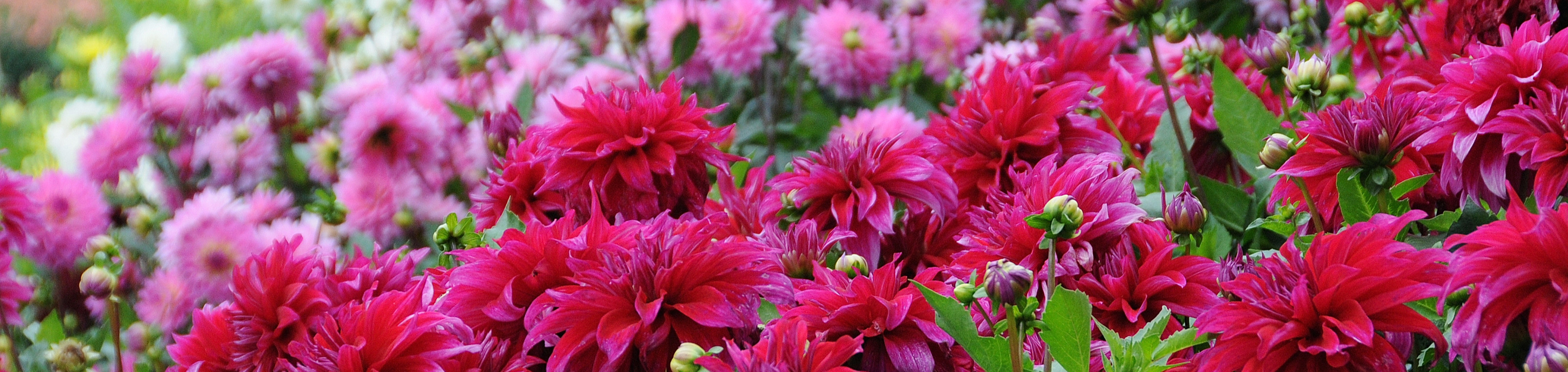
Dahlias flowering in shades of pink and deep red in a colourful summer garden display.

🌟 Why Dahlias Are One of the Best Summer Flowers

Dahlias have become increasingly popular with gardeners thanks to their incredible range of colours, shapes and sizes. From compact patio varieties to giant dinner-plate blooms, they provide months of colour from midsummer right through until the first frosts.

Benefits of growing dahlias include:

  • Flowering from July to October
  • Excellent cut flowers for indoor displays
  • Suitable for borders, beds and containers
  • Huge choice of colours and flower forms
  • Pollinator-friendly single varieties available
  • Ideal for beginner and experienced gardeners alike

👉 Expert Tip: The more flowers you cut and deadhead, the more blooms your dahlias will produce throughout the season.

🌿 Choosing the Right Dahlias for Your Garden

One of the greatest joys of Growing Dahlias is the incredible choice available.

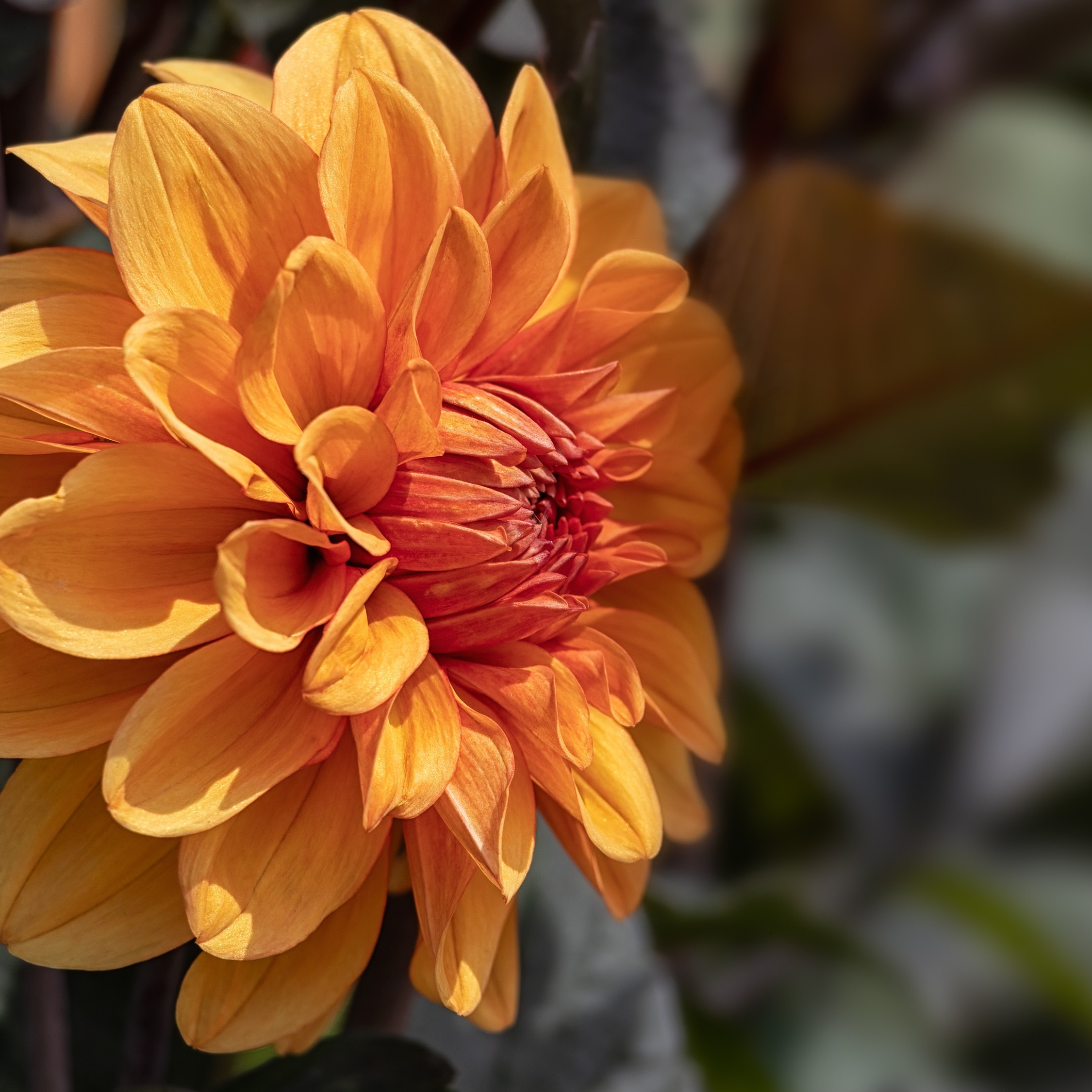
🌸 Decorative Dahlias

Large, fully double blooms perfect for borders and cutting gardens.

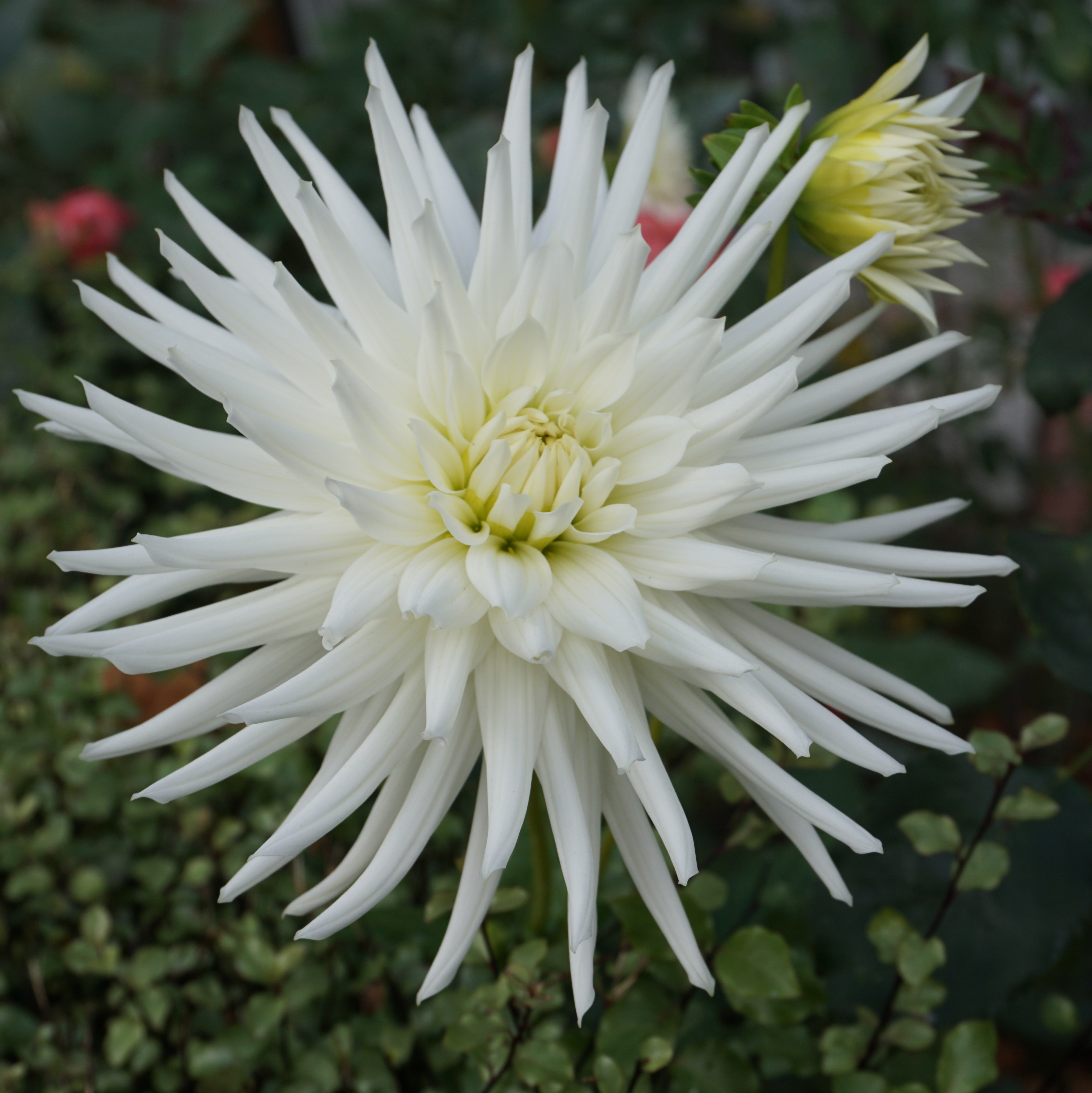
🌵 Cactus Dahlias

Distinctive spiky petals create dramatic architectural displays.

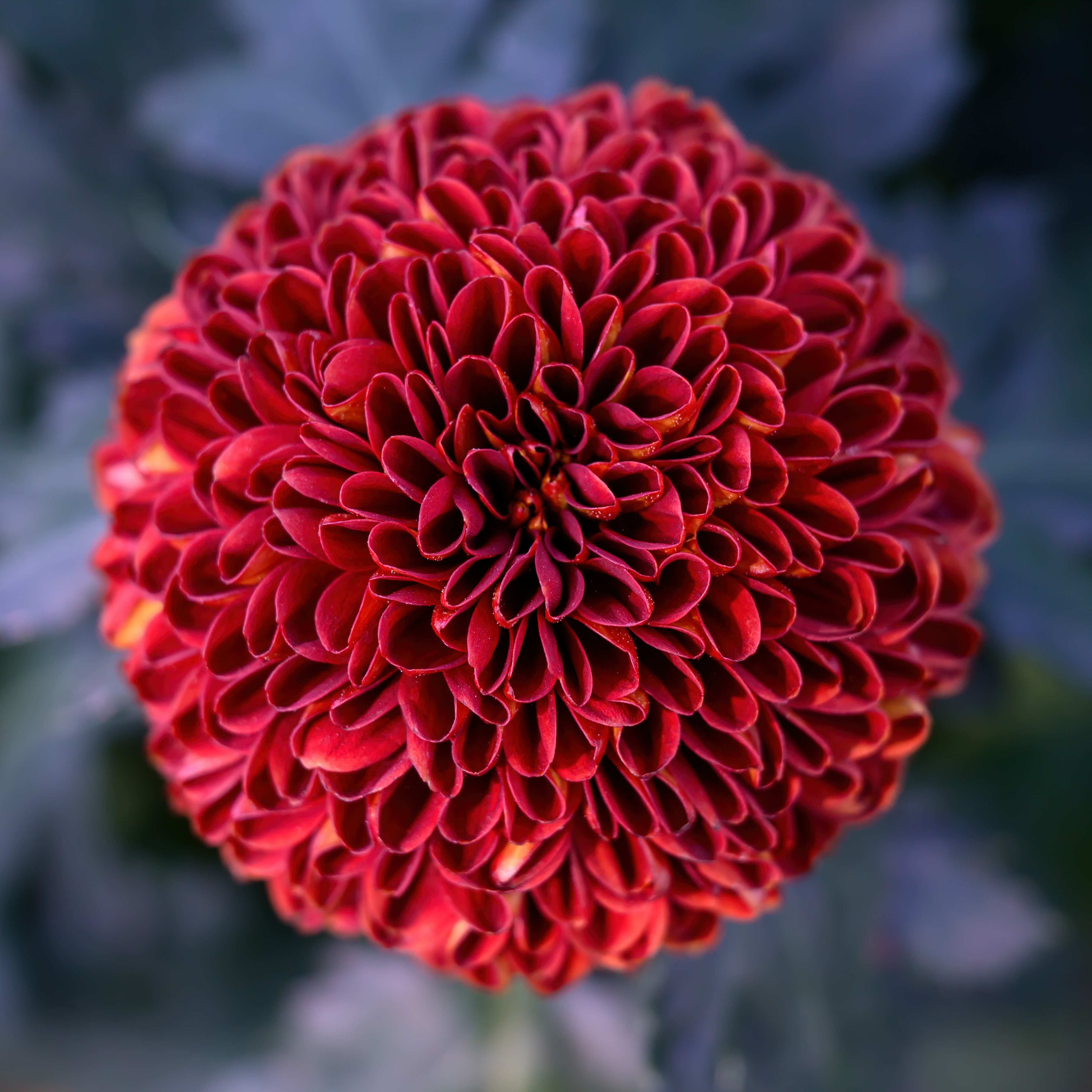
⚪ Pompom Dahlias

Perfectly rounded blooms that add structure and charm.

'David Howard' decorative dahlia with rich orange flowers, a popular cultivar in the Decorative Dahlia Group.
White cactus dahlia flower in bloom with long, spiky petals against a backdrop of green foliage.
Dark red pompon dahlia flower in full bloom with neatly arranged petals.
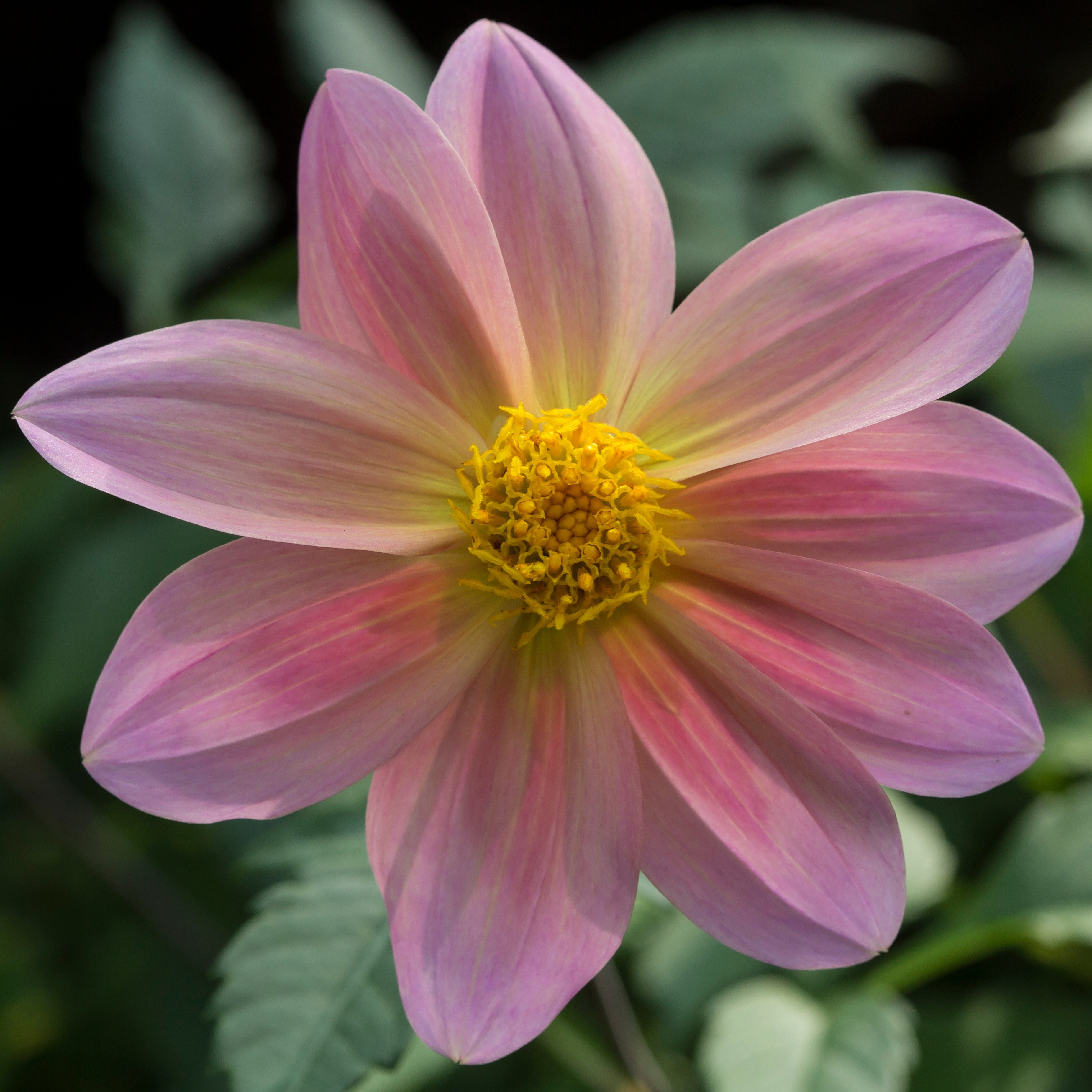
Single pink dahlia with an open yellow centre, illustrating the Single Dahlia Group.

🐝 Single Dahlias

Excellent for wildlife-friendly gardens and pollinators.

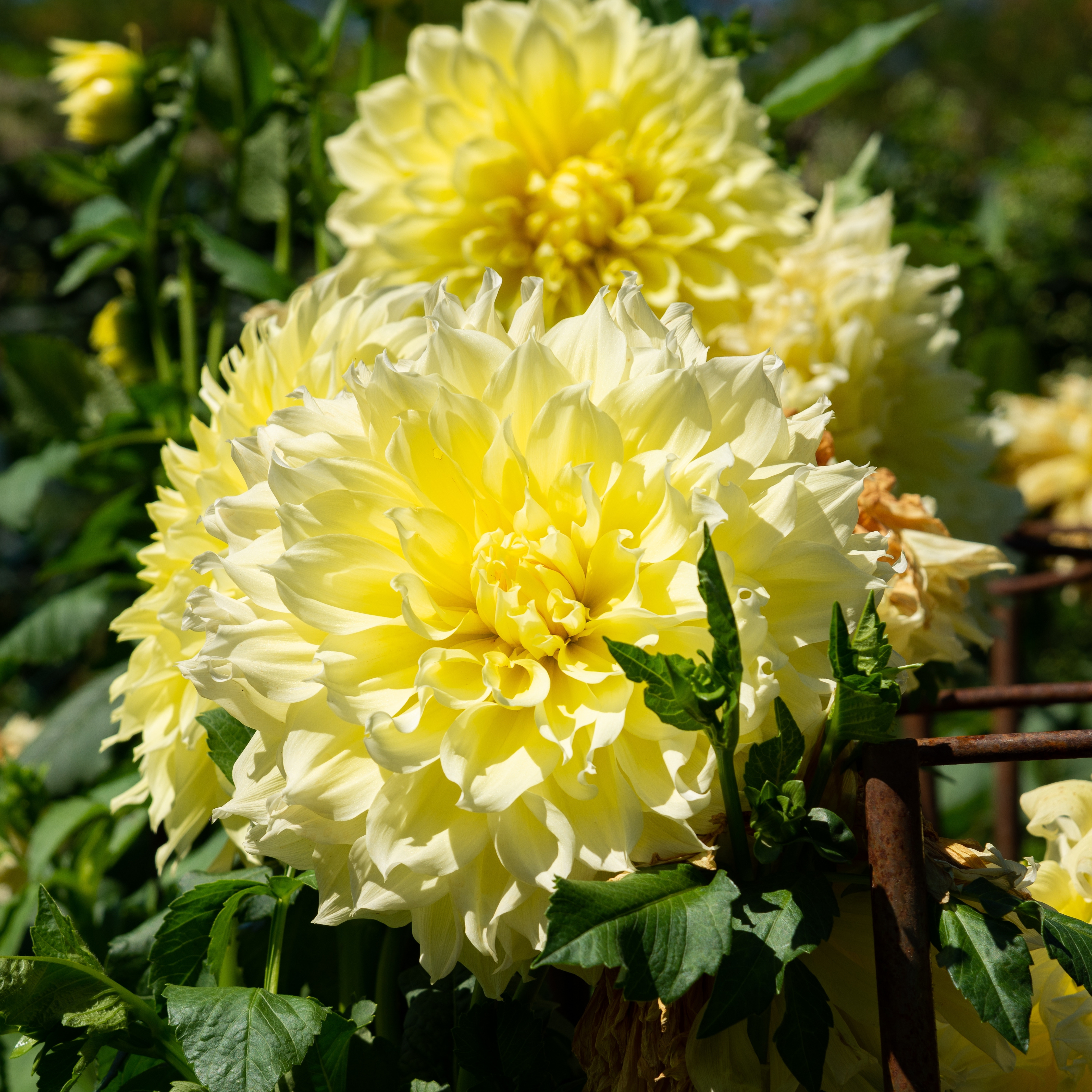
🍽️ Dinner Plate Dahlias

Huge blooms often reaching 20-30cm across.

'Kelvin Floodlight' decorative dahlia with enormous pale yellow blooms, often described as a dinner plate dahlia.

Popular varieties include:

  • ‘Mrs Eileen’ – Massive vibrant orange blooms
  • ‘Grand Prix’ – Stunning creamy-white flowers with golden centres
  • ‘Bishop of Llandaff’ – Deep red flowers with dark foliage
  • ‘Café au Lait’ – Soft blush tones popular for bouquets and wedding flowers

🪴 How to Grow Dahlias in Pots

Limited on space? No problem. Dahlias thrive in containers and are a fantastic choice for patios, balconies, courtyards, and smaller gardens. With the right pot and a sunny position, you can enjoy months of spectacular blooms without needing a large border.

Best Container Tips

Choose:

  • Containers at least 30-40cm wide
  • Quality multipurpose compost
  • Slow-release fertiliser
  • Good drainage holes

Smaller and dwarf varieties perform exceptionally well in containers and can flower continuously for months.

Top Dahlia Varieties for Containers

  • Gallery Series
  • Melody Series
  • Happy Days Series
  • Topmix Series

Regular watering is essential because container-grown dahlias dry out faster than those planted in borders.

If you have more space available, dahlias also perform brilliantly in beds and borders. Planting directly into the ground allows larger varieties to reach their full potential and produce spectacular displays.

🌱 Planting Dahlia Tubers for Success

For the earliest flowers, start tubers indoors in February or March. Alternatively, plant directly outdoors once the risk of frost has passed, usually from late April onwards. Dahlias are surprisingly forgiving and can still be planted successfully into June, making them an excellent choice for filling gaps in borders and containers later in the season.

Preparing Tubers

Before planting:

  • Soak shrivelled tubers in water for up to one hour to rehydrate them. Healthy, firm tubers do not usually need soaking.
  • If starting indoors, fill pots with quality multipurpose compost. For direct planting, prepare the soil by loosening it and incorporating some organic matter if needed.
  • Plant with the growing eye facing upwards.
  • Cover with approximately 10 cm (4 in) of compost or soil.

Keep the compost or soil lightly moist but never waterlogged, as overly wet conditions can cause tubers to rot before new growth appears.

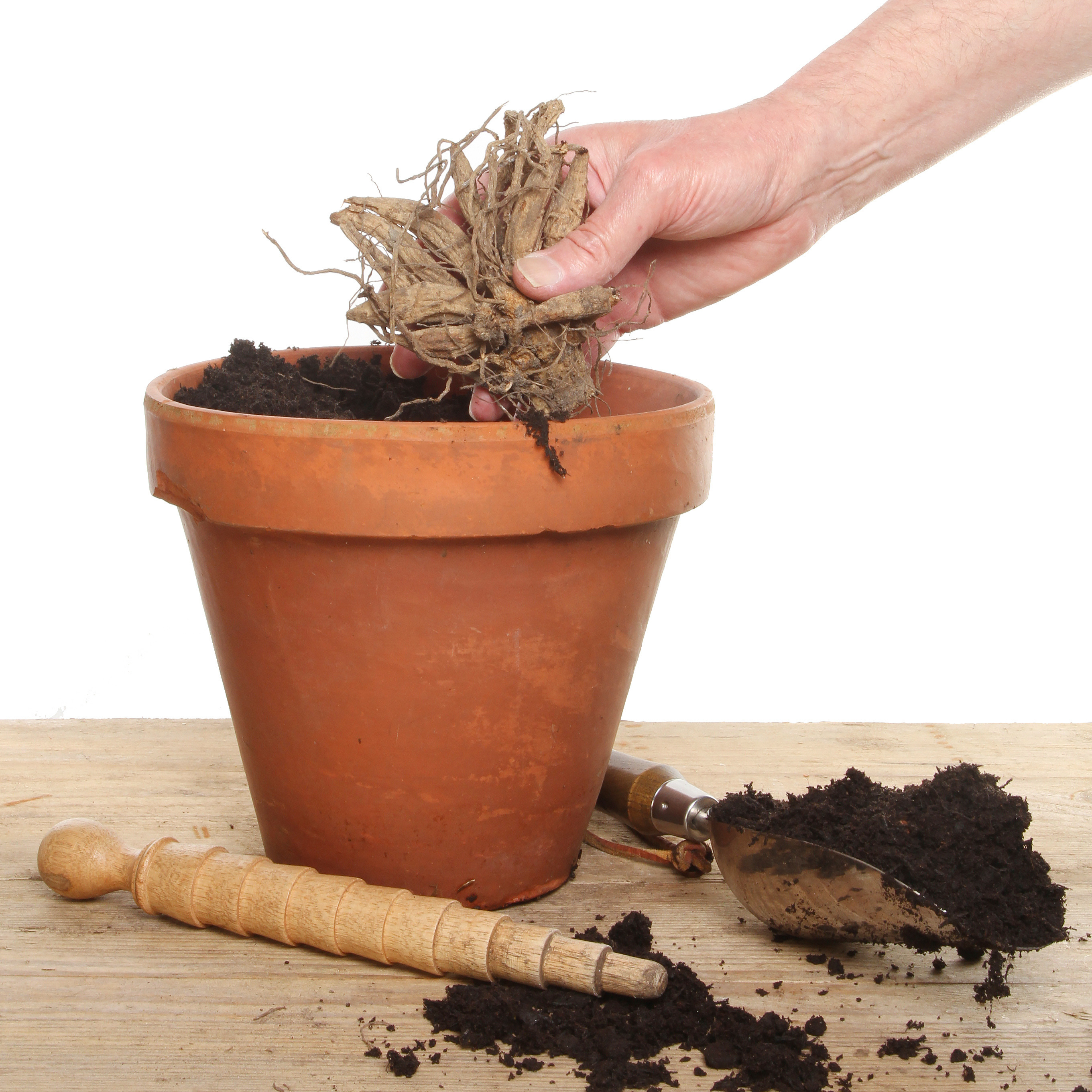
Dormant dahlia tuber ready for planting in a pot of compost

🌱 Planting Dahlia Tubers

Once the danger of frost has passed, dahlia tubers can be planted directly into borders and beds. Dahlias perform best in a sunny position with fertile, well-drained soil, where they can develop strong roots and produce an abundance of flowers throughout summer and autumn.

Choose a location with:

  • Full sun
  • Fertile soil rich in organic matter
  • Good drainage
  • Protection from strong winds

When planting dahlia tubers outdoors:

  • Plant tubers approximately 10cm (4in) deep
  • Space them 45-90cm apart depending on the mature size of the variety
  • Install sturdy stakes at planting time for taller varieties
  • Water thoroughly after planting to help settle the soil around the tubers

👉 Pro Tip: Always install supports before planting. Adding canes later can damage developing tubers and roots underground. As plants grow, tie stems loosely to the supports to prevent wind damage and keep flower-laden stems upright.

💧 Essential Dahlia Care Tips

Proper care ensures continuous flowering throughout summer and autumn.

Watering

Dahlias dislike sitting in water but require consistent moisture during active growth.

Water:

  • Deeply rather than little and often
  • More frequently during hot weather
  • Early morning whenever possible

Feeding

For the best blooms:

  • Apply a balanced liquid feed every two weeks during growth
  • Switch to a high-potassium feed once flowering begins

Pinching Out

When plants reach around 40cm tall:

  • Remove weaker shoots
  • Keep the strongest 4-5 stems
  • Pinch out growing tips

This encourages bushier growth and significantly more flowers.

Deadheading

Remove faded flowers regularly to keep plants producing fresh blooms right until autumn.

🐌 Protecting Dahlias from Pests

Slugs and snails can be particularly troublesome when young shoots emerge.

To protect your plants:

  • Use wildlife-friendly slug control methods
  • Check plants regularly at dusk
  • Remove hiding places around plants
  • Encourage natural predators such as birds and hedgehogs

Other occasional pests include aphids and earwigs, which can usually be managed through regular monitoring.

👉 Expert Tip: Newly emerging dahlia shoots are particularly attractive to slugs and snails, so check plants regularly during the first few weeks of growth. Don’t panic if you spot a few chewed leaves though. Established dahlias are surprisingly resilient and can quickly outgrow minor pest damage once vigorous growth gets underway.

Dahlias are among the most productive cut flowers available.

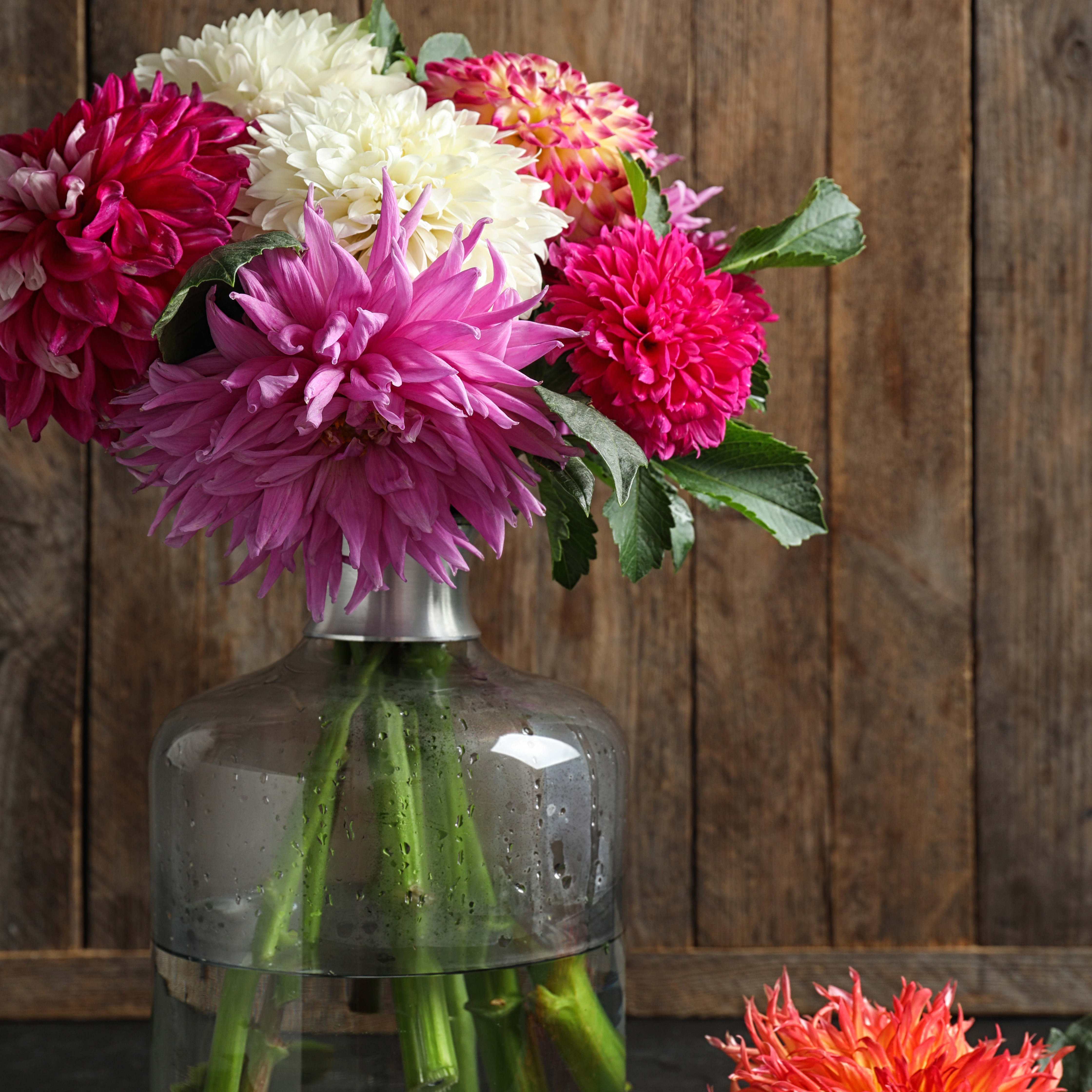
Colourful arrangement of cut dahlias

Benefits include:

  • Long flowering season
  • Huge range of colours
  • Excellent vase life
  • Continuous bloom production

For best results:

  • Cut flowers early in the morning
  • Use sharp, clean secateurs
  • Place stems immediately into water
  • Harvest regularly to encourage more blooms

Many growers dedicate entire borders to dahlias for cutting throughout summer.

❄️ Overwintering Dahlia Tubers

Because dahlias are not fully frost hardy, gardeners often debate whether to lift or leave tubers over winter.

Option 1: Lift and Store

After the first frost:

  • Cut stems back to around 10-15cm above the tubers.
  • Carefully lift the tubers using a garden fork, taking care not to damage them.
  • Remove excess soil and inspect tubers for signs of rot or damage.
  • Allow the tubers to dry for one to two weeks in a frost-free location.
  • Store in boxes filled with slightly damp sand, compost, or vermiculite in a cool, dry, frost-free place.

Lifting tubers also allows you to divide mature clumps and create more plants for the following season.

Option 2: Leave in the Ground

In milder areas, tubers can sometimes survive winter outdoors if protected properly:

  • Apply a thick layer of mulch around the crown.
  • Improve drainage before winter if your soil tends to stay wet.
  • Avoid planting in areas prone to waterlogging.
  • Protect crowns from prolonged wet conditions and severe frosts.
  • Mark the planting location so new shoots are not accidentally damaged in spring.

Leaving tubers in the ground can save time and effort, but success often depends on local weather conditions and good soil drainage.

🌻 Why Dahlias Deserve a Place in Every Garden

If you’re planning a colourful summer display, dahlias pair beautifully with many other summer-flowering bulbs and tubers to create months of continuous colour.

With the right care, regular feeding, and plenty of sunshine, dahlias will reward you with months of breathtaking colour from summer until the first frosts. Their versatility, beauty, and reliability make them one of the most rewarding plants you can grow.

🌿 Visit Our Garden Centre

Ready to start Growing Dahlias in your own garden?

Our garden centre stocks a fantastic range of quality dahlia tubers, flowering plants, composts, fertilisers, and gardening essentials to help you achieve spectacular results. Our team is always happy to offer expert advice on choosing varieties, planting, and ongoing care.

👉 Visit us in Kington today and discover our beautiful range of dahlias, perfect for adding months of colour, pollinator appeal, and stunning blooms to your garden.