
Open today 9:00 - 17:00
A wildflower meadow can bring colour, movement and a more natural character to almost any garden. It doesn’t need to cover a large area either. A sunny patch of unused ground, part of a lawn or an informal section of a border can all provide enough space to create an attractive display.
Wildflowers also provide valuable pollen and nectar for bees, butterflies and other insects, while seeds and longer vegetation can provide food and shelter for other garden wildlife.
Creating a wildflower meadow doesn’t need to be complicated. Choose a seed mix suited to your garden, prepare the ground well and give the flowers time to establish. Once they are growing, much of the pleasure comes from allowing the display to develop naturally from year to year.

Wildflower seed mixes can contain annual flowers, perennial species or a combination of both. All three can create a beautiful display, but understanding what you are sowing will help you know what to expect in the first season and in the years that follow.
Annual wildflowers complete their entire life cycle in one growing season. Sown in spring, they can provide colour within a few months, making them a good choice when you want relatively quick results.
Cornfield-style mixes often contain familiar flowers such as field poppies, cornflowers, corn marigolds and corncockles. Once flowering has finished, allow the plants to set and shed seed before cutting the area back.
Many annual wildflowers will self-seed when conditions suit them. However, because their seedlings need open ground in which to establish, the display can change from year to year as other plants become more dominant.
Perennial wildflowers establish plants that survive from year to year. Depending on the mix, these might include ox-eye daisies, knapweed, red campion and field scabious, sometimes growing alongside meadow grasses.
They usually take longer to establish than annuals, so don’t expect the full effect during the first summer. Once settled in, however, the plants can return and flower for many years.
Mixed seed mixtures combine annuals and perennials, giving you the advantages of both. Fast-growing annuals can provide plenty of first-year colour while the perennial plants establish more gradually among them.
At the end of the flowering season, allow the plants time to set and shed seed before cutting the area back. The perennial plants can then return from their established roots the following year, while annuals may reappear from seed.
Don’t be surprised if a mixed meadow looks different each year. Some plants will thrive in your particular soil and conditions while others may gradually disappear, and the balance between annuals and perennials can change as the meadow matures.
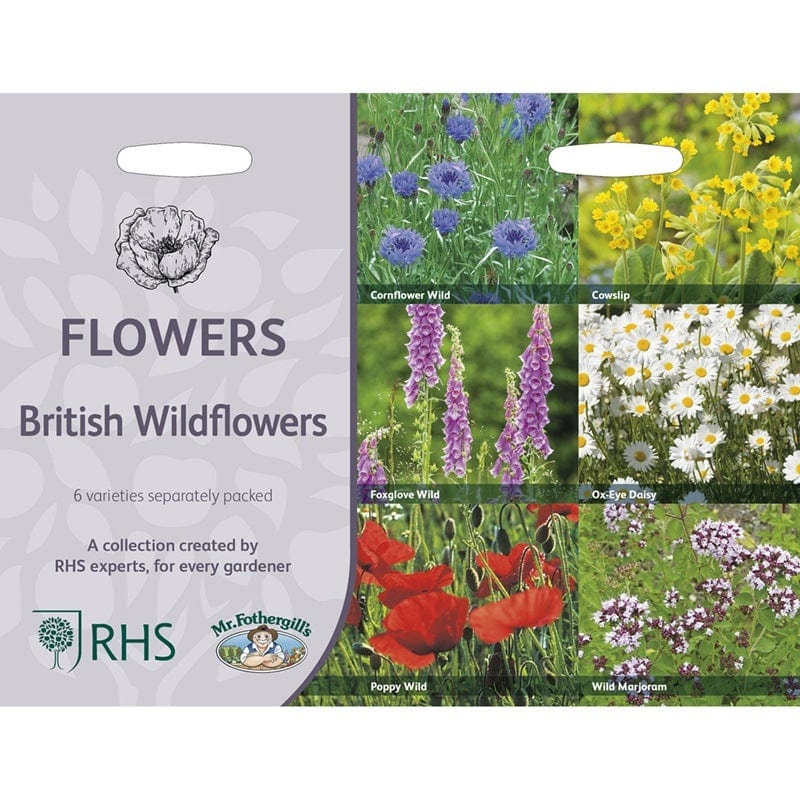
👉 Expert Tip: Whichever type you choose, check that the seed mix suits your soil, aspect and available space. With a mixed meadow, don’t worry about maintaining exactly the same combination of flowers every year – part of its character is allowing the display to develop naturally over time.
Most meadow wildflowers perform best in an open, sunny position, although there are mixes suitable for light shade. Rather than trying to alter your garden substantially to suit a particular seed mix, choose one suited to the conditions you already have.
When choosing where to sow, consider:
There is generally no need to add fertiliser or rich compost before sowing. Encouraging lush growth can increase competition and work against the wildflowers you are trying to establish.
Good ground preparation gives wildflower seeds the best opportunity to germinate without immediately competing with established plants.
Simply scattering seed over a dense, established lawn is unlikely to produce a successful meadow because the existing turf competes for light, water and growing space.
For a new wildflower meadow or patch, start with open, weed-free ground. Remove existing grass and weeds, paying particular attention to troublesome perennial weeds such as docks, nettles and thistles.
Fork over compacted soil if necessary, then firm and rake the surface to create a level, fine-textured seedbed.
There is no need to add fertiliser or rich compost before sowing. Encouraging lush growth can increase competition and may work against the wildflowers you are trying to establish.
👉 Expert Tip: Take your time removing weeds before sowing. It is much easier to deal with them while the ground is bare than to distinguish unwanted seedlings from young wildflowers later.
Wildflower seed can generally be sown in spring or early autumn, although the best time will depend on the mixture and conditions in your garden. Always check the instructions supplied with your chosen seed.
Measure the area first so you know how much seed you need. More seed does not necessarily produce a better meadow – sowing too thickly simply creates more competition between the emerging plants.
For an even distribution:
Wildflower seeds are generally sown close to the surface, so avoid burying them deeply unless the instructions for your particular mixture advise otherwise.
Birds may take some freshly sown seed. If this becomes a problem on a small patch, temporary netting or other suitable bird protection can help while the seeds begin to germinate.
👉 Expert Tip: Keep the seed packet after sowing. Apart from providing useful growing instructions, it gives you a record of the species included in the mixture, making it much easier to identify the seedlings and flowers that appear.
Once established, a garden wildflower meadow needs relatively little day-to-day attention. Keep an eye on newly sown areas during prolonged dry spells and remove obvious weeds that could compete with young plants.
As the flowers begin to fade, resist the temptation to tidy everything immediately. Allowing plants to flower fully and set seed gives annuals an opportunity to self-seed and helps maintain the natural cycle of the meadow.
At the end of the flowering season, cut the area back. Leave the cut material on the ground for a few days so ripe seeds have an opportunity to fall, then rake it away. Removing the cuttings rather than leaving them to decompose also helps prevent the soil gradually becoming richer.
Perennial wildflowers can then regrow from their established roots, while some annuals will return from self-sown seed. You can also sow additional annual seed in spring if you want to boost the display.
Over time, you may find that some flowers become more successful than others. This is perfectly normal. Soil, moisture, sunlight and competition all influence which species thrive, so a wildflower meadow will often evolve rather than looking identical every summer.
If grasses become particularly vigorous in a perennial meadow, regular cutting and removing the clippings can help keep their growth in check. Yellow rattle can also be useful in grassy perennial meadows because it weakens the surrounding grasses, giving wildflowers more room to grow, but it isn’t necessary for every garden wildflower patch.
A few gaps and variations are perfectly normal, particularly during the first season. If something doesn’t look right, these are some of the most common causes:
Wildflower areas naturally change as they mature, so don’t expect every species in the original seed mix to appear in equal numbers every year.
Creating a wildflower meadow is largely about working with the conditions in your garden rather than trying to control every plant that appears. Choose an appropriate seed mix, prepare the ground carefully and then give the flowers time to establish, flower and set seed.
Visit us in Kington. Our knowledgeable team can help you decide which wildflower seeds to choose and advise you on creating a colourful wildflower meadow, whatever the size of your available space.