
Open today 9:00 - 17:00
Bare-root hedging is a practical and economical way to establish a new hedge, particularly along a long boundary or when creating a mixed native hedge. The plants are supplied without containers or compost around their roots and are planted while dormant, ready to establish as growth resumes in spring.
Good preparation makes a significant difference. Protecting the exposed roots, preparing the planting area properly and providing adequate water during establishment will help young plants develop into a strong, healthy hedge.
Bare-root hedge plants are grown in the ground and lifted while dormant, with little or no soil remaining around their roots. They are generally available from late autumn into early spring rather than throughout the year.
Without pots and compost, bare-root plants are lighter and usually less expensive than comparable container-grown stock. They may initially look little more than stems and roots, but this is entirely normal for dormant plants.
Bare-root hedging is particularly useful for:
🌿 Planting long stretches of hedge economically
🌱 Establishing mixed native hedges
🐝 Creating wildlife-friendly boundaries
🌳 Providing natural screening and structure
If you’re new to buying plants this way, our guide to bare-root plants explains how they are supplied, when they are available and what to expect when they arrive.
Bare-root hedging is planted during the dormant season, generally from late autumn through winter and into early spring. The exact planting window varies according to the species and weather conditions.
Plant when the soil is workable and avoid periods when the ground is:
Planting during dormancy allows the plants to begin establishing their roots before they need to support a full canopy of leaves and active top growth.
👉 Expert Tip: Prepare the hedge line before collecting or receiving your plants. This reduces the amount of time the exposed roots need to be stored before planting.
The right plants depend on the conditions in your garden and what you want the finished hedge to provide.
Before choosing, consider:
Traditional deciduous hedging plants include hawthorn, blackthorn, hazel, field maple, beech and hornbeam. A single species can create a more uniform hedge, while a mixed hedge gives you the opportunity to combine different characteristics.
For a more natural or wildlife-friendly boundary, a mixture of native species can provide flowers, fruit and varied foliage through the seasons, while a mature, dense hedge offers valuable shelter and potential nesting habitat.
Plant size is another consideration. Young hedging plants, often known as whips, are economical and can establish well, making them particularly useful for longer stretches of hedging. Larger plants provide more height initially but cost more and may need greater attention while establishing.
The roots are the most vulnerable part of a bare-root plant. Once lifted from the nursery field, they must not be allowed to dry out.
When your plants arrive:
If planting has to be delayed for longer, the plants can be temporarily heeled in. Dig a shallow trench, place the roots into it and cover them thoroughly with soil until permanent planting can take place.
If the roots appear dry before planting, they can be stood in water briefly to rehydrate them. Avoid leaving them submerged for unnecessarily long periods.
👉 Expert Tip: Don’t lay all your bare-root plants along the hedge line before you start. Keep the bundle protected and remove individual plants only as you are ready to put them into the ground.
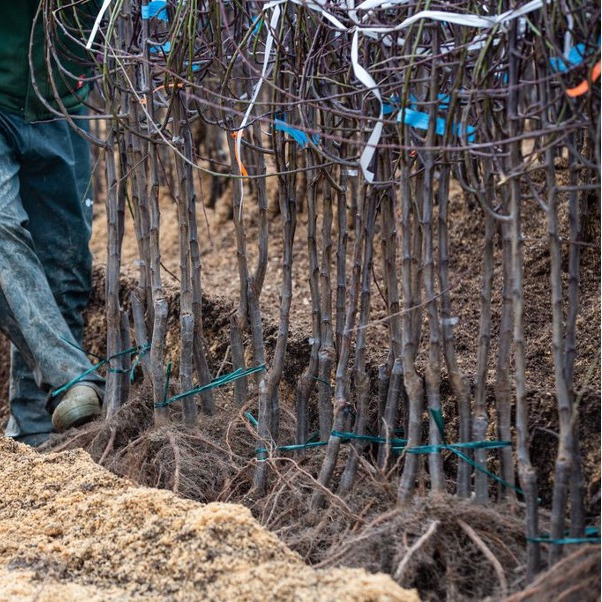
Good soil preparation helps young roots establish and reduces competition for moisture and nutrients.
Before planting:
Avoid creating a narrow pocket of heavily enriched soil around each plant. The roots need to grow out into the surrounding ground as the hedge establishes.
A mulch can be applied after planting to help conserve moisture and suppress weed growth.
For most garden hedges, the actual planting process is straightforward once the ground has been prepared.
Spacing depends on the species, size of the plants and the type of hedge you want to create.
As a broad guide:
Always check the recommended spacing for the particular species and size of plants you are using.
👉 Expert Tip: Planting excessively close together doesn’t necessarily produce a better hedge. Appropriate spacing gives the plants room to establish without unnecessary competition for water and nutrients.
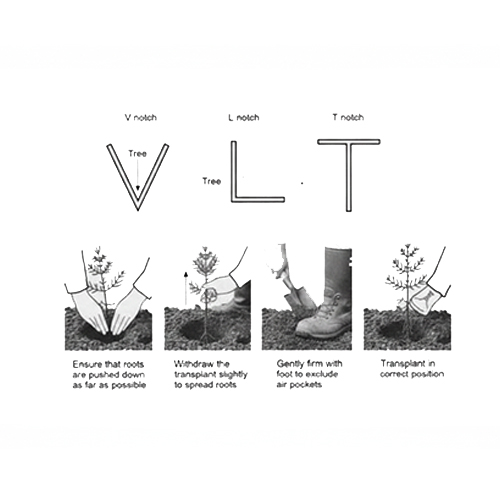
Slit planting, also known as notch planting, is a quick method often used for small bare-root whips and larger hedge-planting projects.
A spade is used to create a narrow slit or notch in prepared soil. The roots are inserted carefully before the soil is closed and firmed around them.
Slit planting can be useful when planting large numbers of small plants, but larger root systems need enough room for their roots to spread naturally rather than being bent or compressed into a narrow opening.
A newly planted hedge has a relatively small root system and needs some attention while those roots grow into the surrounding soil.
During the establishment period:
Watering is particularly important during dry periods in the first couple of growing seasons. Even winter-planted hedging can need additional water once spring and summer growth begins.
Initial pruning depends on the species planted. Some deciduous hedging plants benefit from pruning after planting to encourage branching near the base, helping the hedge develop dense growth from low down.
Evergreens and other species can require different treatment, so avoid applying the same pruning method to every new hedge.
As the hedge develops, appropriate formative pruning can encourage the plants to branch and gradually knit together into a continuous boundary.
Young hedge plants can be vulnerable to browsing and damage, particularly in rural gardens.
Protection may be useful where there is a risk from:
Spiral guards or other suitable hedge and tree protection can be fitted where necessary. Check guards periodically as the plants grow and adjust or remove them when they are no longer required.
👉 Expert Tip: Check a newly planted hedge periodically during its first winter. Frost heave, strong winds or animal activity can loosen plants before their roots have established. Firm any plants that have moved back into the soil.
Once the hedge begins active growth, the priorities are straightforward: provide water when needed, control competing weeds and prune appropriately for the species.
During the first few years:
As the root systems mature, the hedge will become increasingly self-sufficient. Continued pruning and occasional maintenance can then be tailored to the type of hedge, the space available and the role it plays within the garden.
Bare-root hedging provides an economical way to establish a new boundary, mixed native hedge or wildlife-friendly planting scheme. Careful handling and planting followed by good early maintenance will give young plants the best opportunity to establish successfully.
 Visit us in Kington to browse our seasonal garden range. If you would like advice on choosing suitable hedging plants, planting distances or preparing your site for a new hedge, our team will be happy to help.