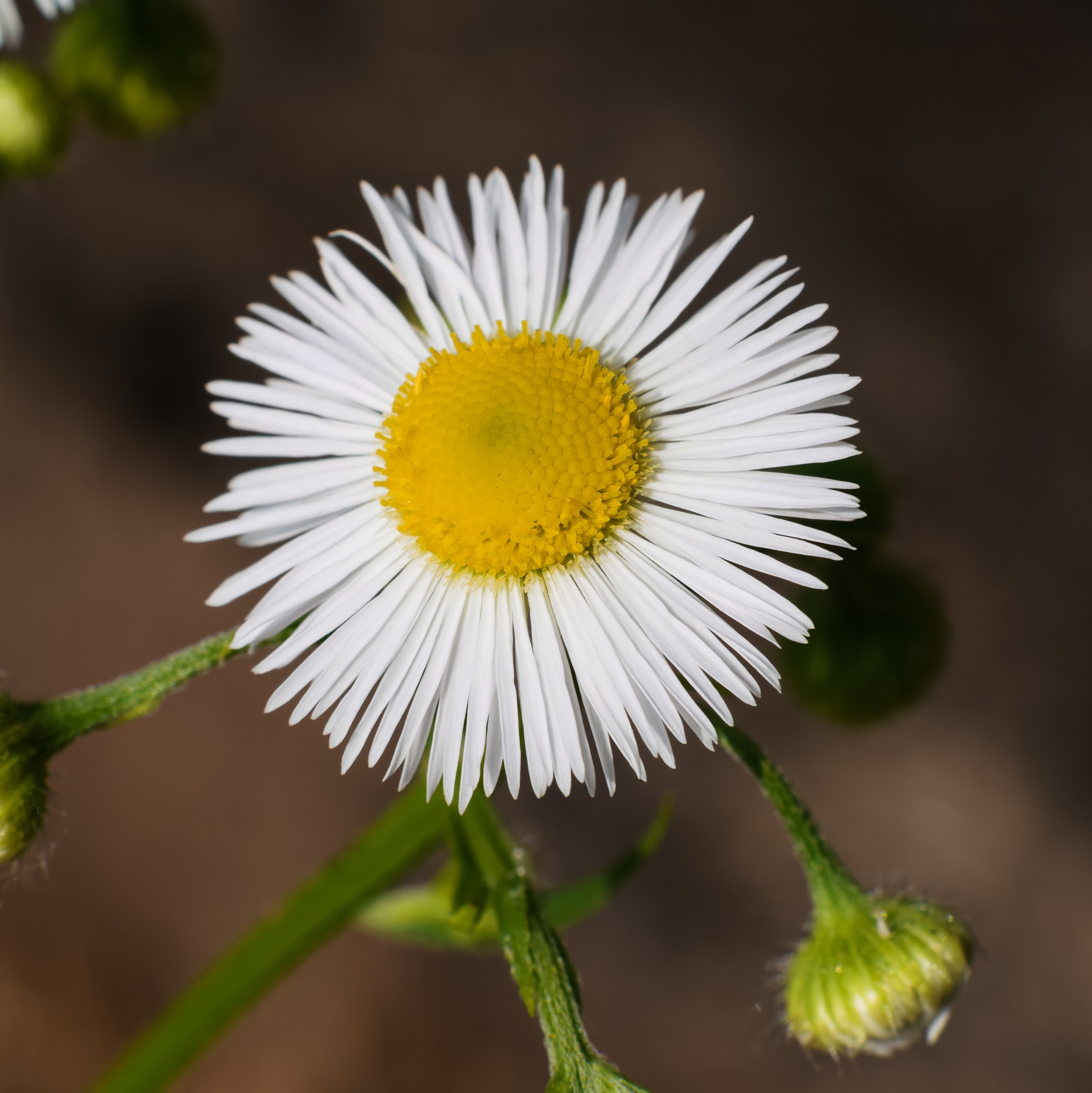
Fleabane, botanically known as Erigeron, is a group of daisy-flowered plants valued for their relaxed, natural appearance and long flowering season. Their delicate flowers, often with fine, narrow petals surrounding a golden centre, bring colour and softness to borders, rock gardens, gravel planting and containers.
One of the best-known species is Erigeron karvinskianus, sometimes called Mexican fleabane or Santa Barbara daisy. It produces masses of small flowers that open white and gradually develop pink tones, creating a lovely mixture of colours on the same plant. Other varieties form more compact clumps, with larger flowers in shades of lavender, violet, pink and white.
When Does It Flower?
Flowering times vary according to the species. Many clump-forming fleabanes flower mainly during summer, while Mexican fleabane has a particularly long season, often flowering from late spring or early summer into autumn, until the first frosts.
Its small, yellow-centred daisies are carried on slender, branching stems above fine green foliage. Plants generally reach around 15–30cm tall and can spread considerably wider, softening the edges of paths, walls and containers.
Clump-forming varieties, including Erigeron speciosus and its cultivars, tend to produce larger flowers, usually from summer onwards. These are better suited to traditional perennial borders, where their upright stems and colourful daisies combine well with other flowering plants.
How to Grow
Choosing the Right Position
Fleabane is generally easy to grow when matched to the right conditions, although requirements vary between species.
Sunlight: Most prefer full sun, although Mexican fleabane will tolerate some light shade.
Soil: Well-drained soil is important, particularly during wet winters.
Position: Low-growing varieties suit wall crevices, steps, gravel gardens and container edges. Taller, clump-forming varieties are attractive towards the front or middle of a sunny border.
Planting
Spring is the best time to plant, allowing roots to establish before winter.
Dig a hole slightly wider than the root ball, position the plant at its original growing depth, then firm the soil gently and water thoroughly.
For containers, use peat-free multipurpose compost mixed with horticultural grit to improve drainage. Ensure pots have adequate drainage holes.
Caring for the Plant
Water regularly while newly planted. Once established, many fleabanes tolerate dry conditions, although container-grown plants need more attention during warm weather.
Mexican fleabane rarely needs feeding in garden soil. Taller, clump-forming varieties generally appreciate moderately fertile soil, but excessive feeding can encourage soft, leafy growth.
Encouraging More Flowers
Removing faded flowers can help keep clump-forming varieties tidy and encourage further flowering. Taller varieties may also benefit from a light cutback after their first flush of blooms.
Mexican fleabane usually flowers freely without regular deadheading. If growth becomes straggly during summer, a light trim can encourage fresh, compact growth.
After Flowering
Once flowering has finished, clump-forming perennial fleabanes can be left standing through autumn and winter, then cut back in early spring before new growth begins.
Mexican fleabane behaves differently. In mild areas it may remain partly evergreen, while colder weather can cause considerable dieback. Remove damaged or untidy growth in spring, cutting back to healthy new shoots.
Autumn and Winter Care
Mexican fleabane is less reliably hardy in cold or exposed gardens, particularly where winter soil remains wet. A sheltered position and excellent drainage improve its chances of surviving.
Container-grown plants can be moved against a sheltered wall during prolonged cold or wet weather. Many clump-forming perennial varieties are more reliably hardy and generally need little winter protection in well-drained soil.
Dividing and Propagation
Many fleabanes can be grown from seed, while established clump-forming perennials can be divided in spring.
Lift the clump carefully, separate it into smaller sections with healthy roots and shoots, then replant promptly and water well.
Mexican fleabane also self-seeds readily, sometimes appearing between paving stones or in wall crevices. These seedlings can be left to establish naturally or moved while young. Remove unwanted seedlings if you prefer to control their spread.
Named cultivars are generally best propagated by division or cuttings to preserve their particular characteristics.
Common Problems
Fleabane is generally trouble-free, but a few growing conditions can affect its performance.
Poor flowering: Too much shade or overly rich soil can reduce flowering. A sunnier position usually gives better results.
Untidy growth: Trim straggly Mexican fleabane in spring. Divide older, congested clump-forming varieties to maintain healthy growth.
Wildlife Benefits
The open, daisy-like flowers provide accessible nectar and pollen for visiting insects, including bees and hoverflies. Long-flowering varieties are particularly useful for extending the availability of flowers through summer and into autumn.
Why Grow Fleabane (Erigeron)?
Fleabane brings a light, informal character to the garden, combining delicate flowers with a long season of interest. Whether spilling over a sunny wall, softening a gravel path or adding colour to a perennial border, there is a variety to suit many different planting styles.
For advice on choosing plants for your garden, visit us in Kington, where we are always happy to help you find suitable varieties.
We use cookies to ensure that we give you the best experience on our website. If you continue to use this site we will assume that you are happy with it.