
Open today 9:00 - 17:00
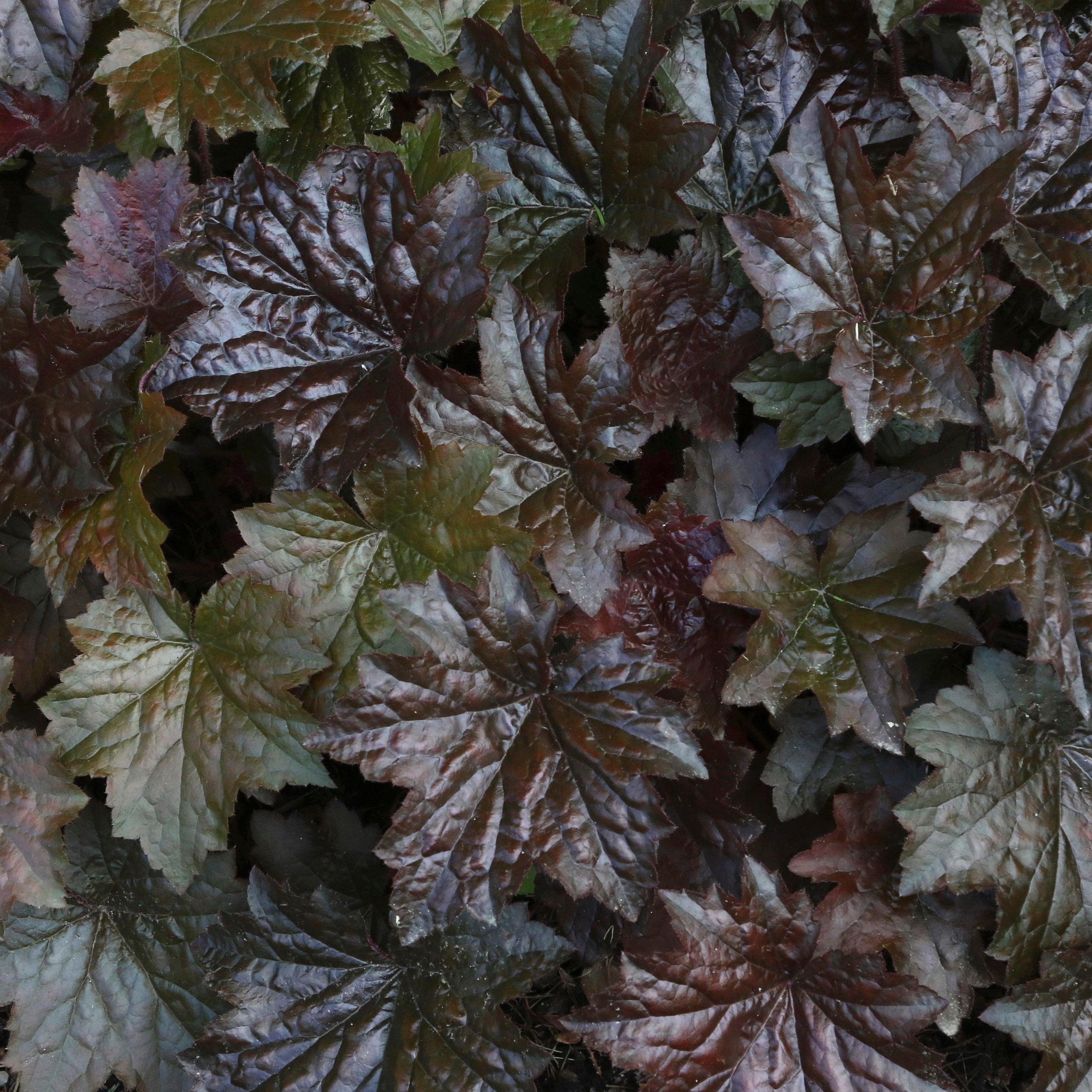
Heucheras (Heuchera), commonly known as coral bells, are hardy perennial plants grown primarily for their colourful, decorative foliage. Their rounded, often ruffled leaves come in an impressive range of shades, from deep purple and burgundy to lime green, copper, peach and silver.
Most varieties form neat, compact clumps around 20–30cm tall, with delicate flower stems rising above the foliage in summer. Particularly useful for shaded borders, containers and garden edging, heucheras provide colour and texture throughout much of the year, with many varieties remaining evergreen.

The foliage is the main attraction, offering a wonderful choice of colours and patterns:
💜 Purple and burgundy: Rich, dark shades, sometimes almost black.
💚 Lime and green: Fresh, bright foliage that lifts shaded areas.
🧡 Copper and peach: Warm tones ranging from amber to burnt orange.
🩷 Pink and rose: Soft pink through to deeper reddish shades.
🩶 Silver and pewter: Subtle metallic tones, often with contrasting veins.
Many varieties have attractively marbled leaves, prominent veining or gently scalloped edges. Some also change colour as the seasons progress.
From early summer, slender stems carry sprays of tiny, bell-shaped flowers, usually in shades of white, cream, pink or red. Flowering can continue intermittently into autumn, depending on the variety and growing conditions.
Most heucheras thrive in partial or dappled shade, where their colourful foliage is protected from strong midday sunshine.
Darker-leaved varieties often tolerate more sunlight, while pale, yellow and lime-green varieties can scorch in exposed positions.
Sunlight: Partial shade is ideal for most varieties, although some tolerate sun with sufficient moisture.
Soil: Fertile, moisture-retentive but well-drained soil.
Drainage: Avoid heavy, waterlogged ground, particularly during winter.
Spacing: Allow approximately 30–40cm between plants, depending on their eventual spread.
Heucheras are particularly effective along the front of borders, beneath lightly shaded shrubs or grouped together to create contrasting patches of foliage colour.
Spring and autumn are ideal planting times, when the soil is generally moist and temperatures are moderate.
Dig a hole slightly wider than the rootball and incorporate organic matter if the soil needs improving. Position the plant at its original growing depth, ensuring the crown, where the leaves emerge, remains at or just above soil level.
Firm gently and water thoroughly.
For containers, use a good-quality, peat-free multipurpose compost with added drainage material where necessary. Choose pots with adequate drainage holes.
Once established, heucheras are relatively low-maintenance plants.
Watering: Water regularly during establishment and prolonged dry spells. Container-grown plants need more frequent attention.
Feeding: Plants in fertile garden soil rarely need additional feeding. Container plants benefit from occasional feeding during the growing season.
Mulching: Apply garden compost or other organic matter in spring, keeping it away from the crown.
Tidying: Remove damaged or discoloured leaves as necessary to maintain an attractive appearance.
Once the flowers have faded, cut the spent stems back to the base of the plant.
There is no need for extensive pruning. Simply remove tired or damaged leaves to encourage a tidy appearance and allow fresh foliage to develop.
Most heucheras are hardy throughout the UK and retain much of their foliage during winter, although some varieties may lose leaves in particularly cold conditions.
Good drainage is especially important at this time of year, as prolonged waterlogging can cause the crown and roots to rot.
Older plants sometimes develop raised, woody stems or lift slightly out of the soil. Check them in spring and replant where necessary, keeping the crown above soil level.
Heucheras benefit from division every three to four years, particularly when older plants become woody or lose their compact shape.
Late spring is a good time to divide established clumps, once fresh growth is underway.
Lift the plant carefully and separate healthy sections from around the outside, ensuring each has roots and several growing shoots. Discard the old, woody centre.
Replant the divisions into well-drained soil or pots of suitable compost, water thoroughly and keep them sheltered while they establish.
Division also provides a reliable way to produce new plants with the same foliage characteristics as the parent variety.
Vine weevil: The larvae feed on roots and can cause plants to wilt or collapse, particularly in containers. Check affected plants for creamy-white, C-shaped grubs and use appropriate biological controls where necessary.
Heuchera rust: Small raised pustules and discoloured patches may develop on leaves. Remove affected foliage and improve air circulation.
Leaf scorch: Pale or crispy leaf edges usually indicate excessive direct sunlight or dry conditions. Move vulnerable varieties into partial shade.
Crown rot: Poor drainage or planting too deeply can cause the crown to deteriorate. Improve drainage and avoid burying the centre of the plant.
Heucheras offer an exceptional range of foliage colours, making them useful for brightening shaded areas and creating contrast among other garden plants. Their compact habit also makes them excellent choices for pots, pathways and the front of borders.
With attractive leaves for much of the year, delicate summer flowers and relatively simple care requirements, they bring lasting interest to gardens of all sizes.
Explore the colourful possibilities of heucheras for your own garden and Visit us in Kington for friendly advice and inspiration.