A Guide to Pruning Hydrangeas for Healthy Growth and Beautiful Blooms
Hydrangeas produce spectacular blooms that brighten borders from summer into autumn. Knowing how and when to prune hydrangeas is the key to keeping them healthy, encouraging vigorous growth and ensuring reliable flowering year after year.
The most important step before pruning is identifying which type of hydrangea you have, as different varieties flower on different wood and require different pruning techniques. With the right approach, pruning becomes a straightforward annual task that helps your plants look their very best.
🌸 Identifying Your Hydrangea
If you’re unsure which hydrangea you have, it’s often best to let it flower for a year before making any major pruning decisions. The shape of the flowers is usually the easiest way to identify the different types.
Mophead and Lacecap (Hydrangea macrophylla)
These compact, bushy shrubs are the most commonly grown hydrangeas.
Mopheads are the most common and produce large rounded flowerheads.
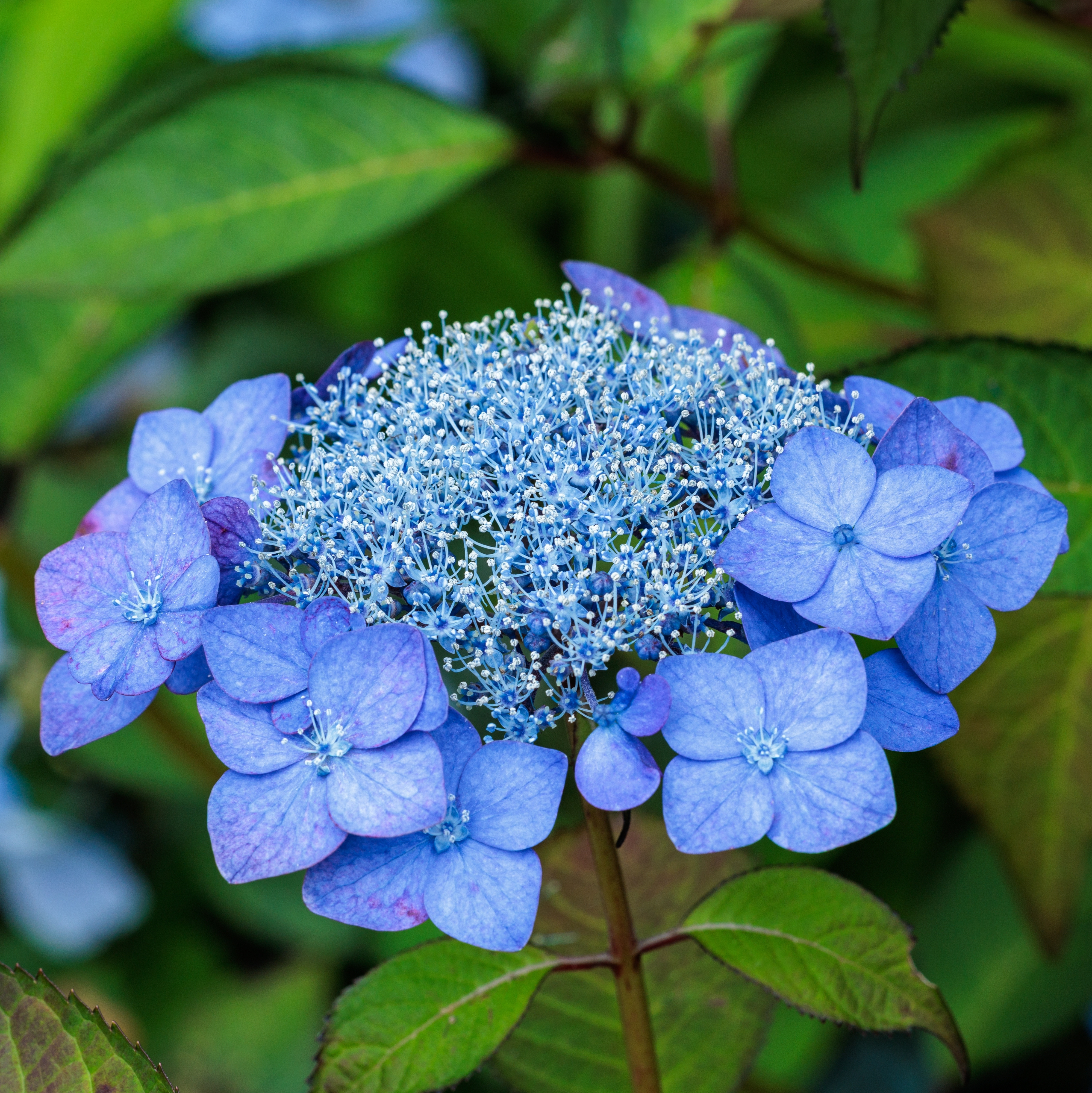
Lacecaps have flattened flowerheads with a ring of larger florets surrounding tiny central flowers.
Flower colours are often pink or blue depending on soil pH, while white varieties remain white regardless of soil conditions.
Panicle (Hydrangea paniculata)
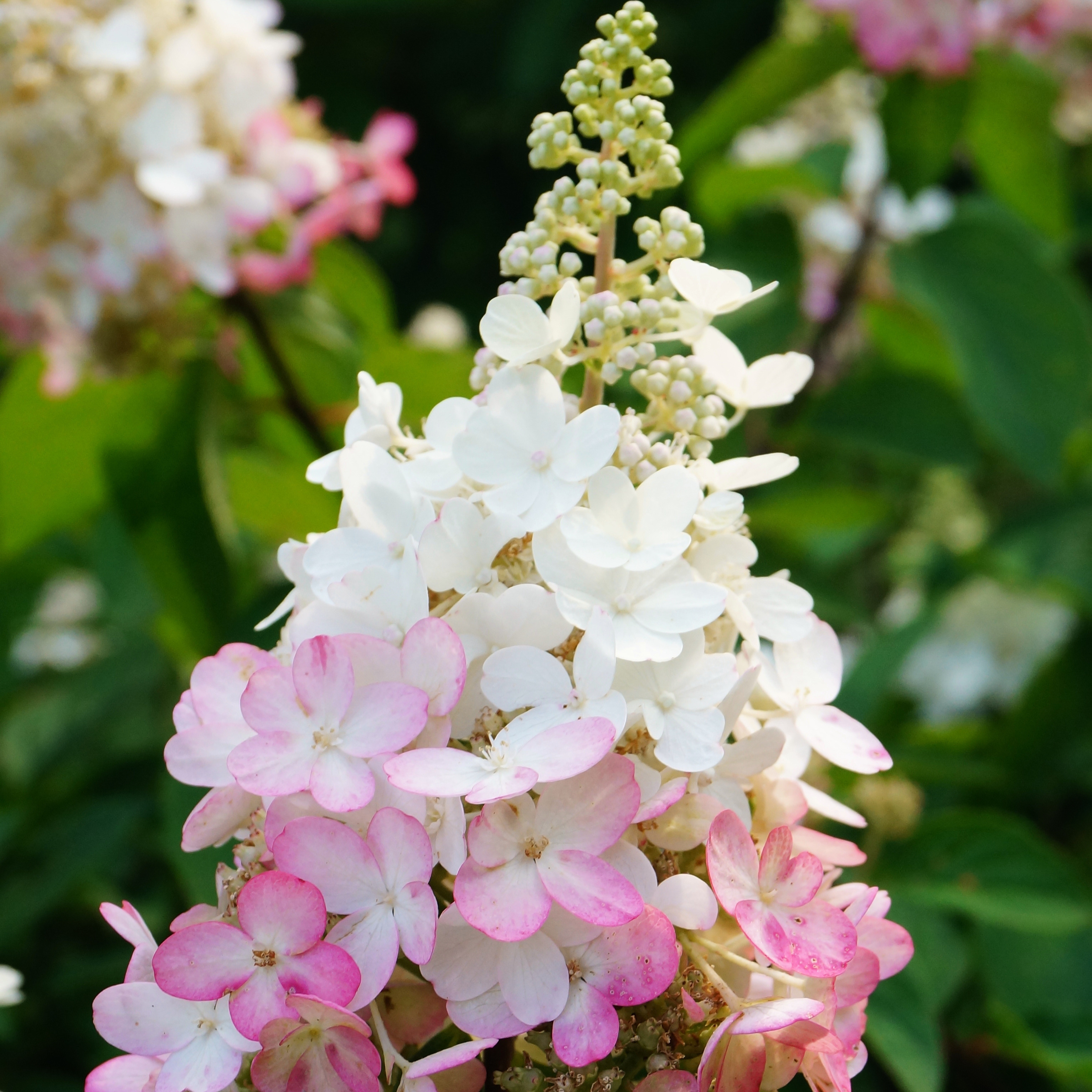
Recognised by their large cone-shaped flowerheads, panicle hydrangeas produce impressive displays that often change colour as the flowers mature.
Oakleaf (Hydrangea quercifolia)
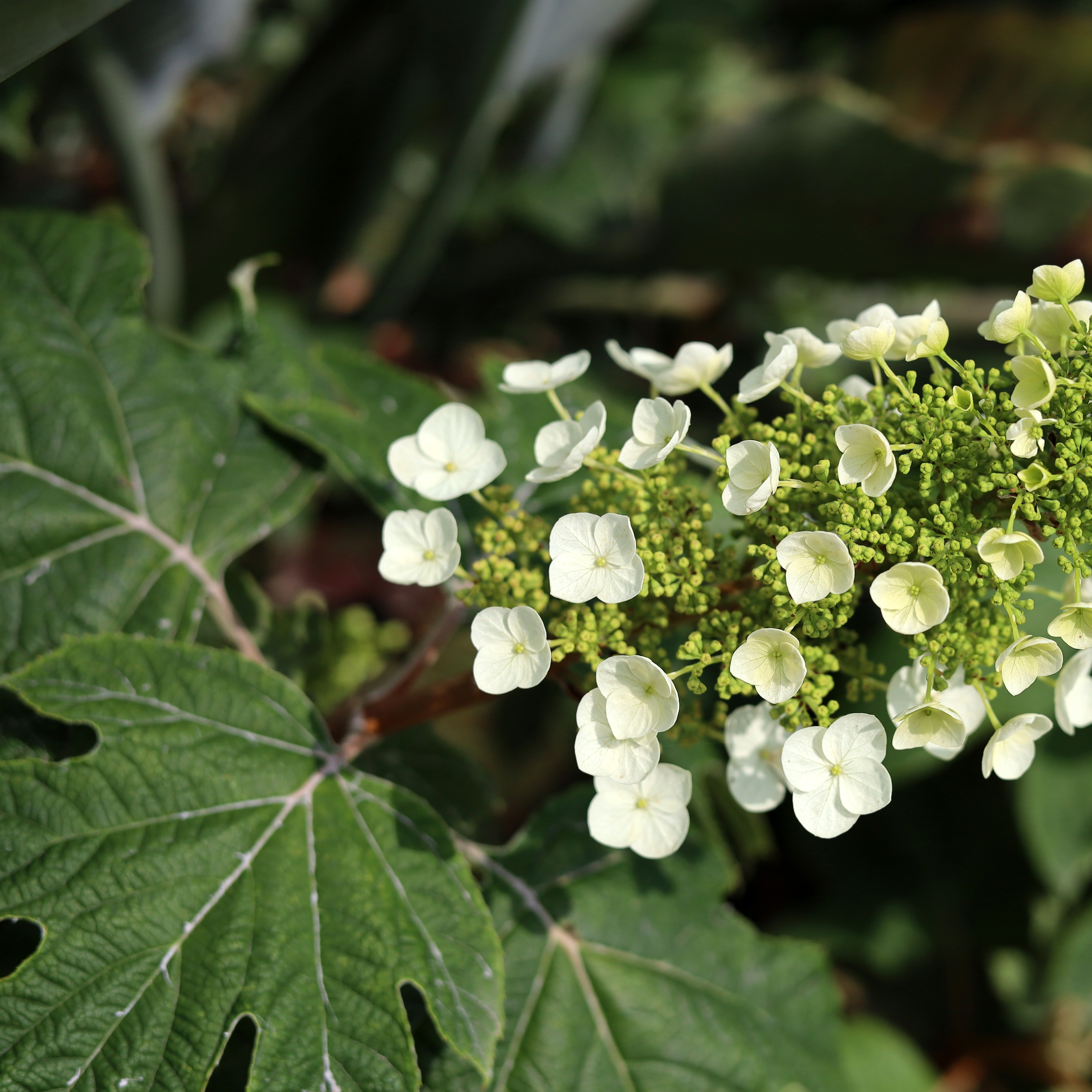
Oakleaf hydrangeas are grown as much for their attractive foliage as their flowers. Their deeply lobed leaves develop beautiful red and bronze autumn colour.
Smooth (Hydrangea arborescens)
These vigorous shrubs produce enormous rounded white flowerheads. ‘Annabelle’ is one of the best-known and most popular varieties.
Climbing (Hydrangea anomala subsp. petiolaris)
A self-clinging climber that produces elegant lacecap-like flowers and is ideal for walls, fences and shaded areas.
How to Prune Mophead and Lacecap Hydrangeas
Mophead and lacecap hydrangeas flower on stems produced the previous year, so careful pruning helps protect next season’s blooms.
Leave faded mophead flowerheads in place throughout winter. They provide a degree of protection for the developing buds beneath during frosty weather.
In early spring:
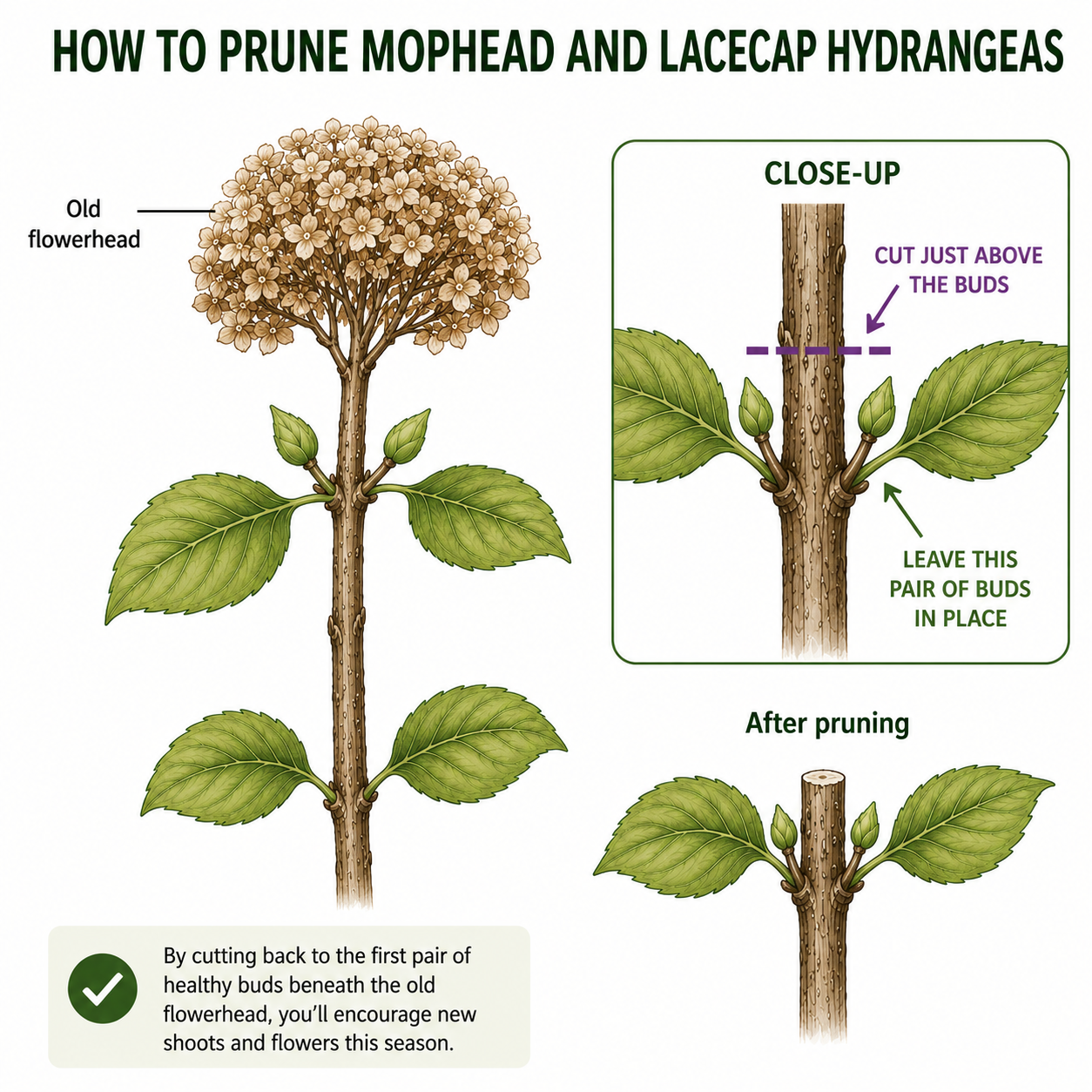
Remove the old flowerhead by cutting back to the first pair of healthy buds beneath it.
Remove one or two of the oldest stems at ground level each year to encourage fresh replacement growth.
Cut out any dead, damaged or weak stems.
Lacecap hydrangeas can be deadheaded after flowering if preferred by cutting back to the second pair of leaves below each flowerhead. In spring, remove a small number of older stems to keep the plant vigorous.
👉 Expert Tip: Avoid cutting healthy stems lower than necessary. The buds just below the old flowerheads are where next year’s flowers will develop.
How to Prune Panicle and Smooth Hydrangeas
Panicle (Hydrangea paniculata) and smooth (Hydrangea arborescens) hydrangeas flower on new growth produced during the current season, making them much more forgiving to prune than mophead and lacecap varieties.
Prune in early spring before new growth begins. You can adjust the amount of pruning depending on the size and appearance you want:
Cut the stems back to around 25cm (10 inches) above ground level to encourage strong new stems that typically produce larger flowerheads.
Leave the stems around 60cm (24 inches) above ground level if you prefer a taller shrub with a more natural shape and a greater number of slightly smaller flowerheads.
Both pruning methods encourage healthy new growth and will reward you with a spectacular display of flowers during the summer.
🍂 Pruning Oakleaf and Climbing Hydrangeas
These hydrangeas require only light maintenance.
Oakleaf Hydrangeas
Simply remove:
Dead wood
Damaged stems
Overlong shoots that spoil the plant’s shape
Avoid hard pruning, as mature plants naturally develop an attractive branching framework.
Climbing Hydrangeas
Prune shortly after flowering by shortening overly long shoots to keep the plant within its allotted space.
Most flowers are produced higher up the plant, so avoid heavy pruning in the upper sections unless absolutely necessary.
👉 Expert Tip: Climbing hydrangeas are slow to establish but become increasingly floriferous as they mature. Light annual pruning is usually all they need.
🌿 Visit Our Garden Centre
Once you’ve identified your hydrangea, pruning becomes a simple annual task that will keep it healthy and flowering at its best. Our knowledgeable team can help you choose the right variety for your garden and offer expert advice on pruning, feeding and seasonal care.
Visit us in Kington to browse our selection of beautiful hydrangeas, quality composts, feeds and pruning tools, and let us help you keep your garden looking its best throughout the seasons.
We use cookies to ensure that we give you the best experience on our website. If you continue to use this site we will assume that you are happy with it.