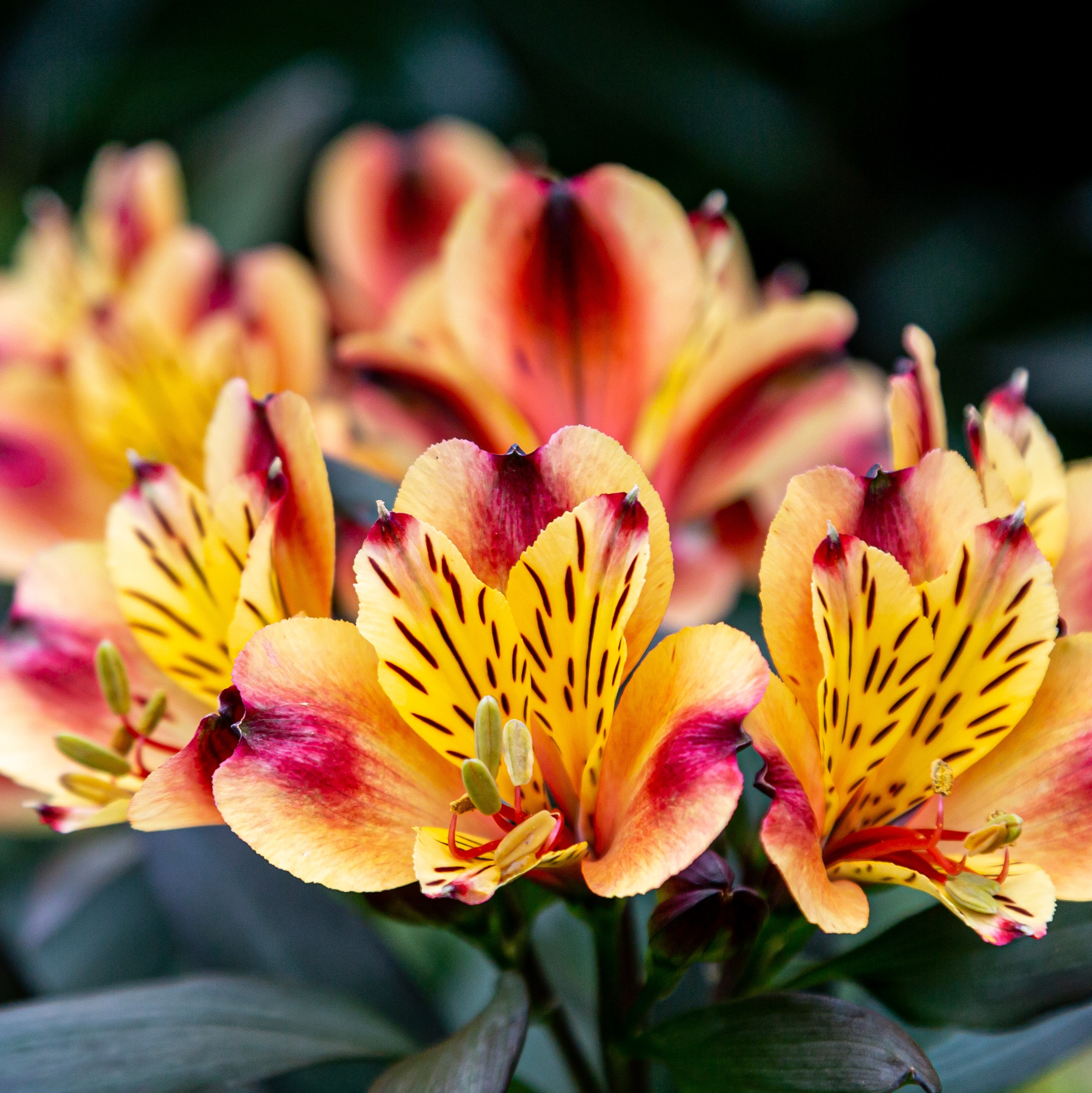
Alstroemeria, commonly known as the Peruvian lily or lily of the Incas, is a colourful perennial grown for its clusters of striking, lily-like flowers. Originally from South America, it brings an exotic appearance to British gardens while being relatively easy to grow in the right conditions.
With varieties ranging from compact patio plants to taller border perennials, there are plenty of ways to enjoy its flowers outdoors. It is also particularly popular for cutting, with blooms that can last for up to two weeks in a vase.
When Does It Flower?
Alstroemeria generally flowers from early summer into autumn, with some varieties continuing until the first frosts. Its flowers are carried in clusters above leafy stems, often with distinctive spots, streaks or contrasting colours on the petals.
The colour range includes white, cream, yellow, apricot, orange, pink, red and purple, with many varieties combining several shades in a single flower.
Height varies considerably. Compact varieties may grow to just 15–30cm, making them suitable for containers and the front of borders, while taller types can reach 1m or more.
How to Grow
Choosing the Right Position
Alstroemeria grows best in a warm, sheltered position with fertile soil and good drainage.
Sunlight: Full sun is ideal for flowering, although light partial shade is tolerated.
Soil: Fertile, moisture-retentive but well-drained soil is best.
Drainage: Avoid ground that becomes waterlogged, particularly during winter, as the fleshy roots can rot.
Shelter: Protect taller varieties from strong winds, which can damage their flowering stems.
Planting
Spring or early autumn is a good time to plant, while the soil is still relatively warm.
Before planting, improve the soil with well-rotted garden compost. Remove the plant carefully from its container, avoiding unnecessary disturbance to its delicate roots. Plant at approximately the same depth as it was growing in the pot, firm the soil gently and water thoroughly.
Allow sufficient room for the plant to develop into a clump over time.
For container growing, choose a generously sized pot with drainage holes and use a peat-free, soil-based compost with added grit to improve drainage.
Caring for the Plant
Once established, Alstroemeria needs relatively little attention.
Watering: Keep newly planted specimens watered during dry weather. Established plants in borders are fairly drought tolerant, but container-grown plants need more regular watering.
Feeding: Feed plants in containers with a high-potassium liquid fertiliser, such as tomato feed, during summer to encourage flowering.
Supporting: Taller varieties may benefit from discreet stakes or twiggy supports, particularly in exposed positions.
Encouraging More Flowers
Removing spent flower stems encourages fresh growth and helps extend the flowering season.
Once every flower in a cluster has faded, grasp the stem near its base and gently pull it away from an established plant. This stimulates the production of new flowering stems.
For newly planted specimens, cut off spent stems rather than pulling them until the roots are firmly established.
During the main flowering season, check plants regularly and remove faded stems as they appear. Leave any stems carrying unopened buds or fresh flowers, as these will continue to bloom. If an old stem does not release easily, avoid pulling too hard and use secateurs instead.
Regular attention throughout summer will help keep the plant looking tidy and encourage a colourful display well into autumn.
After Flowering
Most hardy varieties die back naturally as temperatures fall, returning with fresh growth in spring.
For the first couple of winters, protect plants growing in borders with a thick layer of mulch, such as composted bark, over the root area. Established plants are generally more tolerant of cold, although hardiness varies between varieties.
Plants growing in containers are more vulnerable to frost and winter wet. Move pots to a sheltered, frost-free position, such as an unheated greenhouse or protected porch.
Remove any remaining dead stems in early spring before new shoots emerge.
Dividing Established Clumps
Mature plants can be divided every few years if they become overcrowded or flowering begins to decline.
Early spring, around April, is a suitable time. Carefully lift the clump and divide it into sections, ensuring each has healthy roots and growing points.
The fleshy roots are fragile, so handle them gently and replant divisions promptly.
Growing from seed is possible but less reliable, and seedlings from named cultivars may not produce flowers identical to the parent plant.
Common Problems
Alstroemeria is generally trouble-free when grown in suitable conditions, although a few problems are worth watching for.
Slugs and snails: Young spring shoots can be damaged. Check emerging growth regularly and protect plants where necessary.
Root rot: Poor drainage and prolonged winter wet can damage the roots. Improve drainage and avoid overwatering, particularly in containers.
Frost damage: Young plants and less hardy varieties may suffer during severe cold. Protect vulnerable plants during winter.
Cut Flowers
One of the greatest advantages of Alstroemeria is its excellent vase life. Fresh stems can remain attractive for up to two weeks, making them ideal for homegrown bouquets and floral arrangements.
For the best results:
Pick flowering stems when some blooms have opened and others remain in bud.
Remove foliage that would sit below the waterline.
Place stems in a clean vase with fresh water.
Change the water regularly and remove fading flowers.
Keep arrangements away from direct sunlight and sources of heat.
Traditionally associated with friendship and devotion, these colourful flowers also make a thoughtful addition to a hand-tied bouquet for someone special.
Alstroemeria can cause skin irritation or allergic reactions in some people, particularly when handling foliage or stems. Wear gardening gloves when planting, dividing or picking flowers.
Why Grow Alstroemeria?
With its wide choice of colours, long flowering season and suitability for both borders and containers, Alstroemeria brings plenty of colour to the garden. Its flowers also attract bees and other pollinating insects, while the long-lasting cut stems allow you to enjoy the display indoors.
Visit us in Kington for more ideas on creating colourful borders, patio displays and seasonal planting combinations.
We use cookies to ensure that we give you the best experience on our website. If you continue to use this site we will assume that you are happy with it.