
Open today 9:00 - 17:00
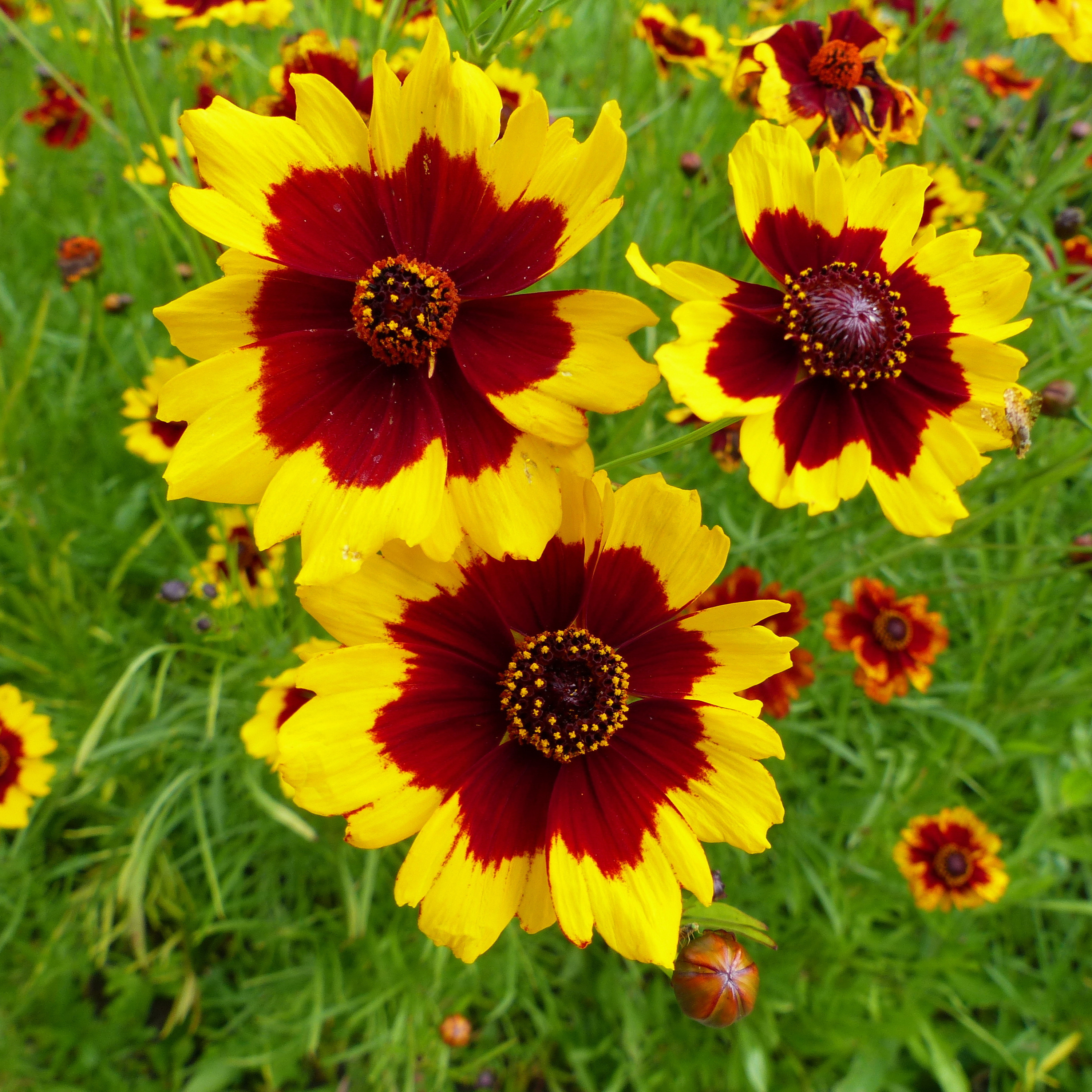
Coreopsis, commonly known as tickseed, is a group of cheerful, summer-flowering plants valued for their daisy-like blooms and long flowering season. Their bright yellow and golden flowers, sometimes marked with rich red or burgundy centres, bring warmth to sunny borders, gravel gardens and containers.
Depending on the variety, coreopsis may form neat, compact mounds or taller, airy clumps. Many are easy to grow and flower generously through summer, making them attractive companions for ornamental grasses and other sun-loving perennials.
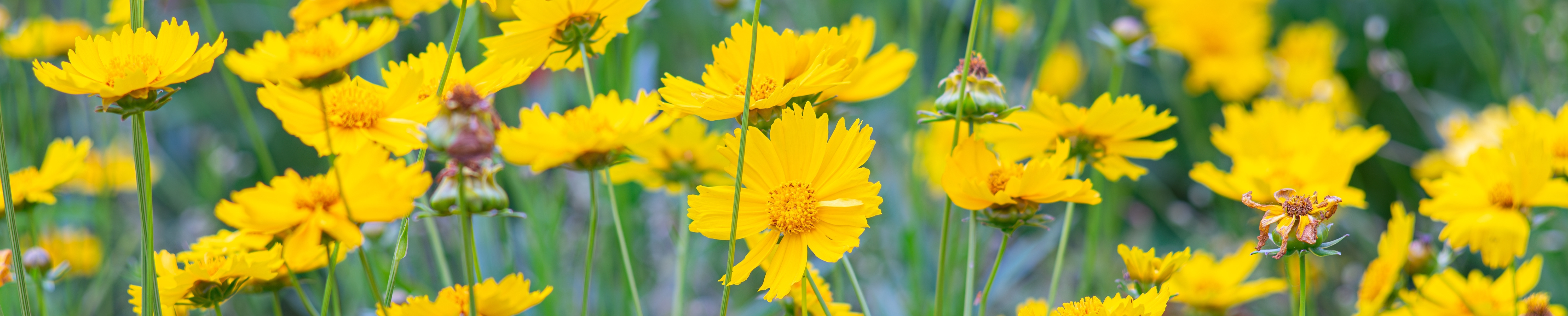
Most garden coreopsis flower from June to September, with some continuing into October in mild autumn weather. The flowering period varies between species and cultivars, and regular deadheading can help extend the display.
Their daisy-like flowers usually measure around 2–6 cm across, although some varieties produce larger blooms. Yellow and golden shades are the most common, often with contrasting red or burgundy centres. Other colours are available in selected species and cultivars, including:
💛 Yellow and gold
🧡 Orange
❤️ Red and burgundy
🩷 Pink (less common)
🤍 White (less common)
Some varieties produce semi-double or double flowers. The finely divided foliage of species such as Coreopsis verticillata gives the plants a particularly light, airy appearance.
Coreopsis flowers are generally grown for their colour rather than fragrance.
Coreopsis performs best in a sunny position with soil that drains freely.
Sunlight: Full sun is best for strong growth and abundant flowers.
Soil: Most varieties prefer moderately fertile soil and tolerate relatively poor conditions.
Drainage: Well-drained soil is important, particularly during winter.
Exposure: An open, sunny position is ideal, although taller varieties may benefit from shelter against strong winds.
Established plants are often reasonably drought tolerant, particularly species with fine foliage. However, moisture requirements vary, and plants growing in containers need more regular attention.
Plant hardy perennial coreopsis in spring or early autumn, allowing time for roots to establish before winter. Spring planting is preferable for less reliably hardy varieties, especially in colder or wetter gardens.
Remove weeds and loosen the soil before planting.
Improve heavy soil with suitable drainage measures or choose a raised bed.
Plant at the same depth as the nursery container.
Space plants according to their expected mature size.
Water thoroughly after planting.
Compact varieties grow well in pots filled with peat-free compost. Ensure containers have drainage holes and avoid leaving them standing in water.
Watering: Water regularly during establishment. Once established, many perennial coreopsis tolerate short dry periods, although prolonged drought can reduce flowering. Container-grown plants need more frequent watering during warm weather.
Feeding: Coreopsis generally flowers well without heavy feeding. Excessive fertiliser, particularly nitrogen-rich feeds, can encourage leafy growth at the expense of flowers. Plants growing in containers may benefit from occasional balanced liquid feeding during the growing season.
Supporting: Compact varieties rarely need support. Taller cultivars may benefit from discreet supports in exposed positions, particularly when carrying numerous flowers.
Coreopsis is valued for its long flowering season, and a little attention can help maintain a colourful display.
Remove faded flowers regularly to encourage further buds on repeat-flowering varieties.
Cut back tired flowering stems during summer to encourage fresh growth where appropriate.
Keep plants watered during prolonged dry spells.
Avoid excessive feeding, which can reduce flowering.
Some varieties respond well to a light trim after their first main flush, while others flower continuously without needing a substantial cutback.
Once the main flowering season has finished, remove spent flower stems to tidy the plant. Alternatively, leave some seed heads for birds and late-season interest.
Hardiness: Many perennial coreopsis are hardy in UK gardens, but hardiness varies between species and cultivars.
Drainage: Good winter drainage is particularly important. Avoid leaving plants in cold, waterlogged soil, which can cause root or crown rot.
Winter protection: Some tender or short-lived cultivars may need winter protection or replacement. Check the requirements of the variety being grown.
Established clumps of perennial coreopsis can often be divided in spring to maintain vigour or produce new plants.
Lift the clump carefully and separate it into sections with healthy roots and shoots. Replant promptly into prepared soil and water until established.
Many coreopsis can also be grown from seed. Annual species, such as Coreopsis tinctoria, are usually sown in spring for summer flowering.
Named cultivars may not come true from seed, so division or suitable vegetative propagation is preferable when preserving their characteristics.
Coreopsis is generally trouble-free when grown in sunshine and well-drained soil.
Slugs and snails: Young growth may occasionally be damaged in spring. Protect vulnerable shoots and encourage natural predators.
Powdery mildew: A white coating may develop on foliage, particularly when plants are stressed by drought or overcrowding. Maintain adequate spacing and water during prolonged dry spells.
Root or crown rot: Poor drainage, especially during winter, can cause plants to deteriorate. Improve growing conditions and avoid leaving crowns in persistently wet soil.
Poor flowering: Too much shade or excessive fertiliser can encourage foliage at the expense of flowers. Move plants to a sunnier position where practical.
The open, daisy-like flowers of coreopsis provide nectar and pollen for visiting insects throughout summer.
They are particularly attractive to:
🐝 Bees
🦋 Butterflies
🪰 Hoverflies
Leaving some mature seed heads may also provide food for small seed-eating birds.
Coreopsis makes a cheerful addition to summer flower arrangements. Choose taller varieties with sufficiently long stems, as compact cultivars are generally better suited to garden displays.
Cut flowers in the cool of the morning and place the stems straight into water. Remove any leaves that would sit below the waterline.
For more ideas on choosing and growing flowers for arrangements, see our guide to How to Grow a Cut Flower Garden.
Regular cutting can also encourage further flowering on suitable varieties.
Coreopsis offers generous summer colour without demanding complicated care. Its cheerful flowers, varied heights and attractive foliage make it a useful choice for sunny borders, gravel gardens and containers. Many varieties also provide a valuable source of nectar and pollen for garden insects.
For advice on choosing coreopsis for your garden, visit us in Kington.