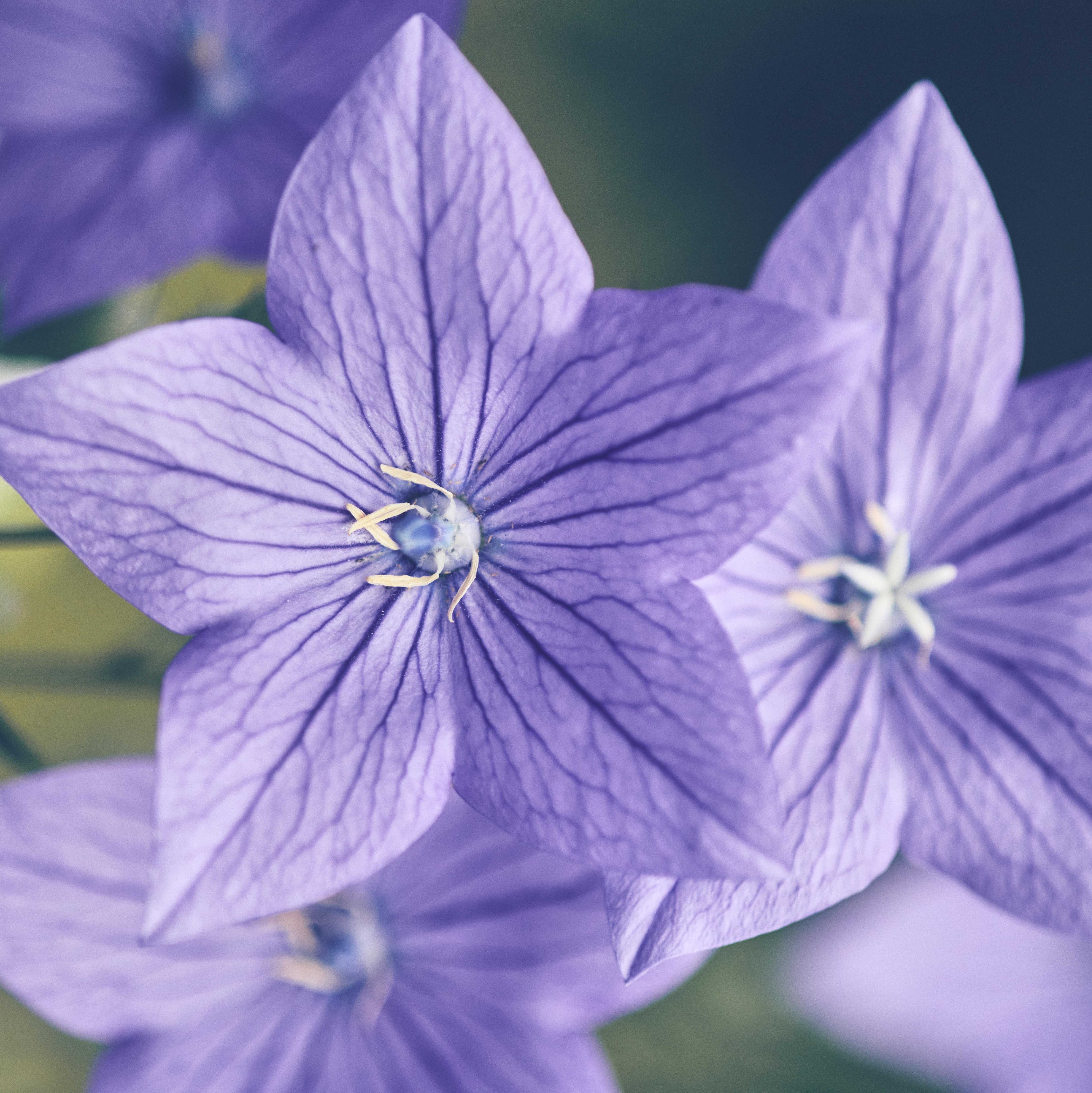
Campanula, commonly known as bellflower, is a versatile group of flowering plants admired for their delicate, bell-shaped blooms and generous displays of colour. From compact varieties that spill over walls and soften the edges of paths to taller perennials that bring height to mixed borders, there is a campanula for many different garden settings.
Most garden varieties flower during late spring and summer, producing masses of blue, purple, pink or white blooms. They are particularly attractive in cottage gardens, rockeries and informal planting schemes, where their flowers create a relaxed, natural appearance.
When Does It Flower?
Most garden campanulas flower between May and August, although the precise season depends on the species and cultivar. Some low-growing varieties begin in late spring, while taller perennial bellflowers often reach their peak during June and July.
The flowers vary from small, star-shaped bells to larger, open cups, usually measuring around 1–5 cm across, depending on the variety. Some hang gracefully from upright stems, while others form dense carpets of colour close to the ground.
Flower colours include:
💙 Blue
💜 Purple
🩷 Pink
🤍 White
Most campanulas have little noticeable fragrance and are grown primarily for their abundant flowers.
How to Grow
Choosing the Right Position
Campanulas are generally easy to grow, although their requirements vary between the compact alpine types and taller border varieties.
Sunlight: Most flower best in full sun or partial shade.
Soil: Moderately fertile soil suits most varieties. Alpine types often prefer poorer, gritty conditions.
Drainage: Good drainage is important, particularly for rockery and alpine varieties. Taller border types generally appreciate soil that retains some moisture.
Exposure: Compact varieties suit walls and rockeries, while taller types benefit from some protection against strong winds.
Low-growing varieties such as Campanula poscharskyana and Campanula portenschlagiana are particularly useful for softening stonework and spreading across the front of borders.
Taller varieties, including Campanula persicifolia and Campanula lactiflora, make attractive additions to cottage gardens and mixed perennial borders.
Planting
Spring and autumn are good times to plant hardy campanulas, when the soil is workable and there is usually enough moisture to help roots establish.
For best results:
Remove weeds and loosen the soil before planting.
Improve heavy, poorly drained soil where necessary, particularly for alpine varieties.
Plant at the same depth as the original nursery container.
Allow sufficient space for the mature spread of the chosen variety.
Water thoroughly after planting.
Compact campanulas can also grow well in containers, troughs and raised beds. Use peat-free compost with suitable drainage, adding grit where appropriate for alpine species.
Caring for the Plant
Watering
Water newly planted campanulas regularly until established, particularly during dry weather.
Established border varieties usually need additional watering only during prolonged dry spells. Alpine types are generally more tolerant of dry conditions but dislike prolonged winter wet.
Container-grown plants require more frequent watering, especially during summer.
Feeding
Campanulas growing in reasonably fertile garden soil rarely need heavy feeding. An annual mulch of garden compost is usually sufficient for border varieties.
Plants in containers may benefit from a light application of balanced fertiliser during spring.
Avoid excessive feeding, particularly with compact alpine types, as this can encourage soft growth.
Supporting
Most low-growing campanulas need no support. Taller varieties, particularly Campanula lactiflora, may benefit from discreet plant supports in exposed gardens.
Place supports early in the growing season so that the developing foliage can conceal them.
Encouraging More Flowers
Campanulas can produce generous displays with relatively little attention, although flowering habits differ between species.
To encourage the best performance:
Grow plants in suitable light conditions.
Avoid allowing border varieties to become excessively dry during active growth.
Remove faded flowers where practical to prolong the display.
Cut back spent flowering stems on suitable perennial varieties to encourage fresh growth and sometimes a second flush.
Divide congested clumps of suitable species when flowering begins to decline.
Some campanulas flower once in a concentrated display, while others continue producing flowers over several weeks. Deadheading can help prolong flowering in some varieties but will not guarantee repeat blooms.
After Flowering
Deadheading
Remove faded flowers and spent stems to keep plants tidy. On some perennial varieties, cutting back the flowering stems after the main display may encourage additional blooms later in summer.
If you would like campanulas to self-seed, leave a few flower stems to mature.
Foliage
Foliage varies considerably between species. Many taller perennial campanulas die back naturally in autumn, while some compact types retain low-growing leaves through much of the winter.
Remove dead or damaged foliage as necessary, taking care not to disturb fresh growth at the base.
Autumn and Winter Care
Most commonly grown perennial campanulas are hardy in UK gardens and need little winter protection.
The main concern for alpine varieties is prolonged wet weather, particularly in heavy soil. Ensure water drains freely around the roots and crowns.
Taller herbaceous varieties can be cut back after their foliage has died down, or left until late winter if the stems remain tidy.
Dividing or Propagation
Many perennial campanulas can be propagated by division, usually in spring or early autumn.
Lift an established clump carefully and separate it into smaller sections, each with healthy roots and shoots. Replant promptly and water well until established.
Low-growing spreading species may also be propagated from rooted sections or cuttings, while many campanulas grow readily from seed.
Some varieties self-seed naturally, although seedlings from named cultivars may not retain the exact characteristics of the parent plant.
Not all campanulas are long-lived perennials. Some are biennial, including Canterbury bells (Campanula medium), and are usually grown from seed rather than divided.
Common Problems
Campanulas are generally reliable plants with few serious problems when grown in suitable conditions.
Slugs and snails
Young shoots and tender leaves can occasionally be damaged, particularly during damp spring weather. Protect vulnerable growth where necessary and encourage natural predators.
Rust
Some campanulas may develop rust, visible as orange-brown pustules on the foliage. Remove badly affected leaves and improve air circulation around the plants.
Powdery mildew
This may appear during dry weather or where plants are overcrowded. Maintain suitable soil moisture and remove affected foliage if necessary.
Poor flowering
Excessive shade, overcrowding or unsuitable soil conditions can reduce flowering. Check that the chosen variety is growing in an appropriate position before applying additional fertiliser.
Wildlife Benefits
Campanula flowers provide nectar and pollen for a range of visiting insects, particularly bees.
Their open or bell-shaped flowers can attract:
🐝 Bumblebees and solitary bees
🦋 Butterflies
🪰 Hoverflies
Some solitary bees have a particularly close association with bellflowers, making campanulas a useful addition to wildlife-friendly planting schemes.
Cut Flowers
Taller campanulas, particularly Campanula persicifolia, Campanula lactiflora and Canterbury bells, make attractive cut flowers for informal summer arrangements.
Cut stems when the first flowers have opened and place them promptly into clean water. Their delicate flowers combine well with roses, hardy geraniums and other cottage garden favourites.
Compact, trailing varieties are generally better enjoyed in the garden than used for cutting.
Why Grow Campanula?
Campanula offers an appealing choice of flower shapes, growth habits and garden uses. Compact varieties bring colour to rockeries, walls and containers, while taller bellflowers create elegant summer displays among other perennials. Their blue, purple, pink and white flowers are particularly effective in cottage gardens and wildlife-friendly borders.
We use cookies to ensure that we give you the best experience on our website. If you continue to use this site we will assume that you are happy with it.