
Open today 9:00 - 17:00
Bergenia is a hardy, evergreen perennial valued for its bold foliage, colourful spring flowers and ability to thrive in places where other plants may struggle. Its large, rounded leaves form attractive clumps throughout the year, while upright stems carry clusters of bell-shaped flowers above the foliage in spring.
Often known as elephant’s ears because of its distinctive leaves, bergenia is particularly useful for edging borders, planting beneath deciduous trees and adding year-round structure to partially shaded areas. Many varieties develop beautiful red, bronze or purple leaf tones during autumn and winter, giving the plant an ornamental appeal that extends well beyond its flowering season.

Bergenia usually flowers between March and May in the UK, although the exact timing depends on the variety and local weather. Some cultivars begin flowering in late winter, while others may produce a smaller second flush later in the year.
The flowers are small and bell-shaped, typically around 1–2 cm across, but appear in generous clusters on sturdy stems held above the leaves.
Flower colours include:
🩷 Pink: From delicate pale pink to deeper rose shades.
🤍 White: Soft white blooms, sometimes ageing to pink.
❤️ Red: Rich rose-red and reddish-purple tones, depending on the variety.
Most bergenias are grown for their visual appeal rather than fragrance.
The foliage is equally important. Large, leathery leaves provide a strong contrast to finer-textured plants, while certain varieties develop particularly striking winter colour when exposed to colder temperatures.
Bergenia is adaptable and easy to grow, making it suitable for a wide range of UK gardens.
Sunlight: Grows well in partial shade and tolerates full sun where the soil retains sufficient moisture. Deep shade may reduce flowering.
Soil: Prefers reasonably fertile soil but adapts to clay, loam and lighter soils.
Drainage: Moist but well-drained soil is ideal. Avoid ground that remains waterlogged for long periods.
Exposure: Hardy in most UK gardens and suitable for sheltered or moderately exposed positions.
Although bergenia is often recommended for shade, it is not restricted to shady gardens. Plants receiving some direct sunlight generally flower more freely, provided they do not become excessively dry.
Established plants can tolerate periods of drought, making bergenia useful beneath deciduous shrubs and trees. However, flowering and foliage quality are usually better where some moisture remains available.
Bergenia also grows well in containers, particularly where its evergreen leaves can provide structure through winter.
Bergenia can be planted in spring or autumn, when the soil is workable and naturally moist. Container-grown plants can also be planted at other times, provided the ground is not frozen or waterlogged and they receive adequate watering while establishing.
Remove perennial weeds and loosen the soil before planting.
Incorporate well-rotted organic matter if the soil is particularly poor.
Dig a hole slightly wider than the rootball and plant at the same depth as in the original pot.
Space plants approximately 30–45 cm apart, adjusting for the mature spread of the chosen variety.
Firm the soil gently and water thoroughly.
Avoid burying the crown or thick, creeping rhizomes too deeply, as bergenia naturally grows with these close to the soil surface.
For container planting, use a suitable peat-free multipurpose compost and a pot with adequate drainage holes.
Bergenia requires relatively little attention once established.
Water newly planted bergenias regularly during their first growing season, especially in dry weather.
Established plants usually need additional watering only during prolonged dry spells. Those growing in containers require more frequent attention, particularly in summer.
Bergenia is not a particularly hungry plant. An annual mulch of well-rotted compost or leaf mould in spring will usually provide sufficient nutrients.
Plants growing in containers may benefit from a light application of balanced fertiliser in spring. Avoid excessive feeding, which can encourage lush foliage without improving flowering.
Bergenia flowers reliably when given suitable growing conditions, although the amount of bloom varies between cultivars.
To encourage a good display:
Provide sufficient light. Partial shade with some morning or afternoon sunshine is often ideal.
Avoid overcrowding. Divide congested clumps when flowering begins to decline.
Maintain soil moisture. Extended drought during active growth can affect plant vigour.
Remove spent flower stems. This keeps plants tidy, although it does not guarantee a second flush.
Avoid excessive fertiliser. Too much nitrogen can encourage leaves at the expense of flowers.
Some cultivars naturally flower more generously than others, so variety selection is important when spring colour is the main priority.
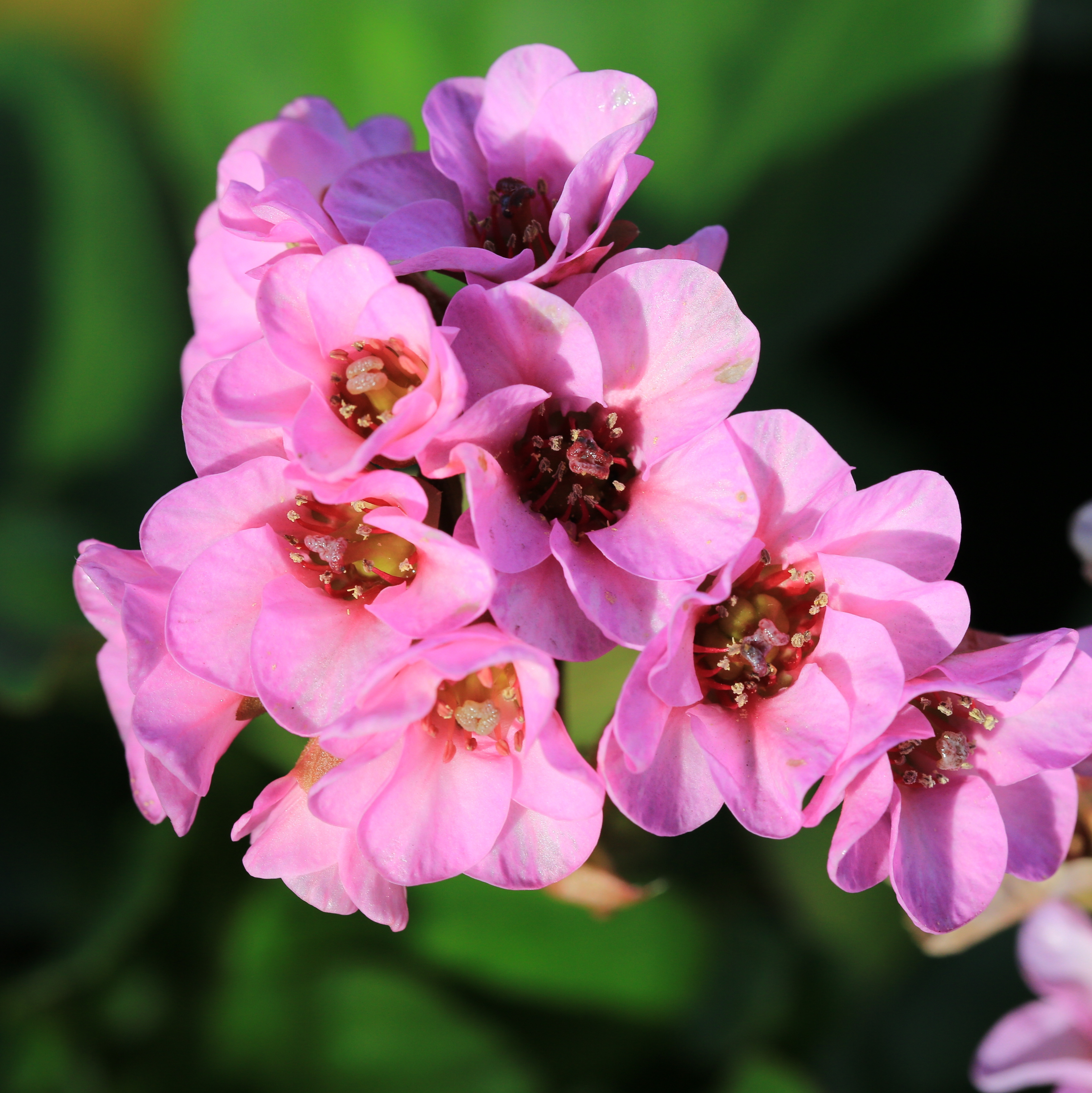
Once the flowers have faded, cut the spent stems back near their base using clean secateurs.
Deadheading is mainly for appearance rather than essential plant health. Bergenia does not generally require regular cutting back.
Bergenia is evergreen, so its leaves remain on the plant throughout the year. Older leaves naturally become damaged or discoloured as they age.
Remove dead, torn or unsightly leaves in spring to reveal fresh growth and improve the appearance of the clump.
Avoid cutting back all the foliage as you would with a deciduous perennial. The leaves are an important part of bergenia’s year-round appeal.
Bergenia is fully hardy in most UK gardens and usually needs no special winter protection.
Cold weather can bring out attractive burgundy, bronze and purple tones in varieties selected for winter foliage colour. This is a normal seasonal response rather than a sign of poor health.
Plants growing in containers should not be allowed to sit in waterlogged compost during winter. Raise pots slightly if necessary to keep drainage holes clear.
Bergenia spreads gradually through thick, creeping rhizomes and can form substantial clumps over time.
Division is the simplest way to propagate established plants and can also rejuvenate older clumps that have become congested or bare in the centre.
Early spring or early autumn are suitable times to divide bergenia.
Lift the clump carefully with a garden fork.
Separate it into smaller sections, ensuring each has healthy roots and at least one growing point.
Remove any dead or damaged rhizome sections.
Replant the divisions at their original depth.
Water thoroughly and keep the soil reasonably moist until new growth is established.
Bergenia does not need dividing frequently. Healthy clumps can remain undisturbed for several years.
Bergenia is generally robust and rarely troubled by serious pests or diseases.
Vine weevil adults may leave distinctive notches around leaf edges. Their larvae can be more damaging, feeding on roots and rhizomes, particularly in container-grown plants.
Check plants that suddenly wilt or become loose in the compost. Where necessary, use an appropriate biological control, following the manufacturer’s instructions and recommended soil temperatures.
Young leaves may occasionally be damaged by slugs and snails, although mature bergenia foliage is usually less attractive to them.
Remove hiding places around vulnerable plants and protect fresh growth where necessary.
Fungal leaf spots can sometimes appear, particularly in damp conditions or where plants are overcrowded.
Remove badly affected leaves, improve air circulation and avoid leaving decaying foliage around the crown.
A bergenia producing plenty of leaves but few flowers may be growing in excessive shade or may have become overcrowded.
Moving it to a brighter position or dividing an established clump can often improve flowering.
Bergenia provides a useful early-season source of nectar and pollen for visiting insects.
Its spring flowers can attract bees, including early-emerging bumblebees, at a time when fewer garden plants are in bloom.
The dense evergreen foliage can also provide low-level shelter for small invertebrates.
Although bergenia is not primarily grown as a wildlife plant, it can make a worthwhile contribution to a garden containing a varied selection of nectar-rich flowers.
Bergenia flower stems can be cut for small spring arrangements, particularly when combined with other seasonal flowers and fresh foliage.
Choose stems with several flowers open and additional buds still developing. Cut them cleanly and place them promptly into water.
The relatively short stems make bergenia most suitable for informal posies and smaller arrangements rather than tall displays.
It is particularly effective along pathways, at the front of borders, beneath deciduous shrubs or in containers where its bold foliage can be appreciated throughout the year. Planted in groups, bergenia creates generous ground-level cover and brings welcome colour to the garden in early spring.
Visit our garden centre to explore bergenia and other hardy perennials that can bring lasting structure, seasonal interest and colour to your garden.