
Open today 9:00 - 17:00
Crocosmia brings vibrant colour and graceful movement to the garden during the second half of summer. Its arching stems carry rows of red, orange or yellow flowers above upright, sword-shaped leaves, creating a lively contrast with softer border plants.
Sometimes called montbretia, Crocosmia grows from underground corms and returns year after year in suitable conditions. There are compact varieties for smaller gardens and taller forms that rise above neighbouring perennials. The choice of variety matters, as some spread much more vigorously than others.
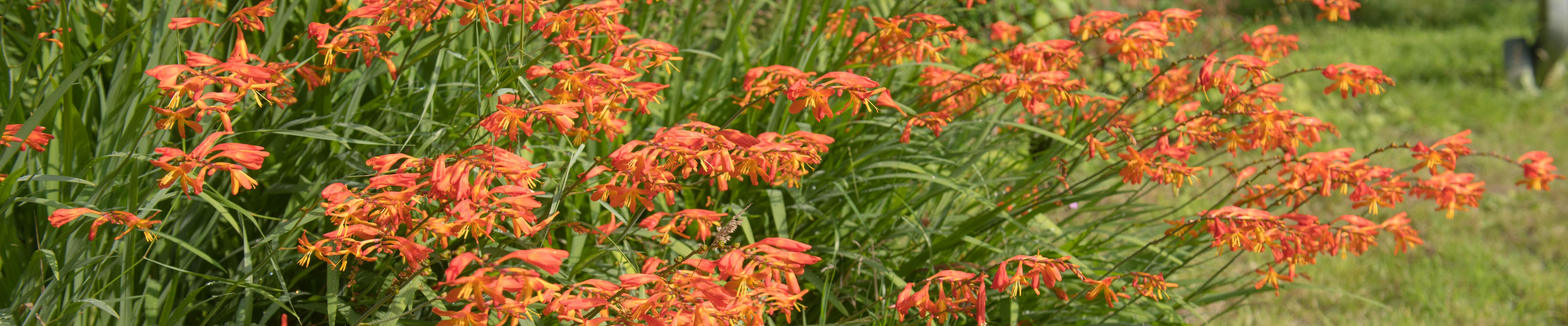
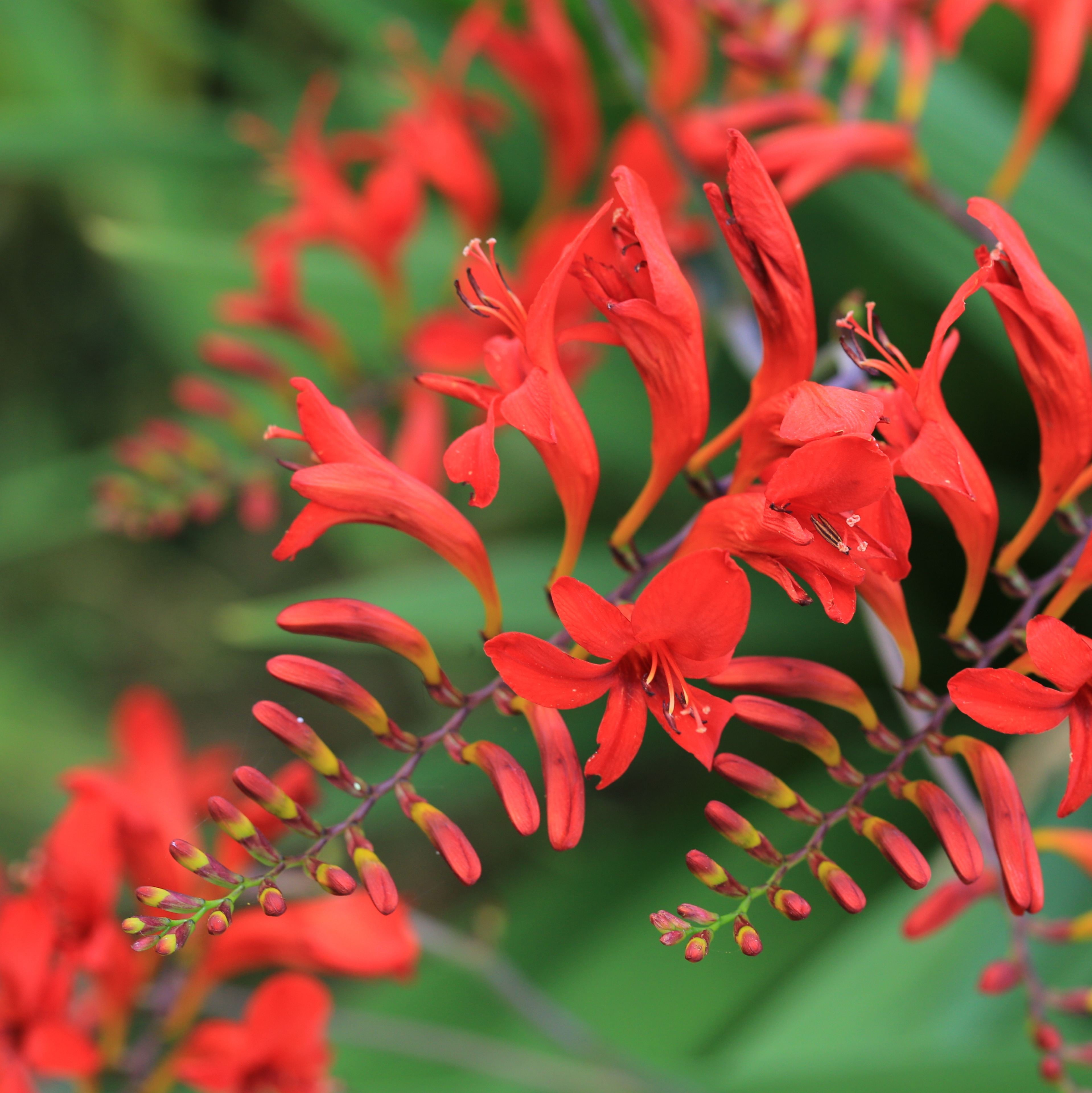
Crocosmia generally flowers from July to September, depending on the variety and weather conditions. Its slender, arching stems carry clusters of funnel-shaped flowers that open in succession, giving each stem an extended period of interest.
The flowers are particularly effective when planted in groups, where their bright colours stand out against the upright green foliage.
Flower colours include:
❤️ Scarlet and deep red
🧡 Bright orange and copper
💛 Golden yellow
🌼 Apricot and softer peach tones
Varieties differ considerably in height. Compact forms such as ‘Emily McKenzie’ grow to around 60cm, while taller varieties such as ‘Lucifer’ can reach approximately 1.5m or more in favourable conditions.
Crocosmia grows well in sunny borders where its leaves and flower stems have space to develop. It prefers soil that retains some moisture during summer but drains well enough to prevent the corms sitting in waterlogged ground.
Sunlight: Full sun encourages strong flowering, although many varieties tolerate light partial shade.
Soil: Fertile, moisture-retentive but well-drained soil is ideal.
Drainage: Avoid ground that remains waterlogged, particularly during winter.
Exposure: Most varieties cope well in open borders, although taller flower stems benefit from some protection in very windy positions.
Crocosmia combines well with ornamental grasses, salvias, dahlias and other late-summer perennials. Its narrow leaves provide a useful contrast to plants with broader foliage.
Spring is a good time to plant dormant Crocosmia corms, allowing them to establish as the soil warms.
Prepare the planting area by removing weeds and incorporating garden compost if the soil is particularly poor or dries out quickly.
Plant the corms approximately 8–10cm deep, with the pointed end facing upwards. Space them around 10cm apart in small groups for a natural-looking display.
Container-grown plants can be planted during the growing season. Position them at the same depth as they were growing in their pots, firm the soil gently and water thoroughly.
Compact varieties are also suitable for large containers. Use a peat-free compost with good drainage and water regularly during warm weather.
For more ideas on using summer-flowering corms and bulbs, explore our summer bulbs page.
Crocosmia needs little attention once established, making it a useful choice for a low-maintenance border.
Watering: Water newly planted corms and young plants during dry spells. Once established, Crocosmia growing in borders rarely needs additional watering. Plants in containers will need more regular attention.
Feeding: A spring mulch of garden compost is usually sufficient for plants growing in borders. Container-grown plants may benefit from occasional liquid feeding.
Supporting: Taller varieties can become top-heavy and slump as their flowers open. Position discreet plant supports early in the growing season to keep the stems upright without spoiling their natural arching shape.
Tidying: Remove damaged leaves as needed, but leave healthy foliage in place throughout the growing season.
As the flowers fade, the arching stems gradually lose their colour. Spent flower stems can be cut back to the base to keep the border tidy, although removing them will not normally encourage another flush of flowers.
Leave the foliage intact while it remains green. The leaves continue producing and storing energy in the underground corms, helping the plant prepare for the following year’s growth.
By autumn, the leaves begin to yellow and die back naturally. At this stage, they can be removed, or left until early spring if you prefer to keep some cover around the clump during winter.
Many commonly grown Crocosmia varieties are hardy in UK gardens, but winter tolerance varies. ‘Lucifer’ is particularly hardy, while some other varieties benefit from protection in colder areas.
In gardens prone to severe frost, a layer of dry mulch can help insulate the corms. Avoid heavy, wet mulch on poorly drained soil, as excessive winter moisture can encourage rotting.
Container-grown plants are more exposed to freezing temperatures. Move pots into a sheltered position during cold weather and ensure they drain freely.
Crocosmia gradually spreads as new corms develop, sometimes growing on top of one another. Over time, clumps can become overcrowded or spread beyond their intended space.
In spring, as new shoots begin to appear, lift congested clumps with a garden fork. Separate the corms, discarding any that are damaged or shrivelled.
Replant the healthy corms approximately 8–10cm deep, spacing them around 10cm apart, and water thoroughly.
Established clumps do not need dividing routinely. Leave them undisturbed until they become overcrowded or need reducing in size.
Crocosmia is generally robust, although a few problems can affect its growth.
Poor flowering: Too much shade or overcrowded clumps can reduce flowering. Move plants into a sunnier position or divide congested clumps in spring.
Red spider mite: Occasionally affects plants during hot, dry conditions, causing pale mottling or discolouration of the leaves.
Corm rot: Prolonged waterlogging, particularly during winter, can damage underground corms. Improve drainage or move plants to a more suitable position.
Excessive spreading: Some types, particularly common montbretia, spread vigorously through underground corms and require regular control.
Crocosmia’s arching stems make attractive additions to summer flower arrangements, bringing both colour and an unusual shape to bouquets.
Cut stems when the first few flowers have opened, leaving the remaining buds to develop in the vase. Place them promptly in clean water and remove any foliage that would sit below the waterline.
The flowers combine particularly well with dahlias, zinnias and ornamental grasses. Their curved stems are also useful for creating movement in more informal arrangements.
For further inspiration, see our guide to creating a cut flower garden.
In the UK, Common montbretia (Crocosmia × crocosmiiflora) is listed under Schedule 9 of the Wildlife and Countryside Act 1981. It must not be planted or allowed to spread into the wild.
Do not put unwanted corms on your home compost heap. Check with your local council before using garden waste collections or recycling centres, as invasive plant material may require separate disposal.
Crocosmia is an excellent choice for extending colour into late summer. Its sword-shaped leaves provide structure earlier in the season, while the arching flower stems bring a different shape and movement to the border.
Choose a variety suited to the available space, and Crocosmia will return year after year with relatively little attention.
Visit us at Lyonshall Nurseries in Kington for advice on choosing perennials and planning colourful seasonal borders.