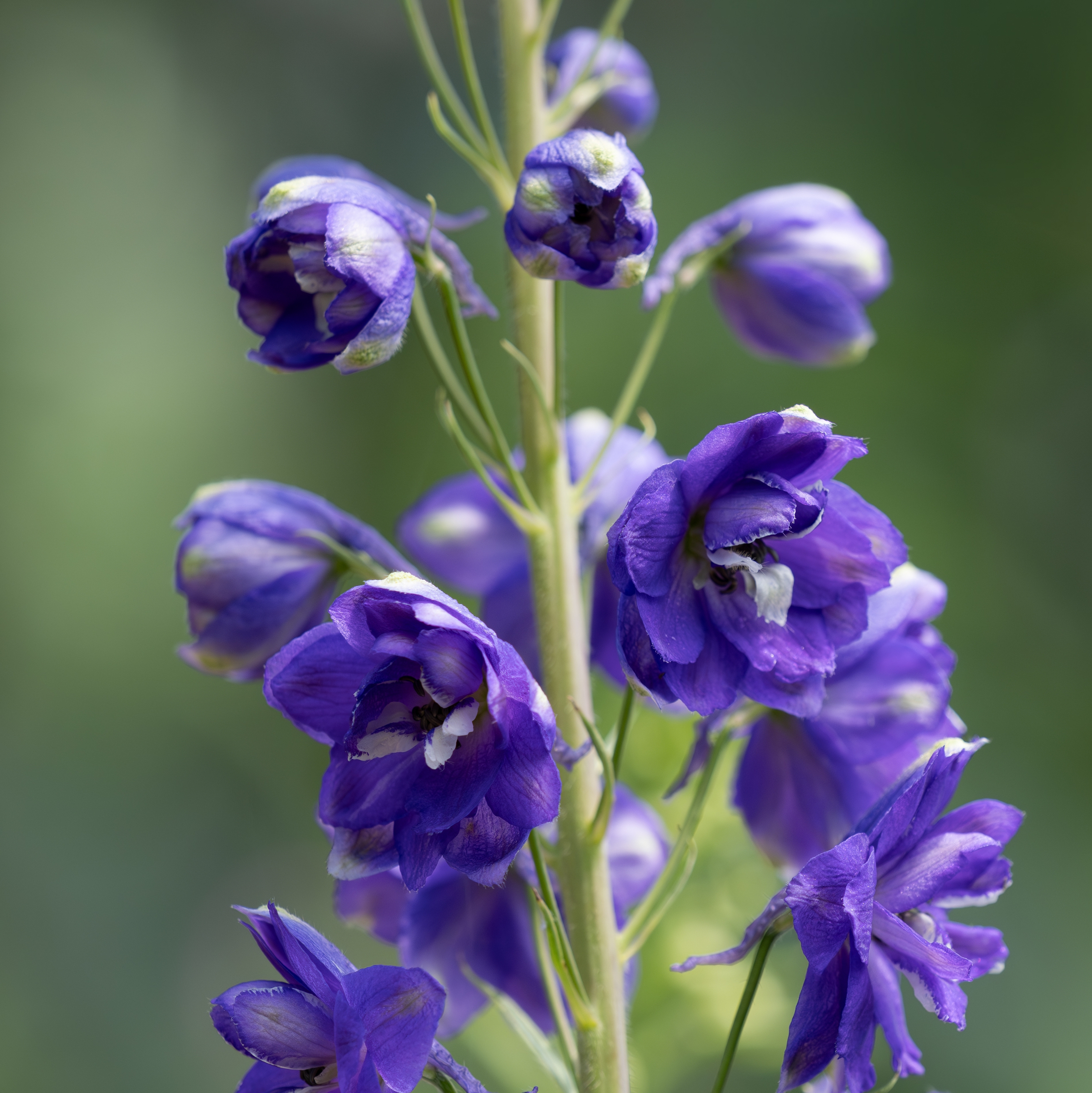
Delphiniums bring height and colour to summer borders with their tall spires of blue, purple, pink or white flowers. Rising above neighbouring plants, their flower spikes create a striking display, particularly when several are planted together.
Long associated with traditional cottage gardens, Delphiniums also work beautifully in mixed perennial borders. They need a little more attention than some garden plants, especially when their tender spring shoots emerge, but their summer flowers make the effort worthwhile.
When Does It Flower?
Perennial Delphiniums usually flower from June to July, with some varieties producing another, smaller display later in summer.
The flowers open gradually along upright stems, often with a contrasting white or dark centre known as a bee.
Flower colours include:
💙 Sky blue, gentian blue and deep indigo
💜 Lavender, violet and rich purple
🤍 Pure white and creamy white
🩷 Soft pink and rose
Some varieties have densely packed flower spikes, while others produce more open, branching stems. Heights range from compact plants around 90cm to towering varieties reaching 1.5–2m.
The flowers are also attractive to bumblebees, particularly varieties with accessible, single blooms.
How to Grow
Choosing the Right Position
For healthy growth and reliable flowering, choose a position with the following conditions:
Sunlight: Full sun encourages strong growth and flowering.
Soil: Fertile, moisture-retentive but well-drained soil.
Drainage: Avoid waterlogged ground, especially during winter.
Exposure: Shelter from strong winds helps protect tall flower spikes.
Planting
Plant Delphiniums in spring, in fertile, well-drained soil enriched with garden compost.
Plant at the same depth as the original container.
Space plants approximately 45–60cm apart, allowing more room for taller varieties.
Water thoroughly after planting.
Compact varieties can also be grown in large containers with good drainage.
Caring for the Plant
Delphiniums benefit from some attention during spring and early summer, particularly as their flower spikes develop.
Watering: Water during prolonged dry spells, especially while plants are establishing or developing flowers.
Feeding: Apply a mulch of garden compost in spring. Container-grown plants may benefit from occasional liquid feeding.
Supporting: Tall varieties need sturdy supports to prevent their flower stems from bending or snapping. Put supports in place early, before the plants reach their full height.
Tidying: Remove damaged or yellowing leaves as needed.
After Flowering
Once the first flower spikes have faded, cut them back to the base. This can encourage a second, smaller display in late summer or early autumn.
Keep plants watered during dry weather while fresh growth develops. A second flush is not guaranteed, but established plants often respond well to cutting back.
Leave healthy foliage in place while it remains green, allowing the plant to build up energy for the following year.
Autumn and Winter Care
Perennial Delphiniums are generally hardy in UK gardens, provided the soil drains well.
As the foliage dies back in autumn, cut the stems down to ground level and remove dead leaves.
Container-grown plants benefit from a sheltered position during winter, particularly where prolonged rain could leave the compost waterlogged.
Dividing and Propagation
Established clumps can become less vigorous over time. Every few years, they may benefit from being lifted and divided in early spring, keeping the healthiest sections for replanting.
Delphiniums can also be grown from seed or propagated from young shoots taken as cuttings in spring.
Common Problems
A few pests and diseases to watch out for include:
Slugs and snails: Protect tender new growth from early spring and check plants regularly.
Powdery mildew: A white coating may develop on leaves, particularly during dry weather. Water during prolonged drought and avoid overcrowding.
Black blotch: Dark patches may appear on leaves and stems. Remove affected foliage and clear away fallen plant material.
Cut Flowers
Delphiniums make beautiful cut flowers, bringing height and rich colour to summer arrangements.
Cut stems when the lower flowers have opened and the upper buds are still developing. Place them promptly in clean water and use a sturdy vase to support their height.
All parts of Delphiniums are poisonous if eaten, so keep children and pets from ingesting them.
The foliage and sap may also irritate sensitive skin. Wear gloves when handling or cutting back plants.
Why Grow Delphinium?
Delphiniums give summer borders height, colour and a distinctive upright shape. Their flowers look particularly attractive among roses, peonies and lower-growing perennials.
They do need protection from slugs and sturdy support as they grow, but with suitable conditions and a little seasonal care, they can provide a memorable summer display.
Visit us in Kington for advice on choosing Delphiniums and other perennials for your garden.
We use cookies to ensure that we give you the best experience on our website. If you continue to use this site we will assume that you are happy with it.