How to Grow and Prune Wisteria for Healthy Growth and Reliable Flowering
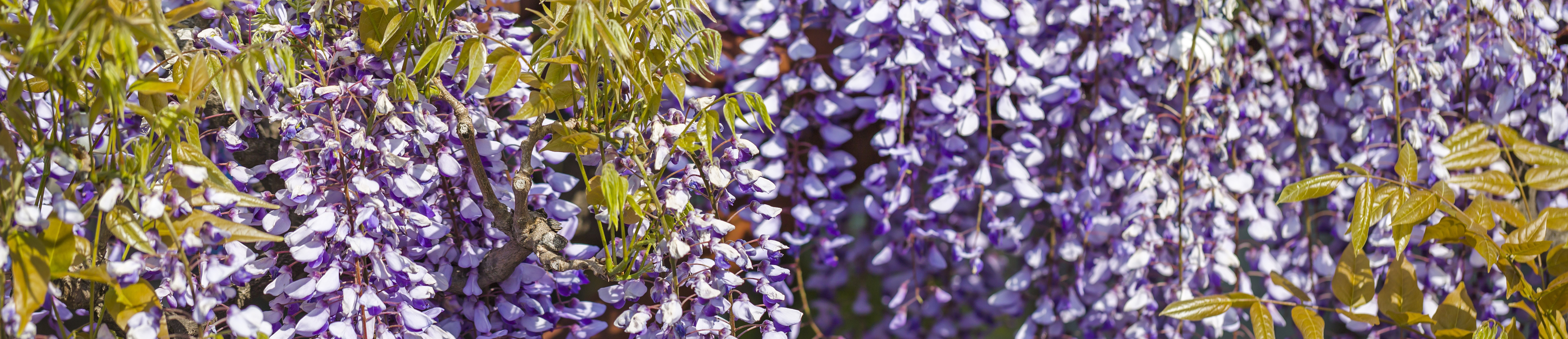
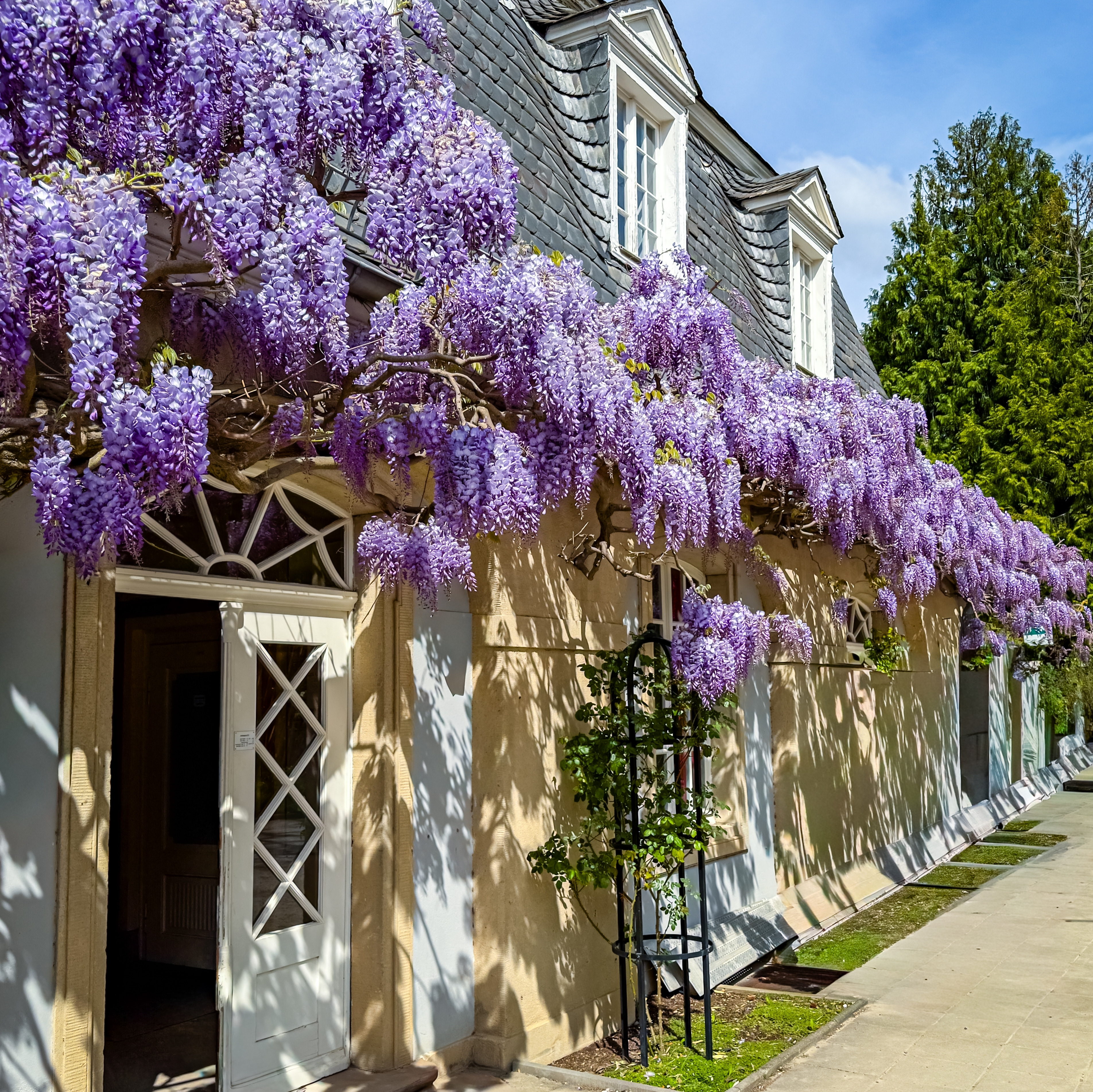
Wisteria is one of the most breathtaking climbers you can add to your garden. With its cascading blue-lilac, white, pink or deep purple flowers and beautiful fragrance, it transforms walls, pergolas, and arches into showstopping features every spring.
This guide explains how to grow and prune wisteria, including where to plant it, how to provide suitable support, when to prune and how to care for established plants.
👉 Tip: Choose a plant that is already flowering when buying. This helps ensure reliable blooms sooner.
📍 Where to Grow Wisteria Successfully
Choosing the right location gives wisteria the best chance to thrive. A sunny, sheltered position with plenty of room to grow will encourage healthy growth and a good display of flowers.
Ideal Conditions
Sunlight: Full sun for best flowering
Soil: Moist but well-drained
Position: Sheltered from strong winds
Space: Allow up to 6m growth if unpruned
Support Matters
Wisteria becomes heavy over time, so install strong supports early:
Galvanised steel wires on walls
Sturdy pergolas or arches
Strong wooden or metal trellis
👉 Pro Tip: Fix horizontal wires about 30cm apart for easy training and maintenance.
✂️ How and When to Prune Wisteria
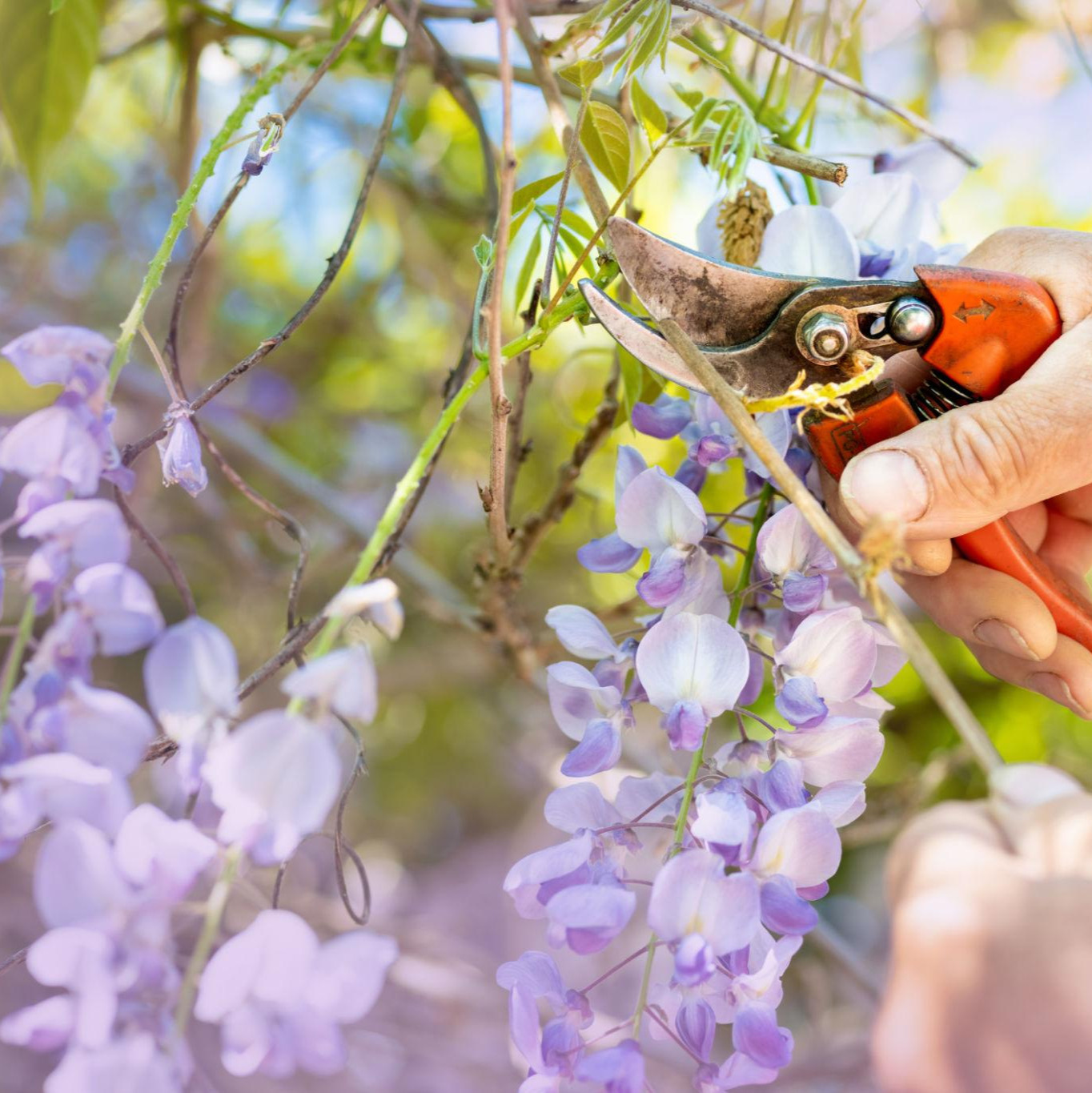
Regular pruning is an important part of caring for wisteria. Pruning twice a year, once in summer to control vigorous growth and again in winter to maintain the framework and flowering spurs, helps encourage a good display of flowers and keeps the plant manageable.
🌞 Summer Pruning: July to August
During summer, wisteria can produce long, vigorous shoots that quickly become tangled. Cut these whippy shoots back to around five or six leaves from the main branch. This controls the plant’s size, lets more light and air into the framework and helps encourage the development of flower buds.
Tie in any shoots that you want to keep for extending the plant’s permanent framework rather than cutting them back.
❄️ Winter Pruning: January to February
Once the leaves have fallen and the framework is easier to see, return to the shoots shortened in summer. Cut them back further, leaving two or three buds from their base. These short spurs are where flowers can develop.
Winter is also a good opportunity to remove dead, damaged or unwanted growth and check that ties and supports are secure.
⚠️ Note: Hard pruning may reduce flowering temporarily, but improves long-term health.
🌱 How to Train Wisteria
Training helps shape your plant and improves flowering.
Tie in young shoots to your support system
Train horizontally to encourage more blooms
Avoid letting it tangle into dense masses
👉 Expert Insight: Horizontal growth produces more flowers than vertical growth.
🌸 Extra Tips for Caring for Wisteria
A few additional care measures can help keep wisteria healthy and encourage reliable flowering:
Feed in spring with a general-purpose or flowering-shrub fertiliser, following the manufacturer’s instructions
Avoid excessive nitrogen, which can encourage leafy growth at the expense of flowers
On light, sandy soils that may be low in potassium, sulphate of potash can help support flower formation
Mulch in spring to help the soil retain moisture
Be patient, as young wisteria can take several years to begin flowering
Prune twice a year to control vigorous growth and encourage the development of flowering spurs
🌺 Visit Our Garden Centre in Kington
Thinking of adding wisteria to your garden, or looking for advice on caring for an established plant? Our knowledgeable team can help you choose a suitable variety and offer practical advice on planting, supports, pruning and ongoing care.
Visit us in Kington to explore our range of wisteria, supports and pruning tools, and chat to our team about how to keep your wisteria healthy, manageable and flowering beautifully for years to come.
We use cookies to ensure that we give you the best experience on our website. If you continue to use this site we will assume that you are happy with it.