
Open today 9:00 - 17:00
Spring bulbs are ideal for bringing pots and containers to life after winter. Tulips, daffodils, hyacinths, crocuses and other spring favourites can be planted alone for a bold display or combined to provide different colours, heights and flowering times throughout the season.
Pots are particularly useful on patios, beside doorways and in smaller gardens, and can be moved into prominent positions as the bulbs come into flower. With a little planning in autumn, you can create displays that provide weeks of spring colour.
Spring bulbs will grow well in many types of pot, but good drainage is essential. Bulbs can rot if they remain in cold, waterlogged compost over winter, so always choose a container with drainage holes in the base.
For the best results, look for:
Terracotta, glazed ceramic, wooden planters and lightweight outdoor pots can all work well. Terracotta is porous, so containers may need checking more frequently for water during dry weather.
Top Tip: Raise pots slightly on pot feet during winter to keep drainage holes clear and allow excess water to escape.
One of the best techniques for spring containers is “lasagne planting” — layering bulbs to extend flowering over many weeks.
Start with the largest, later-flowering bulbs at the bottom of the container, add a layer of compost, then plant medium-sized bulbs above them. Smaller, earlier-flowering bulbs such as crocuses or muscari can be planted nearer the surface.
For example:
Position bulbs in each layer so they are not sitting directly above those beneath them. Add compost between the layers and finish with enough compost to cover the uppermost bulbs at the appropriate depth.
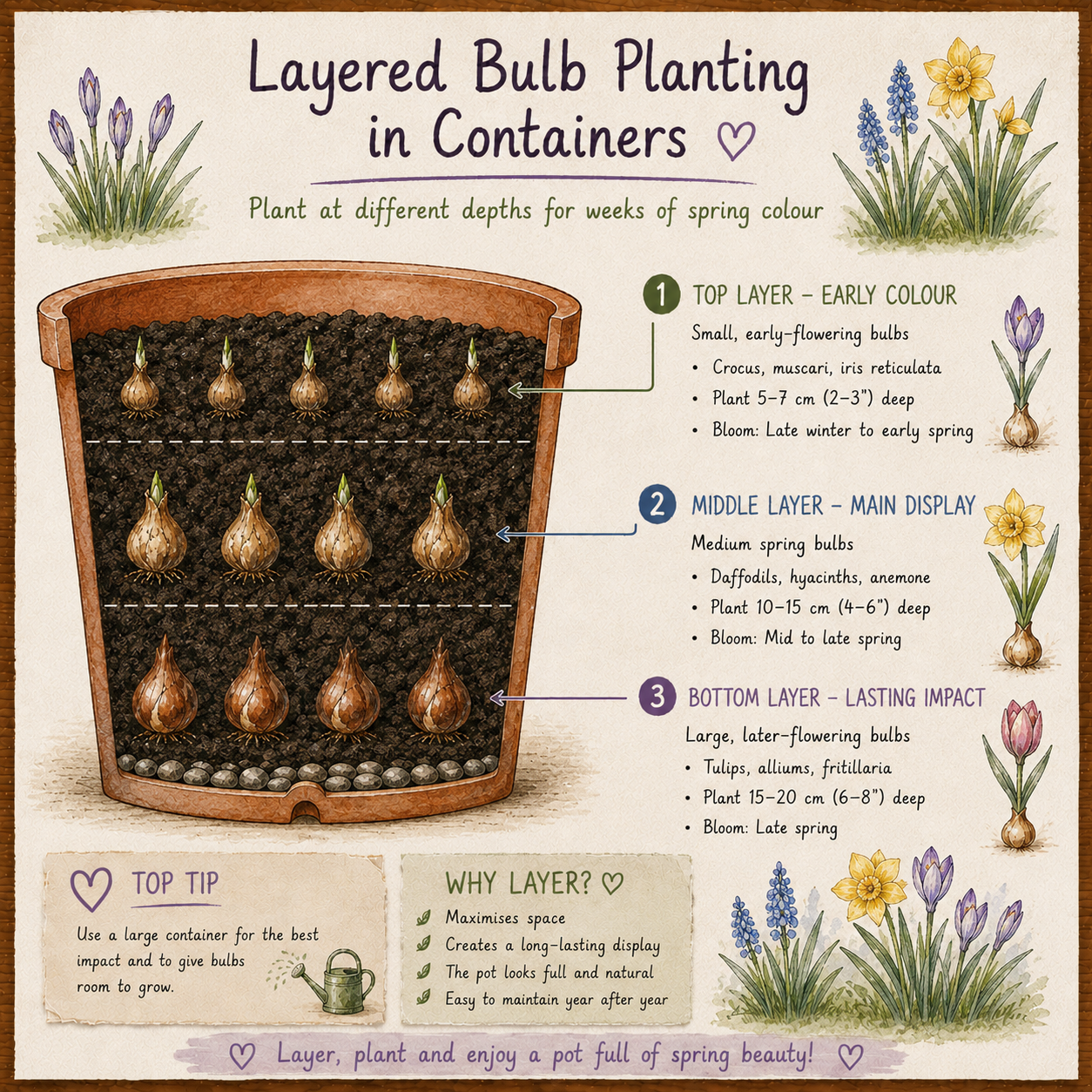
Layered planting works particularly well in deeper containers and gives each group of bulbs room to grow while allowing their shoots to find their way to the surface.
Top Tip: Make sure the container drains freely. Bulbs need moisture while establishing, but sitting in cold, waterlogged compost over winter can cause them to rot.
Layering different bulbs isn’t the only way to create an effective spring container. Planting one variety in generous groups can produce a simple, coordinated display and works particularly well with tulips, daffodils and hyacinths.
You could try:
For a fuller effect, plant bulbs relatively closely while ensuring they are not touching one another or the sides of the container.
Spring bulbs can also be combined with seasonal plants to create fuller containers and provide colour while you wait for later bulbs to flower. Low-growing plants work particularly well around emerging bulbs without overwhelming them.
Try combinations such as:
Choose plants that enjoy similar growing conditions and consider their eventual height so that smaller plants aren’t hidden as the bulbs grow.
Top Tip: You can refresh the seasonal planting as individual plants finish flowering, while leaving the bulbs undisturbed to complete their growing cycle.
If you missed the autumn planting season, or simply want to add colour to a particular area as spring arrives, pots of bulbs already in growth can be useful.
Flowering or soon-to-flower bulbs in nursery pots can be placed inside larger decorative containers, allowing you to create a seasonal display without disturbing the bulbs. Once flowering has finished, the inner pots can be removed and replaced with another seasonal display.
This approach works particularly well:
After flowering, don’t simply discard bulbs you want to keep. Allow the foliage to die back naturally so the leaves can continue feeding the bulb for the following year.
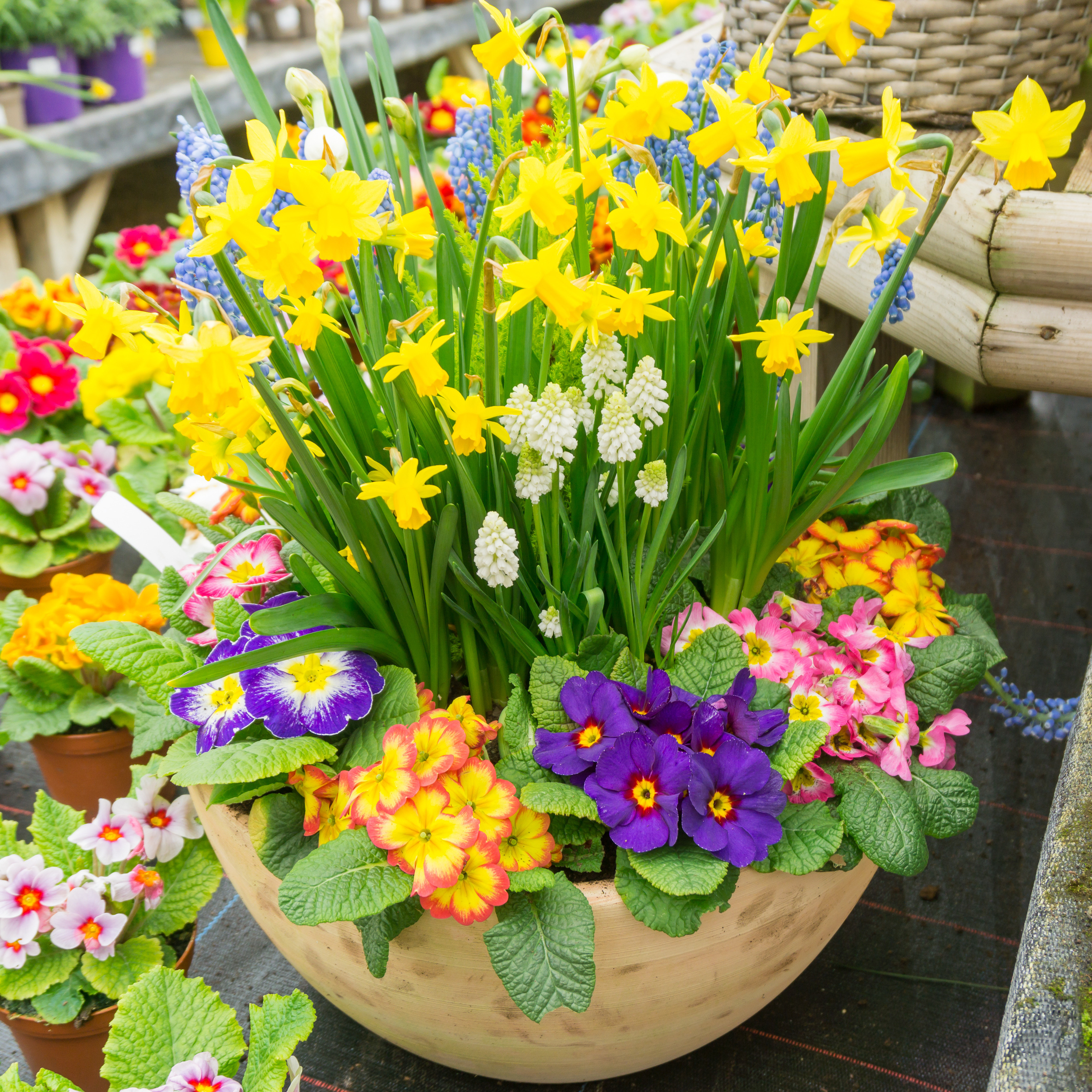
Spring bulbs in containers need a little more attention than bulbs growing in the ground, particularly when it comes to watering and drainage.
If you want to keep the bulbs for future years, allowing the foliage to die back naturally is particularly important. The leaves continue to photosynthesise after flowering, helping the bulb replenish the energy reserves it needs for the following year’s growth.
Most spring-flowering bulbs can be grown successfully in containers, but some are particularly well suited to pots because of their size, flowering habit or ability to combine with other bulbs and seasonal plants.
Good choices include:
You can grow a single variety for a coordinated display or combine complementary bulbs to experiment with colour, height and planting style.
For more advice on choosing bulbs, planting depths and growing spring bulbs in beds, borders and lawns, see our guide to planting spring bulbs.
Spring is planned in autumn, and choosing the bulbs is all part of the fun. Explore different colours, flowering times and varieties to create containers that will bring your garden to life as winter gives way to spring.
We stock a wide range of spring-flowering bulbs, along with pots, peat-free compost and other planting essentials for creating your own spring displays.
Visit us in Kington to browse our seasonal bulb range at your leisure. And if you would like some help choosing varieties or planning your containers, our team will be happy to offer practical advice.