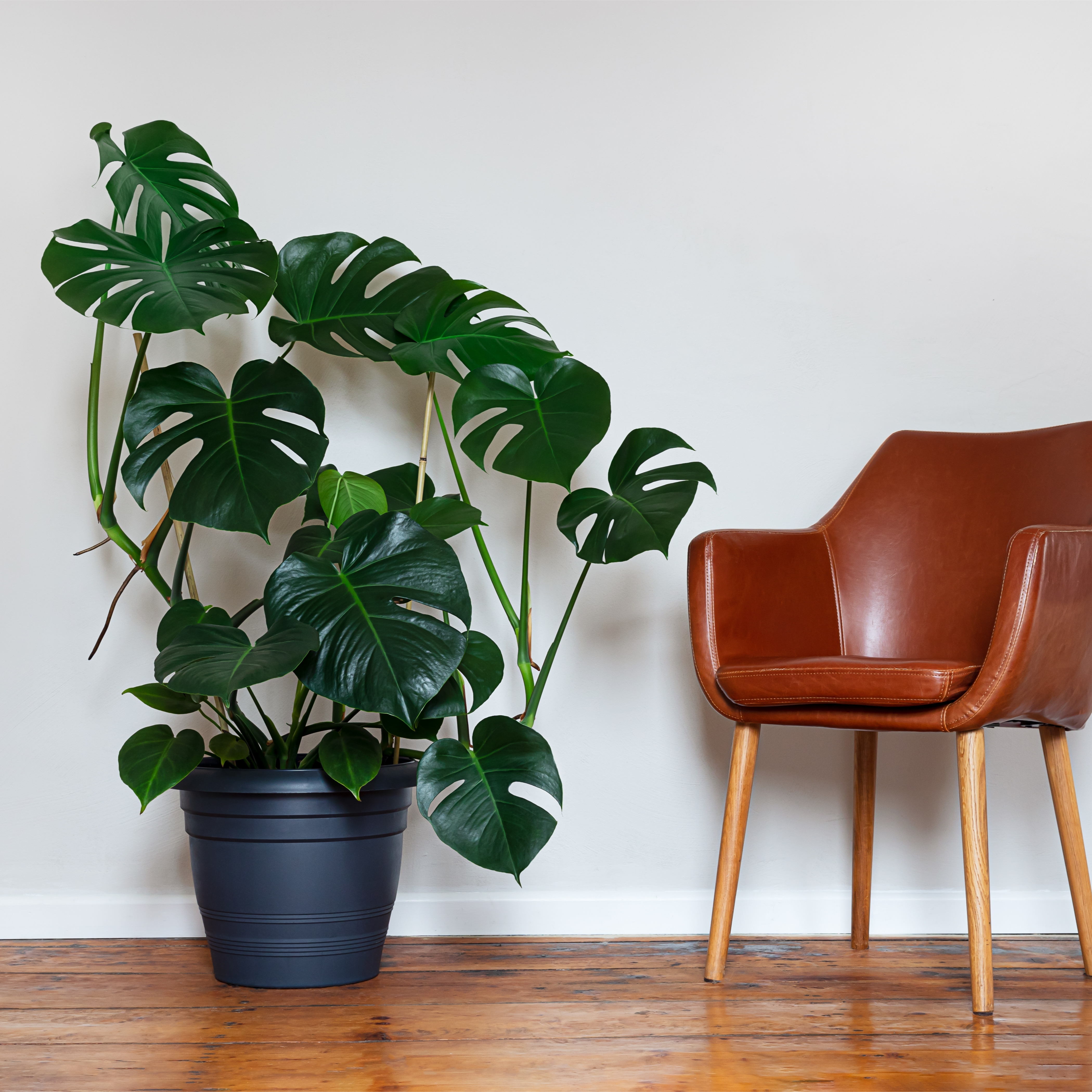
Monstera deliciosa

Monstera deliciosa: The Iconic Swiss Cheese Plant

Few houseplants are as instantly recognisable as the Monstera. With its large glossy leaves and dramatic natural holes, this tropical plant has become one of the most popular indoor plants in the world.

Easy to grow, long-lived and wonderfully architectural, Monstera brings a bold jungle feel to homes, offices and conservatories. Given the right conditions, it can grow into an impressive specimen that becomes a true focal point indoors.

🌿 About Monstera

Healthy Monstera deliciosa growing indoors displaying its large glossy leaves with distinctive natural splits

Monstera deliciosa is native to the tropical rainforests of Central America, where it grows as a climbing plant beneath the forest canopy.

Its distinctive leaves develop splits and holes as they mature, a feature known as fenestration. These openings help the plant withstand strong winds and allow light to reach lower leaves in its natural habitat.

Although often called the Swiss Cheese Plant, Monstera is actually a member of the arum family, alongside popular houseplants such as Philodendrons and Peace Lilies.

As the plant matures, leaves can grow to impressive sizes, often reaching 30–60cm across indoors.

🌺 Why Monstera Is So Popular

Few houseplants combine beauty and simplicity as successfully as Monstera.

Its popularity comes from several factors:

🌿 Stunning tropical foliage

🌿 Relatively easy care requirements

🌿 Fast growth in the right conditions

🌿 Tolerance of normal indoor environments

🌿 Long lifespan

🌿 Suitable for both beginners and experienced plant enthusiasts

As the plant matures, each new leaf often emerges larger and more dramatic than the last, making Monstera particularly rewarding to grow.

πŸ‘‰ Expert Tip: Mature Monsteras develop larger leaves with more splits and holes when given bright indirect light and adequate support.

β˜€οΈ How to Grow and Care for Monstera

Monstera are surprisingly forgiving plants but perform best when their tropical origins are taken into account.

πŸ’‘ Light

Place your Monstera in bright, indirect light.

A position near a window is ideal, provided harsh midday sunlight does not strike the leaves directly. Too little light can slow growth and reduce leaf fenestration.

🌑️ Temperature

Monstera thrive in typical household temperatures between 18Β°C and 27Β°C.

Avoid placing plants near cold draughts, exterior doors or unheated rooms during winter.

πŸ’§ Watering

Allow the top few centimetres of compost to dry before watering.

Monsteras prefer slightly moist soil but dislike sitting in waterlogged compost. Always ensure excess water can drain away freely.

🌱 Feeding

Feed every two to four weeks during spring and summer using a balanced liquid houseplant fertiliser.

Reduce feeding during autumn and winter when growth naturally slows.

πŸ’¨ Humidity

Although adaptable, Monsteras appreciate moderate to high humidity.

Occasional misting, grouping plants together or using a pebble tray can help increase humidity around the plant.

🌿 Support

As climbing plants, Monsteras benefit from support as they grow.

A moss pole or coir pole encourages larger leaves and more natural growth, while also helping the plant remain upright.

🟑 Common Monstera Problems

Most Monstera problems are caused by environmental conditions such as overwatering, insufficient light or low humidity. Like other houseplants, they can also occasionally be affected by common indoor plant pests.

Yellow leaves are usually caused by overwatering or poor drainage.

Brown leaf edges often indicate dry air or inconsistent watering.

Drooping leaves may be caused by underwatering, poor light levels or sudden temperature changes.

A variety of pests can occasionally affect Monstera. Regular inspection of leaves, stems and compost helps identify infestations early. See our Houseplant Pests guide for identification and treatment advice.

🌱 Understanding Monstera Growth

Young Monsteras look very different from mature plants.

Juvenile leaves are typically heart-shaped and solid. As the plant grows, leaves gradually develop the characteristic splits and holes that make Monstera famous.

Growth is usually strongest during spring and summer. Under favourable conditions, a healthy plant can produce several new leaves each year.

Aerial roots often emerge from stems as the plant matures. These help the plant climb in nature and can be left alone or gently guided into the compost.

πŸ‘‰ Expert Tip: Don’t remove aerial roots unless absolutely necessary. They are a normal and healthy part of Monstera growth.

🌿 Popular Monstera Varieties

While Monstera deliciosa remains the most widely grown species, several other varieties have become popular with collectors.

Monstera adansonii – Often called the Swiss Cheese Vine, this species has smaller leaves with numerous holes and a trailing or climbing habit.

Monstera obliqua – A rare collector’s plant famous for its extremely delicate leaves and extensive perforations.

Monstera siltepecana – A climbing species with attractive silver-patterned foliage and silvery-green leaves.

Monstera pinnatipartita – Known for its deeply divided mature leaves and dramatic appearance.

🌿 Visit Our Garden Centre

Looking for the perfect Monstera? Our team can help you choose the right plant and provide expert advice on watering, feeding, support and long-term care.

πŸ‘‰Β Visit usΒ inΒ KingtonΒ and explore our range of beautiful houseplants, pots and indoor plant accessories.