
Open today 9:00 - 17:00
Hedgehogs are welcome visitors to many UK gardens, emerging after dark to search for beetles, caterpillars, worms and other invertebrates. Gardens can provide valuable feeding areas, shelter and safe routes between habitats, particularly when neighbouring gardens are connected.
Helping hedgehogs doesn’t require major changes to the way you garden. Providing access, fresh water, suitable habitat and somewhere quiet to shelter can all make a difference. Just as importantly, a few simple precautions can reduce the risk of accidentally injuring a hedgehog while carrying out everyday garden jobs.

Hedgehogs remain widespread across Britain, but their numbers have declined substantially over recent decades. Habitat loss, road traffic, declining invertebrate populations and changes in the way land is managed are among the pressures they face.
Gardens can form an important part of the connected habitat available to them. A single garden can provide food or shelter, but a network of accessible gardens gives hedgehogs much more room to forage, find mates and locate suitable nesting and hibernation sites.
The most useful things gardeners can provide are:
One of the most useful things you can do is make sure hedgehogs can actually get into and out of your garden.
Hedgehogs can travel considerable distances during the night as they search for food, shelter and mates. Solid fences and walls can divide otherwise useful habitat into isolated areas.
A gap measuring around 13cm x 13cm at the bottom of a fence is large enough for a hedgehog to pass through. If neighbouring gardens have similar gaps, these routes form what is often called a hedgehog highway.
Before making an opening, check that the other side is safe and that the gap won’t lead directly onto a road, into a steep drop or towards another hazard.
👉 Expert Tip: If several neighbouring gardens are enclosed by fences, creating connected access points can be much more valuable than making a single garden hedgehog-friendly in isolation.
Hedgehogs favour gardens with plenty of cover and places where they can forage without disturbance. A garden doesn’t need to be untidy throughout, but allowing a few areas to remain less intensively managed can create useful habitat.
Suitable places include:
These areas also support many of the invertebrates hedgehogs naturally eat.
Try not to clear every fallen leaf, dead stem or piece of woody material from the garden. Leaving some natural debris in suitable places provides both shelter and feeding opportunities.
A purpose-made hedgehog house can provide additional shelter for nesting, resting or hibernation, particularly in gardens where natural cover is limited.
Ready-made houses are available, or you can construct your own from sturdy untreated timber. A good hedgehog house should be dry, well ventilated and robust enough to remain undisturbed outdoors.
A hedgehog house doesn’t need to be elaborate. You can buy a purpose-made house or make your own, but it should provide a dry, sheltered space where a hedgehog can nest without being disturbed.
Look for or create a shelter with:
If you make a wooden house, use untreated timber or apply only a water-based preservative to the outside. Avoid creosote, solvent-based preservatives and paint, as lingering fumes can be harmful to hedgehogs.
Leave some dry leaves nearby for nesting material. Hedgehogs are quite capable of furnishing their own home and may carry the material inside themselves.
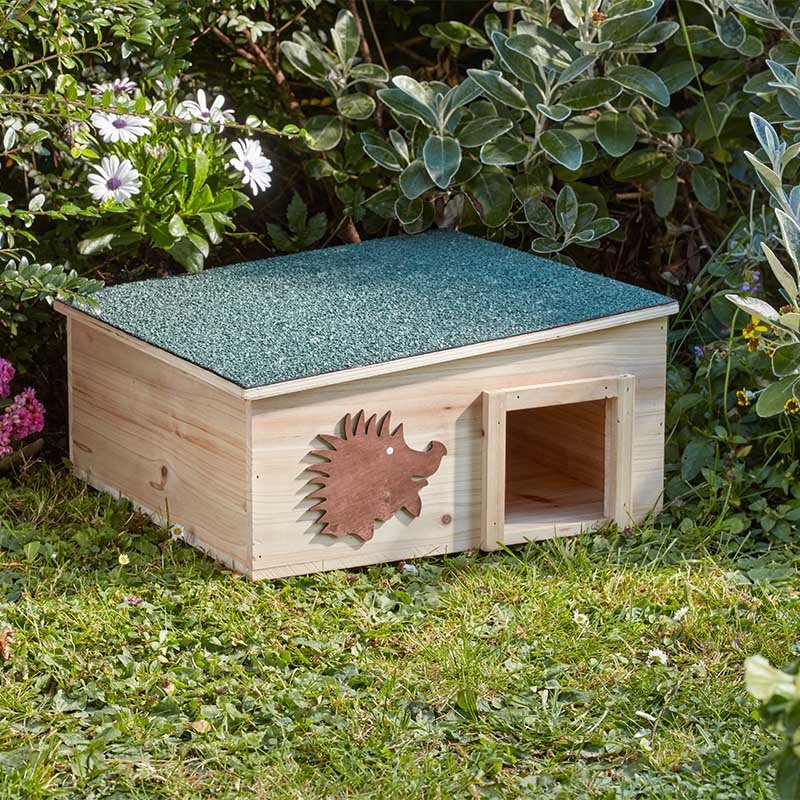
Choose a quiet, sheltered position where people and pets are unlikely to disturb it. Behind a shed, beneath shrubs or towards the back of a border can work well.
Avoid exposed areas that receive strong midday sun or regularly become waterlogged.
Once the house is in place, resist the temptation to keep opening it to see whether anything has moved in. Hedgehogs need somewhere they can remain undisturbed.
👉 Expert Tip: A hedgehog house is most useful when it forms part of a suitable habitat. Access between gardens, natural cover and safe feeding areas are just as important as the house itself.
A shallow dish of clean water is one of the simplest and most useful things you can provide for visiting hedgehogs. Keep it available throughout the year, clean and refill it regularly, and check it particularly often during hot, dry weather.
Garden ponds can also provide drinking water, but make sure wildlife can get out safely. Hedgehogs can swim, but steep-sided ponds can become traps. A gently sloping edge, ramp or securely positioned piece of rough timber provides an escape route.
A healthy garden rich in invertebrates provides natural feeding opportunities, but supplementary food can also be useful, particularly when natural food is harder to find.
Suitable options include:
Put food out in the evening and remove any leftovers the following morning. Clean feeding dishes regularly to reduce the risk of spreading disease between visiting animals.
If cats or other animals regularly take the food, a covered feeding station with a hedgehog-sized entrance can help restrict access. If you’re curious to know whether hedgehogs are visiting, watch the feeding area after dark or position a wildlife camera nearby.
Some foods commonly left out for hedgehogs are unsuitable, while others can cause nutritional problems if fed regularly. Avoid:
Some ordinary gardening activities can pose a serious risk to hedgehogs, particularly because they often rest during the day in long vegetation, leaf piles and other hidden places.
Check long grass, dense ground cover and vegetation before using a mower, strimmer or brush cutter. Hedgehogs may curl up rather than move away from approaching machinery.
Hedgehogs may shelter or nest in compost heaps. Check carefully before turning compost or pushing in a garden fork.
Build bonfires as close as possible to the time you intend to light them. If a pile has been standing, dismantle and rebuild it elsewhere, checking for hedgehogs as you go.
Keep loose netting, mesh, twine and wire off the ground. Cover deep holes and drains, remove litter and make sure steep-sided ponds have an escape route.
A hedgehog-friendly garden should support the invertebrates that form part of a hedgehog’s natural diet.
Be tolerant of a reasonable amount of insect activity and minor plant damage. Many insects that gardeners think of as pests are also part of the wider food web.
Where control is genuinely needed, consider non-chemical methods first, such as barriers, hand removal and cultivation techniques.
This approach supports a wider range of garden wildlife rather than trying to eliminate every caterpillar or insect that appears.
Hedgehogs tend to hibernate between November and mid-March, although the timing varies according to weather conditions and the individual animal.
This makes undisturbed winter shelter particularly important. Leaf piles, log piles, dense vegetation and hedgehog houses may all be used as hibernation sites.
Avoid disturbing established nesting areas unnecessarily during winter. A pile of leaves that appears unused may have a sleeping hedgehog hidden deep inside it.
Seeing a hedgehog after dark is usually perfectly normal. However, a hedgehog that is injured, trapped, lethargic, wobbly or lying exposed may need help. A hedgehog out during daylight can also be a cause for concern, although there are exceptions, including healthy females gathering nesting material or feeding while they have young.
If you find a hedgehog that appears sick, injured or distressed, follow the British Hedgehog Preservation Society’s Hedgehog First Aid Advice. It explains how to safely pick up and temporarily care for a hedgehog while you seek help, and provides details for contacting the BHPS for advice and local independent rehabilitators.
If a hedgehog is obviously injured or in pain and needs urgent treatment, take it to a vet as soon as possible.
Many of the changes that benefit hedgehogs also improve the garden for other wildlife. Longer grass provides habitat for insects, log piles support invertebrates, shallow water benefits birds and small animals, and connected boundaries allow wildlife to move more freely.
You don’t need to turn the whole garden into a wild area. A few quieter corners, safe routes and slightly less intensive management can create valuable habitat alongside the borders, lawns and other areas you use and enjoy.
Small changes can make a garden much easier for hedgehogs to move through, feed in and use for shelter. Providing fresh water, safe access and undisturbed habitat is an excellent place to start.
Visit us in Kington. Our team can help you choose wildlife-friendly garden products and offer practical advice on creating habitats that support hedgehogs and other garden wildlife.