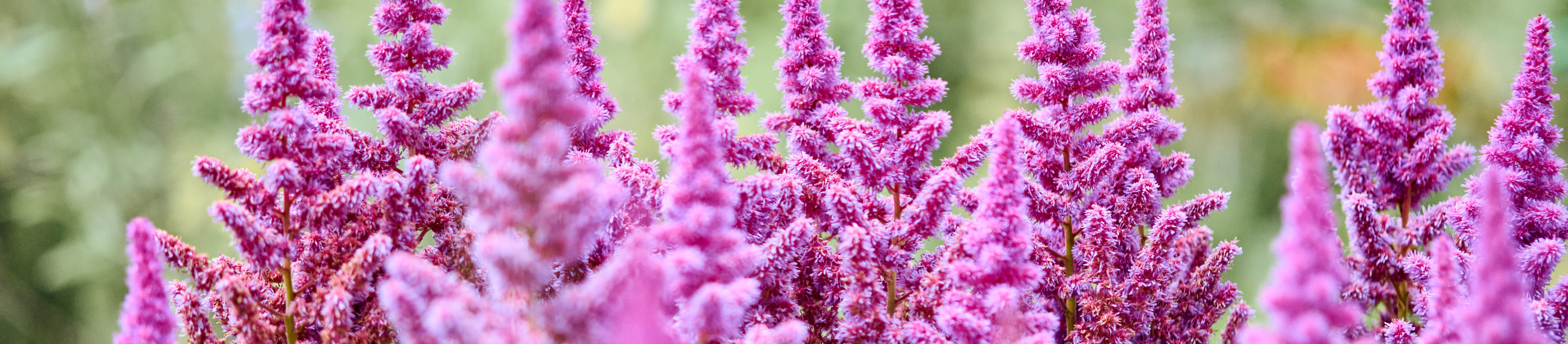
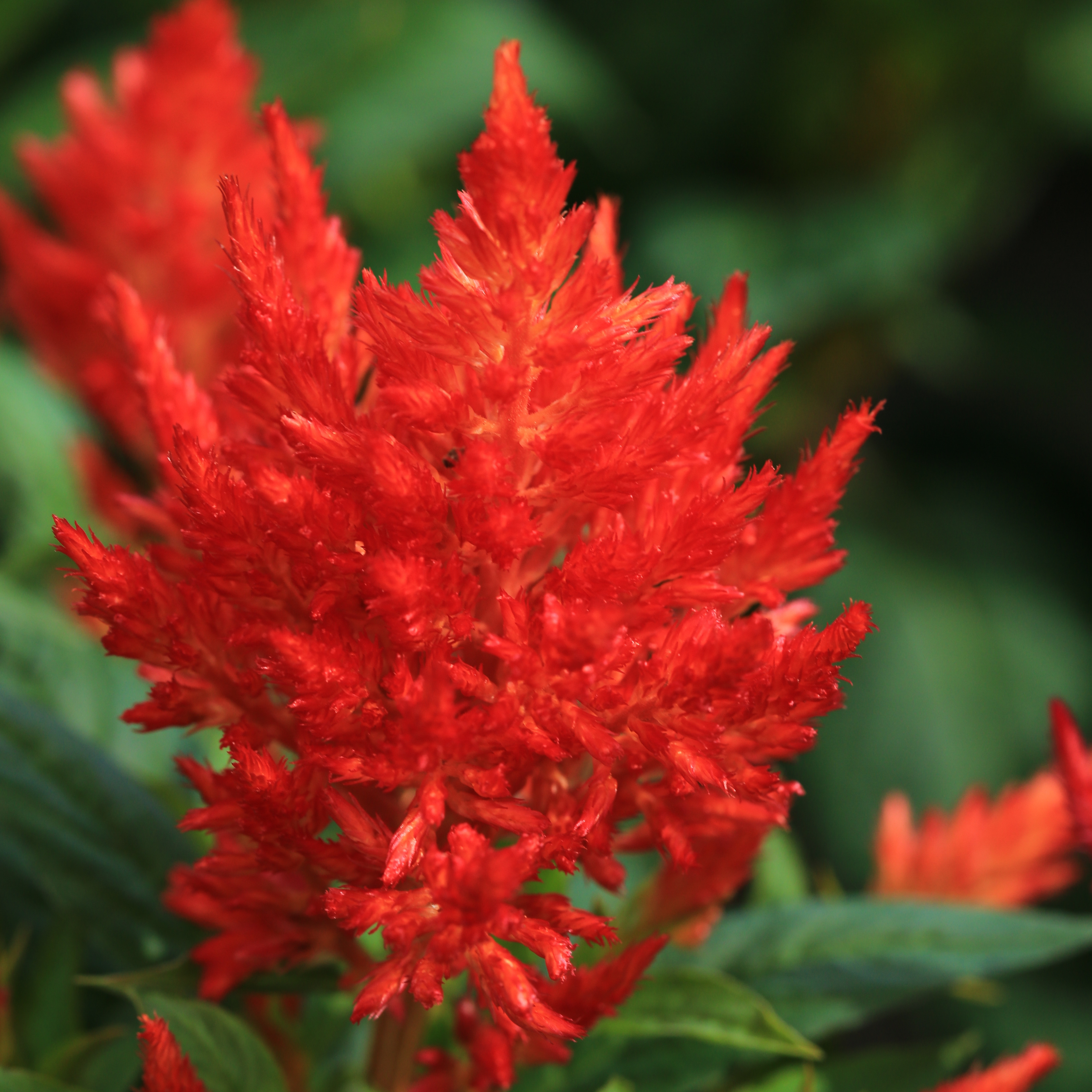
With its elegant, feathery flower plumes rising above attractive fern-like foliage, Astilbe brings soft texture and long-lasting colour to the garden throughout summer. Thriving in reliably moist soil, it is particularly well suited to shaded borders, woodland gardens and waterside planting, where its graceful blooms brighten areas that can often be difficult to fill with flowering plants.
When Does It Flower?
Astilbe typically flowers from June to August, with some varieties continuing into September.
The upright flower plumes are made up of hundreds of tiny blooms, creating the plant’s distinctive fluffy appearance. Flowers are carried well above the foliage, providing movement and long-lasting colour.
Flower colours include:
❤️ Red
💗 Pink
🤍 White
💜 Lilac
🌸 Soft lavender
Individual flower plumes typically measure 15–30cm long, with larger varieties producing particularly impressive displays.
Most Astilbe varieties have little or no noticeable fragrance, but their flowers remain highly attractive to pollinating insects.
Even after flowering, the fading seed heads often provide additional texture well into autumn if left in place.
How to Grow
Choosing the Right Position
These moisture-loving perennials perform best in a position that mimics their natural woodland habitat.
They prefer:
Partial shade or dappled shade.
Full sun only if the soil remains consistently moist.
Rich, fertile soil with plenty of organic matter.
Moist but well-drained conditions.
Sheltered locations protected from drying winds.
Dry soils and prolonged drought can quickly lead to scorched foliage and reduced flowering, so choosing the right location is one of the keys to success.
Planting
Plant Astilbe in spring or autumn while the soil is moist and easy to work.
For best results:
Improve the soil with plenty of garden compost or well-rotted manure before planting.
Position the crown at the same depth it was growing in its pot.
Space plants around 30–60cm apart, depending on the mature variety.
Water thoroughly after planting.
Apply a mulch to help retain soil moisture.
Astilbe is also well suited to large containers, provided they are kept well watered and filled with a moisture-retentive compost.
Caring for the Plant
Watering
Regular watering is essential, particularly during dry weather.
Keep the soil consistently moist.
Water deeply rather than little and often.
Container-grown plants may require watering every day during hot spells.
Mulching each spring helps conserve moisture.
Unlike many perennials, Astilbe dislikes drying out.
Feeding
Feed plants each spring with a balanced general fertiliser.
An annual mulch of compost or well-rotted organic matter will gradually improve soil fertility while helping to retain moisture.
Encouraging More Flowers
To encourage the best display each year:
Keep plants well watered during spring and summer.
Feed annually in spring.
Remove competing weeds.
Divide congested clumps every few years.
Avoid allowing plants to become dry during the growing season.
Healthy, vigorous plants naturally produce more flower spikes.
After Flowering
Deadheading
Spent flower stems can be removed once they fade to keep plants looking tidy.
Alternatively, leave the dried plumes standing through autumn, where they continue to add attractive structure before cutting them back in late winter.
Foliage
Attractive green foliage remains throughout the growing season before naturally dying back in autumn as the plant enters dormancy.
Seasonal Care
Cut back old stems and foliage in late winter or early spring before new growth begins.
Apply a fresh mulch each spring to improve moisture retention and soil quality.
Dividing or Propagation
Established clumps benefit from division every three to five years, particularly if flowering becomes less prolific or the centre of the clump begins to thin.
Lift established plants in spring or autumn and divide them into healthy sections, ensuring each has several shoots and a good root system before replanting.
Common Problems
Astilbe is generally reliable and trouble-free.
Occasionally gardeners may notice:
Leaf scorch, usually caused by dry soil or excessive sunshine rather than disease.
Vine weevil in container-grown plants.
Occasional powdery mildew if plants become stressed during prolonged dry weather.
Slugs and snails, particularly on fresh spring growth. If pests become troublesome, our organic pest control guide offers practical, wildlife-friendly ways to manage them
Most problems are easily avoided by maintaining evenly moist soil, improving air circulation and removing damaged foliage when necessary.
Wildlife Benefits
The flowers attract a variety of pollinators while the dense foliage provides shelter for other beneficial garden wildlife.
Its flowers attract:
🐝 Bees
🦋 Butterflies
🪰 Hoverflies
The dense foliage can also provide useful shelter for insects and other small garden wildlife.
Cut Flowers
Astilbe makes an excellent cut flower.
Fresh flower spikes add soft texture to summer arrangements and can also be dried for long-lasting indoor displays.
For the longest vase life, cut stems just as the flowers begin to open.
Why Grow Astilbe?
Few shade-loving perennials combine graceful flowers, attractive foliage and dependable performance quite like Astilbe. Its elegant plumes bring welcome colour to woodland gardens, damp borders and partially shaded planting schemes at a time when many other shade plants are valued mainly for their foliage.
Whether planted in generous drifts, mixed with ferns and hostas, or grown beside ponds and streams, Astilbe provides reliable summer interest year after year with relatively little maintenance. Visit our garden centre to explore our range of Astilbe varieties and discover the perfect choice for bringing lasting colour and texture to your garden.
We use cookies to ensure that we give you the best experience on our website. If you continue to use this site we will assume that you are happy with it.