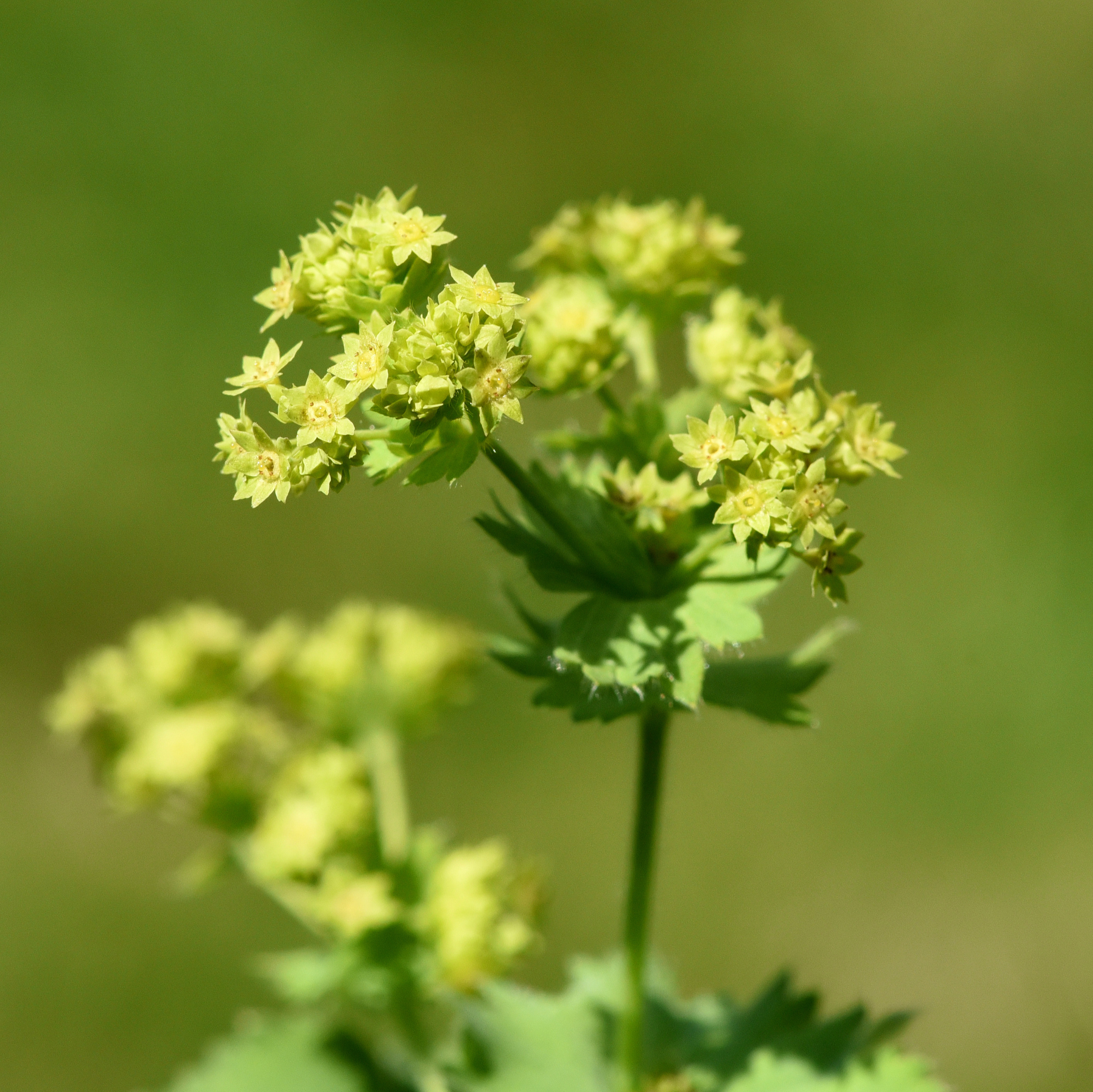
Alchemilla, commonly known as lady’s mantle, is a hardy perennial valued for its soft, scalloped leaves and delicate sprays of lime-green flowers. One of its most charming features is the way droplets of rain and dew gather like tiny jewels on the velvety foliage.
Easy to grow and wonderfully versatile, it is particularly useful for softening the edges of borders, lining pathways and providing attractive ground cover. The most familiar species, Alchemilla mollis, is a favourite in cottage gardens, where its frothy flowers complement roses and other summer-flowering plants.
When Does It Flower?
Alchemilla generally flowers from June through August, although some varieties may continue into early autumn. Its tiny, yellow-green flowers appear in airy clusters above rounded, softly hairy leaves.
The flowers are understated individually, but together they create a delicate, cloud-like effect that works beautifully among more colourful perennials. These small, open flowers can also attract bees, hoverflies and other beneficial insects, making Alchemilla a useful addition to wildlife-friendly borders.
Most garden varieties grow to around 30–50cm tall, although there are smaller species for more compact spaces. Alchemilla erythropoda, for example, forms a much lower mound, while alpine species such as Alchemilla alpina are suitable for rock gardens.
The foliage is equally attractive, particularly after rain when water droplets collect on the distinctive fan-shaped leaves.
How to Grow
Choosing the Right Position
Alchemilla is adaptable and thrives in a wide range of garden conditions, making it an excellent choice for difficult corners and mixed borders.
Sunlight: Grows well in full sun or partial shade. It also tolerates some deeper shade, although flowering may be reduced.
Soil: Prefers moisture-retentive, well-drained soil but tolerates most soil types, including clay.
Drainage: Avoid permanently waterlogged ground or excessively dry positions.
Position: Ideal for border edges, beneath roses and shrubs, or planted in groups to create attractive ground cover.
Planting
Spring and autumn are ideal times to plant, when the soil is moist and temperatures are mild.
Prepare the planting area by removing weeds and incorporating well-rotted garden compost if the soil needs improving. Position the plant at the same depth as it was growing in its container, firm the soil gently and water thoroughly.
For Alchemilla mollis, space plants approximately 30–45cm apart to allow the foliage to develop into rounded clumps.
Smaller varieties also grow well in containers, provided they have adequate drainage and are watered regularly.
Caring for the Plant
Once established, Alchemilla needs very little attention.
Watering: Water regularly during the first growing season. Established plants generally need additional water only during prolonged dry spells.
Feeding: Routine feeding is rarely necessary. An occasional mulch of garden compost will help maintain soil condition and retain moisture.
Maintenance: Remove damaged or tired foliage as necessary to keep plants looking fresh.
Encouraging Fresh Growth
By midsummer, the flowerheads may begin to fade and the foliage can look rather tired, particularly after heavy rain or prolonged dry weather.
Once the main flowering display has finished, cut the flower stems and old leaves back close to the base of the plant. This may seem drastic, but established plants generally respond by producing a fresh mound of attractive new foliage.
Water well after cutting back if the weather is dry. In favourable conditions, you may also enjoy a smaller second flush of flowers later in the season.
If the leaves still look healthy, you can simply remove the faded flowerheads instead. This keeps the plant tidy without temporarily leaving a gap in the border.
After Flowering
One characteristic worth knowing about Alchemilla is its enthusiasm for self-seeding. In favourable conditions, particularly with Alchemilla mollis, seedlings can appear throughout neighbouring borders and pathways.
This can be welcome if you want to fill gaps naturally, but removing spent flowers before they set seed will prevent unwanted spreading.
As autumn progresses, the foliage gradually dies back. You can leave the old growth over winter to provide shelter for small garden creatures, then clear it away in late winter or early spring before the new leaves appear.
Most commonly grown varieties are fully hardy in UK gardens and require no special winter protection.
Dividing and Propagation
Established clumps can be divided every few years to keep them vigorous and create new plants.
Spring or early autumn is the best time. Lift the clump carefully with a garden fork and separate it into smaller sections, ensuring each has healthy roots and growing points.
Replant the divisions promptly and water them thoroughly while they establish.
Alchemilla can also be grown from seed, and naturally occurring seedlings can be lifted and moved to suitable positions while still small.
Cut Flowers
Although its flowers are small, Alchemilla makes an excellent addition to homegrown floral arrangements.
The airy, lime-green flowerheads provide a soft contrast to larger, more colourful blooms, particularly roses, sweet peas and other cottage garden favourites.
Cut the stems when the flower clusters are fully developed and place them in fresh water promptly. The attractive foliage can also be used to add texture to arrangements.
With its charming foliage, delicate summer flowers and ability to thrive in sun or partial shade, Alchemilla is a useful addition to almost any garden. It brings softness to planting schemes, provides reliable ground cover and requires very little maintenance once established.
Visit us in Kington for more ideas on combining hardy perennials and creating beautiful, easy-care garden borders.
We use cookies to ensure that we give you the best experience on our website. If you continue to use this site we will assume that you are happy with it.