
Open today 9:00 - 17:00
Acanthus, commonly known as bear’s breeches, is a striking perennial grown for its large, deeply lobed leaves and tall, architectural flower spikes. Its bold foliage creates a dramatic presence in borders, while the upright flowers add height and structure during summer.
Originally from parts of southern Europe and the Mediterranean region, the commonly grown varieties are hardy in much of the UK. Once established, they can remain in the same position for many years, making them particularly useful for spacious borders and informal planting schemes.
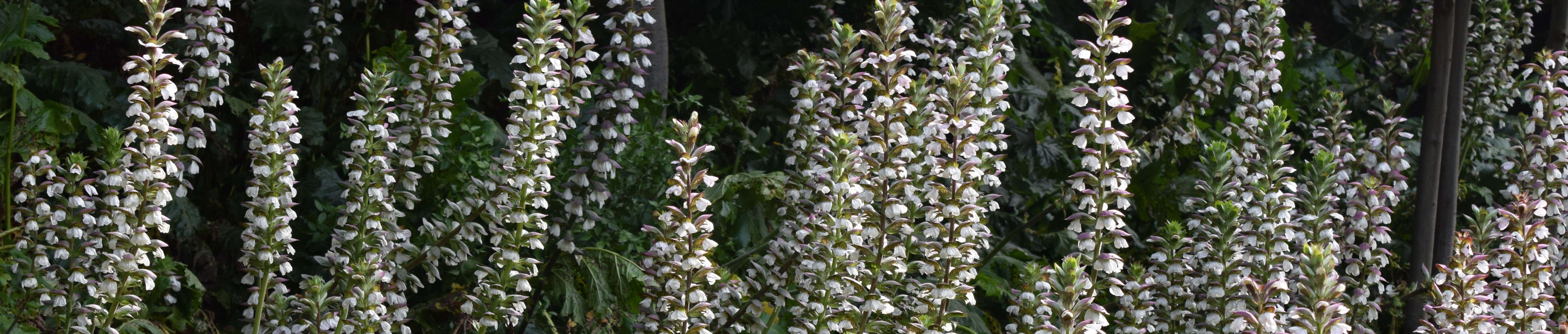
Acanthus generally flowers from June to August, although the exact timing varies with the species, variety and growing conditions. Some varieties continue flowering into late summer or early autumn.
The flowers are arranged along tall, upright spikes above the foliage. Individual blooms are usually white or pale pink, surrounded by distinctive purple, green or pinkish bracts that give the flower spikes their unusual appearance.
The most commonly grown types include:
Acanthus mollis: Often called bear’s breeches, this variety has large, glossy, softly lobed leaves and white flowers with purple bracts. It typically reaches around 1–1.5m tall when flowering.
Acanthus spinosus: Known as spiny bear’s breeches, it has more deeply divided, prickly leaves and distinctive flower spikes. It generally grows to around 1–1.5m tall.
Variegated varieties: Some cultivated forms, including ‘Tasmanian Angel’, have decorative cream and green foliage, providing additional interest even when the plant is not flowering.
The broad leaves are an important part of the display, creating substantial mounds of foliage that contrast beautifully with finer-leaved perennials and ornamental grasses.
Acanthus grows best where its roots have room to develop and its foliage can spread without crowding neighbouring plants. A sunny or lightly shaded position with well-drained soil is ideal.
Sunlight: Full sun or partial shade. Plants generally flower best with plenty of light, although they can tolerate some shade.
Soil: Deep, reasonably fertile soil is preferred, but established plants tolerate a range of soil types.
Drainage: Good drainage is particularly important during winter. Avoid positions where the ground remains waterlogged.
Exposure: A sheltered position can help protect tall flower spikes from strong winds, particularly in exposed gardens.
Choose the planting position carefully. Acanthus develops a substantial root system and can be difficult to remove once established, as pieces of root left in the soil may produce new shoots.
Spring is an ideal time to plant Acanthus, allowing it to establish before its first winter. Container-grown plants can also be planted in early autumn while the soil remains warm.
Prepare the planting area by removing weeds and loosening the soil. Incorporate some well-rotted garden compost if the soil is particularly poor, but avoid creating excessively wet conditions.
Dig a hole large enough to accommodate the root ball and position the plant at the same depth as it was growing in its container. Firm the soil gently and water thoroughly.
Allow plenty of space between plants. Larger varieties may eventually spread to more than a metre across, and their broad leaves can overshadow smaller neighbouring plants.
Acanthus is generally better suited to growing in the ground than in small containers, as its deep roots and vigorous growth require considerable space.
Once established, Acanthus is relatively low maintenance and can tolerate periods of dry weather.
Watering: Water regularly during the first growing season. Established plants usually need additional watering only during prolonged dry spells.
Feeding: A spring mulch of well-rotted compost is generally sufficient. Excessive feeding is unnecessary.
Supporting: The sturdy flower stems are usually self-supporting, although particularly tall varieties may benefit from protection in windy positions.
Tidying: Remove damaged or yellowing leaves as needed, particularly where they become untidy around the base.
Acanthus flowers most reliably once it has become well established in a suitable position. Young plants may take a few years to produce their first flower spikes, so patience is sometimes needed.
Although Acanthus tolerates partial shade, plants growing in deep shade may produce plenty of foliage but fewer flowers. A position with some direct sunlight generally gives the best display.
During spring and early summer, avoid allowing the soil to become excessively dry while flower stems are developing. Established plants tolerate periods of drought, but prolonged dryness at this stage may affect flowering.
Once the flowers have faded, the tall spikes can be cut back to the base to keep the plant tidy. Alternatively, leave a few standing if you enjoy their architectural appearance later in the season.
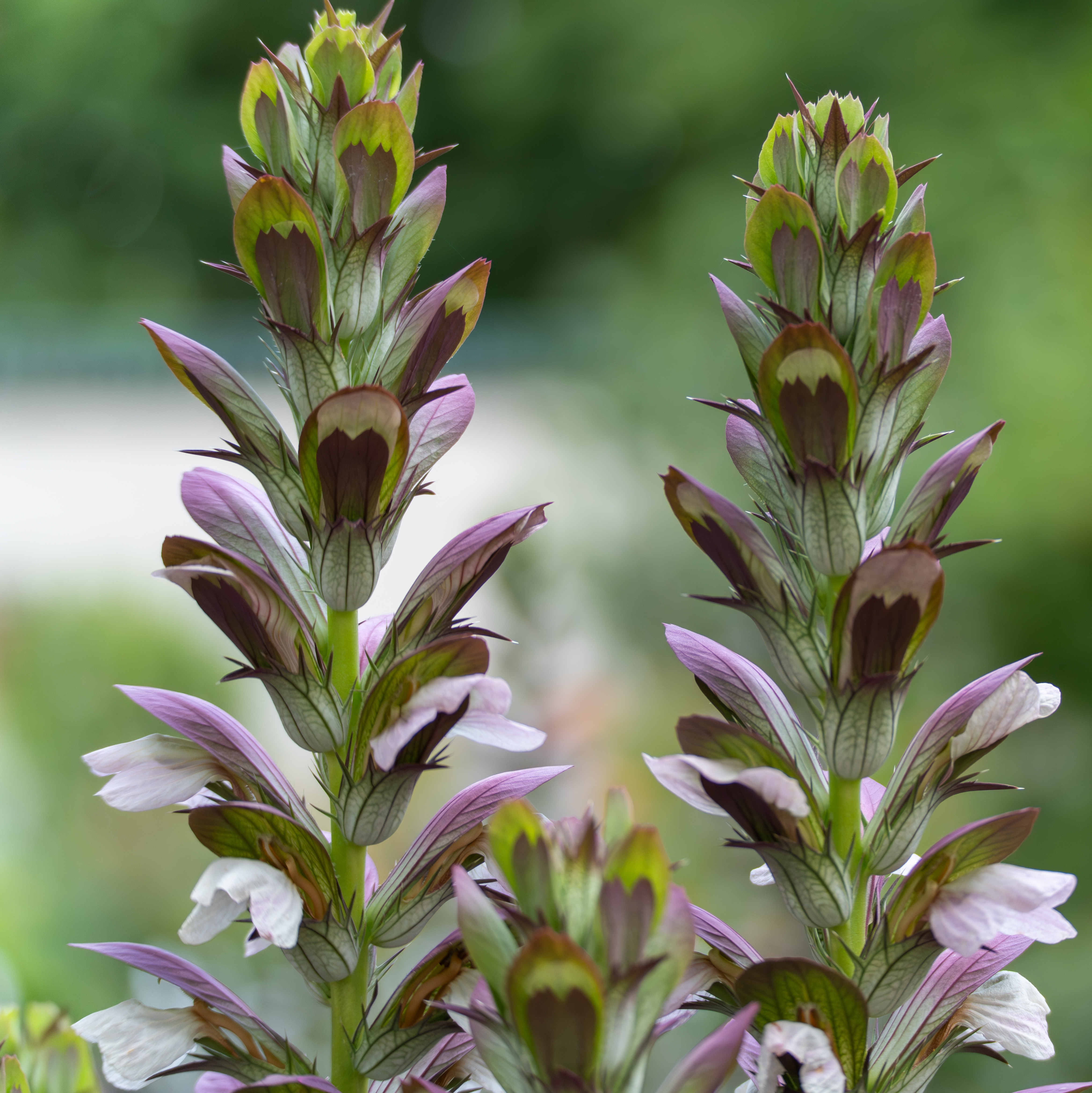
Unlike some summer-flowering perennials, Acanthus does not normally produce a second flush in response to deadheading, so removing spent flower spikes is mainly a matter of appearance.
The bold foliage may remain attractive well into autumn, although some varieties lose their leaves as temperatures fall.
Most commonly grown Acanthus varieties are hardy in UK gardens, provided they are growing in suitable, well-drained soil.
In colder areas, the leaves may die back completely during winter, with fresh growth appearing from the roots in spring. In milder gardens, some foliage may remain through winter.
Remove dead or damaged leaves in early spring to make room for new growth.
A layer of mulch around the base can help protect the roots during cold weather, but avoid piling material directly over the crown, particularly on heavy or poorly drained soil.
Acanthus can be propagated by division or root cuttings, although established plants generally prefer to remain undisturbed.
If division is necessary, it is best carried out in spring as new growth begins. Carefully lift a section from the edge of the clump, ensuring that it has healthy roots and developing shoots.
Root cuttings are another effective method of propagation. Sections of healthy root can be taken during late autumn or winter and encouraged to produce new plants.
However, this ability to regenerate from root fragments also means that Acanthus can spread beyond its intended position. Removing an established plant may be difficult, as even small pieces of root left behind can produce fresh shoots.
For this reason, it is worth choosing a permanent position from the outset, particularly when growing vigorous varieties such as Acanthus mollis.
Acanthus is generally robust, but a few problems can affect its appearance or growth.
Slugs and snails: Young leaves can be damaged as they emerge in spring. Check new growth regularly and protect vulnerable plants where necessary.
Powdery mildew: A white, powdery coating may appear on foliage, particularly during dry conditions. Improve air circulation and water the roots during prolonged drought.
Poor flowering: Too much shade, an immature plant or unsuitable growing conditions can reduce flower production. Plants may take time to establish before flowering reliably.
Unwanted spreading: New shoots may emerge from underground roots beyond the original clump. Remove unwanted growth promptly, taking out as much of the root as possible.
Acanthus flowers can attract bumblebees, which are strong enough to push into the distinctive hooded flowers to reach the nectar.
🐝 Bumblebees are among the main visitors to the flowers, particularly larger species capable of accessing their deep floral structures.
🌿 Garden shelter is another benefit of the broad, overlapping leaves, which create shaded cover around the base of the plant for small invertebrates.
Acanthus is primarily grown for its foliage and architectural flowers rather than as a general-purpose pollinator plant. For a wider range of visiting insects, it is best combined with other nectar-rich perennials that have more accessible flowers.
For more planting ideas, explore our guide to creating a pollinator garden.
Some varieties, particularly Acanthus spinosus, have sharp spines along their leaves and flower bracts. Wear gloves when handling or cutting back the plant, and avoid placing prickly varieties immediately beside narrow paths or areas where people frequently brush against the foliage.
Its vigorous root system is also worth considering before planting, as established clumps can be difficult to remove completely.
Acanthus brings bold foliage, dramatic flower spikes and strong architectural character to garden borders. It works particularly well as a statement plant among softer perennials, providing contrast and structure even when it is not flowering.
With the right position and enough room to develop, this long-lived perennial can become a distinctive feature of the garden for many years.
Visit us in Kington for inspiration on choosing hardy perennials and creating attractive planting combinations.