
Open today 9:00 - 17:00
A pollinator garden can be colourful, productive and full of life. By providing a good range of flowers, suitable habitats and a source of water, even a relatively small garden can support bees, butterflies, hoverflies, moths and other pollinating insects.
You don’t need to redesign the whole garden or turn it into a wildflower meadow. A few well-chosen changes to borders, lawns, containers and the way you manage your garden can make a real difference. The key is to provide what pollinators need throughout their life cycles rather than concentrating solely on flowers during the height of summer.
Pollination happens when pollen is transferred between flowers, allowing many plants to produce seeds and fruit. Bees are among our most familiar pollinators, but they are far from the only ones. Butterflies, moths, hoverflies, beetles and other insects also contribute.
Gardens are particularly valuable because they can contain a diverse mixture of flowering plants in a relatively small area. By choosing plants with different flowering periods, gardeners can provide a more continuous source of nectar and pollen through the seasons.
A pollinator-friendly garden also benefits from variety. Different insects feed in different ways, so a garden containing several flower shapes and plant types is generally more useful than one dominated by a single species.
Simple, open flowers are particularly useful to a wide range of insects. Daisy-like flowers and plants with broad, flat flower heads provide convenient landing places and make nectar and pollen relatively easy to reach. Achillea, echinacea and single-flowered dahlias are good examples, while flowering herbs such as oregano can become exceptionally busy feeding stations when allowed to bloom.
Tubular flowers are valuable too, particularly for long-tongued bumblebees, butterflies and moths. Including different flower shapes therefore helps cater for a wider range of visitors.
Very double flowers can sometimes offer less value because additional petals replace or obscure the flower’s reproductive parts. There is no need to remove double flowers you enjoy; simply grow them alongside plenty of accessible, nectar- and pollen-rich plants.
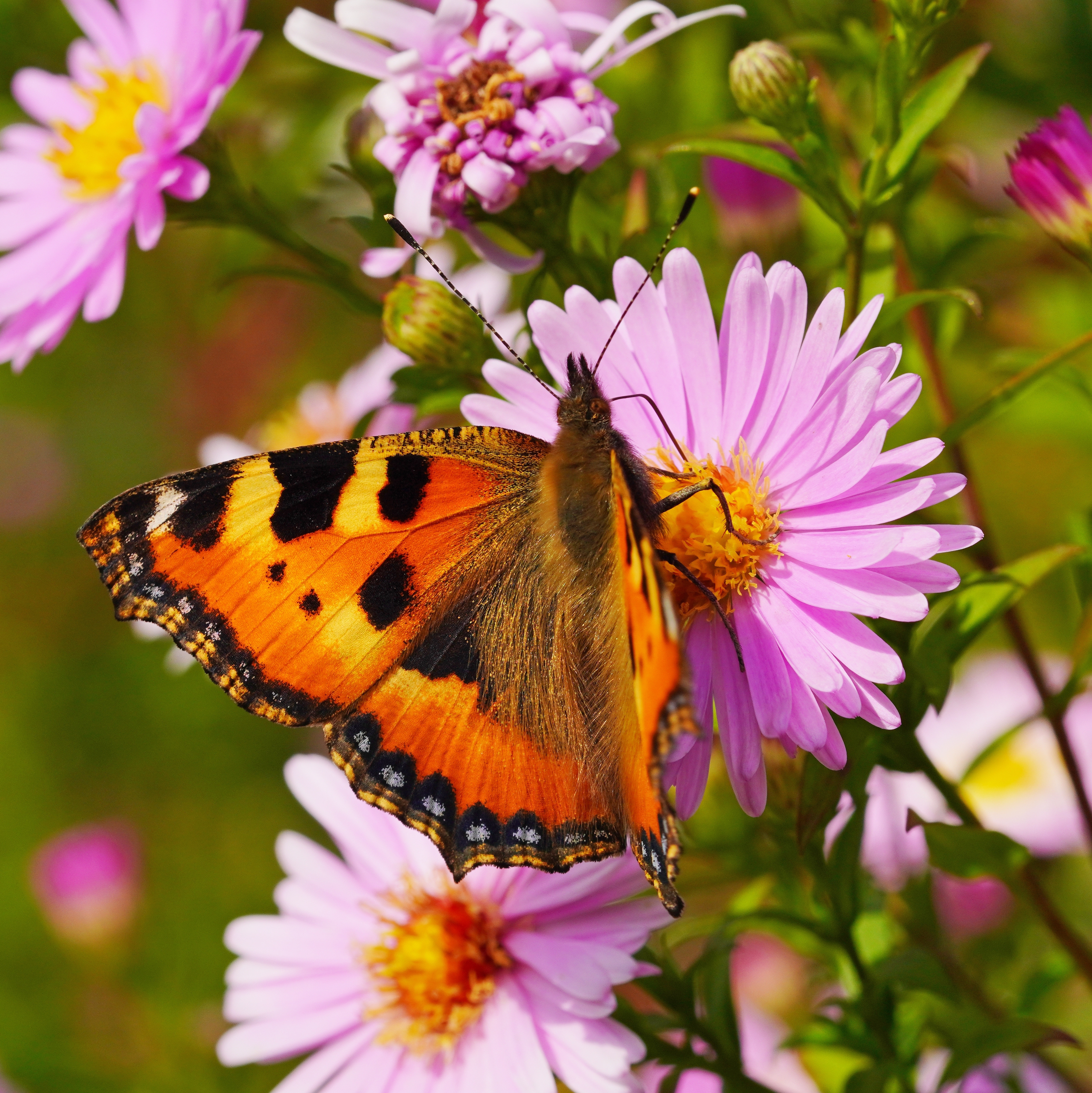
👉 Expert Tip: Watch flowering plants at different times of day before choosing new additions. Bees, hoverflies and butterflies visiting repeatedly are a useful indication that a plant is providing accessible food.
One of the most effective ways to improve a pollinator-friendly garden is to avoid concentrating all the flowering interest into summer. Aim instead for overlapping periods of bloom, from the first mild days of the year into autumn and winter.
🌱 Spring
Crocus · Primrose · Hellebore · Pulmonaria · Honesty · Flowering cherry
☀️ Summer
Lavender · Hardy geranium · Achillea · Borage · Echinacea · Agastache · Scabious
🍂 Autumn
Japanese anemone · Sedum · Michaelmas daisy · Single dahlias · Ivy
❄️ Winter
Mahonia · Sarcococca · Winter honeysuckle · Hellebore · Winter crocus
For the best results, plant pollinator-friendly flowers in groups rather than as isolated specimens, making them easier for foraging insects to find. It is also worth retaining mature ivy where space allows, as its late flowers provide valuable nectar and pollen when fewer other plants are in bloom.
👉 Expert Tip: When planning a border, note the flowering period of each plant rather than simply choosing several labelled as pollinator-friendly. The aim is to avoid a garden full of flowers in June followed by very little in September.
A pollinator garden doesn’t have to look untidy. Allowing selected areas to become less intensively managed can provide additional food and habitat for insects.
You could:
You don’t need a large garden to provide useful food for pollinators. Containers, window boxes and hanging baskets can all support flowering plants, making patios, courtyards and balconies valuable too.
A large container could combine a compact flowering shrub or perennial with seasonal plants around the edge, while several smaller pots can be chosen to flower in succession. Herbs are especially useful where space is limited because plants such as thyme, oregano and chives can provide both a crop and flowers for insects.
Allotments and kitchen gardens can benefit from the same approach. Allowing some herbs to flower or planting pollinator-friendly flowers around beds provides additional forage close to fruit and vegetable crops.
Container plants dry out more quickly than plants in the ground, so regular watering is important. Keeping flowering plants healthy during hot, dry periods helps them continue producing flowers and nectar.
Flowers provide food, but a genuinely pollinator-friendly garden should also offer places where insects can complete their life cycles.
Different species need different habitats. Some solitary bees use hollow stems or holes in wood, while many others nest in the ground. Leaving a small sunny area of bare, undisturbed soil can therefore be just as useful as putting up a bee hotel.
Allowing hollow-stemmed plants to remain standing over winter can also provide shelter for insects. Instead of cutting every perennial to ground level in autumn, leave some stems and seed heads in place until spring.
Plants themselves can provide nesting materials. Wool carder bees, for example, collect fibres from hairy leaves such as those of lamb’s ears to help construct their nests. Leafcutter bees may remove neat semicircular pieces from leaves, including roses. The damage is usually cosmetic and is a good sign that these fascinating solitary bees are using the garden.
👉 Expert Tip: Don’t make the garden too tidy in autumn. Leaving selected stems, seed heads and undisturbed corners until spring provides overwintering habitat without requiring the whole garden to look unmanaged.
Pollinating insects need water as well as food. A pond with shallow edges can provide drinking places, but you don’t need a pond to help.
A garden designed for pollinators needs to be managed with those insects in mind. Avoid pesticides wherever possible and use good cultivation, physical controls and biological controls as the first approach to garden pests.
Some insect activity and plant damage is entirely normal. Aphids, for example, may be unwelcome on plants, but they also provide food for hoverfly larvae and other predators.
If a plant develops a pest problem, identify the cause before deciding whether any treatment is actually necessary. Never spray insecticides onto open flowers where pollinating insects may be feeding.
A few simple changes can make your garden much more welcoming to pollinators. Adding flowers for different seasons, providing nesting and sheltering places, and allowing some areas to grow a little less formally can all help.
Visit us in Kington. Explore our range of plants for pollinators and get practical advice on creating a colourful garden that supports bees, butterflies, hoverflies and other pollinating insects throughout the year.