
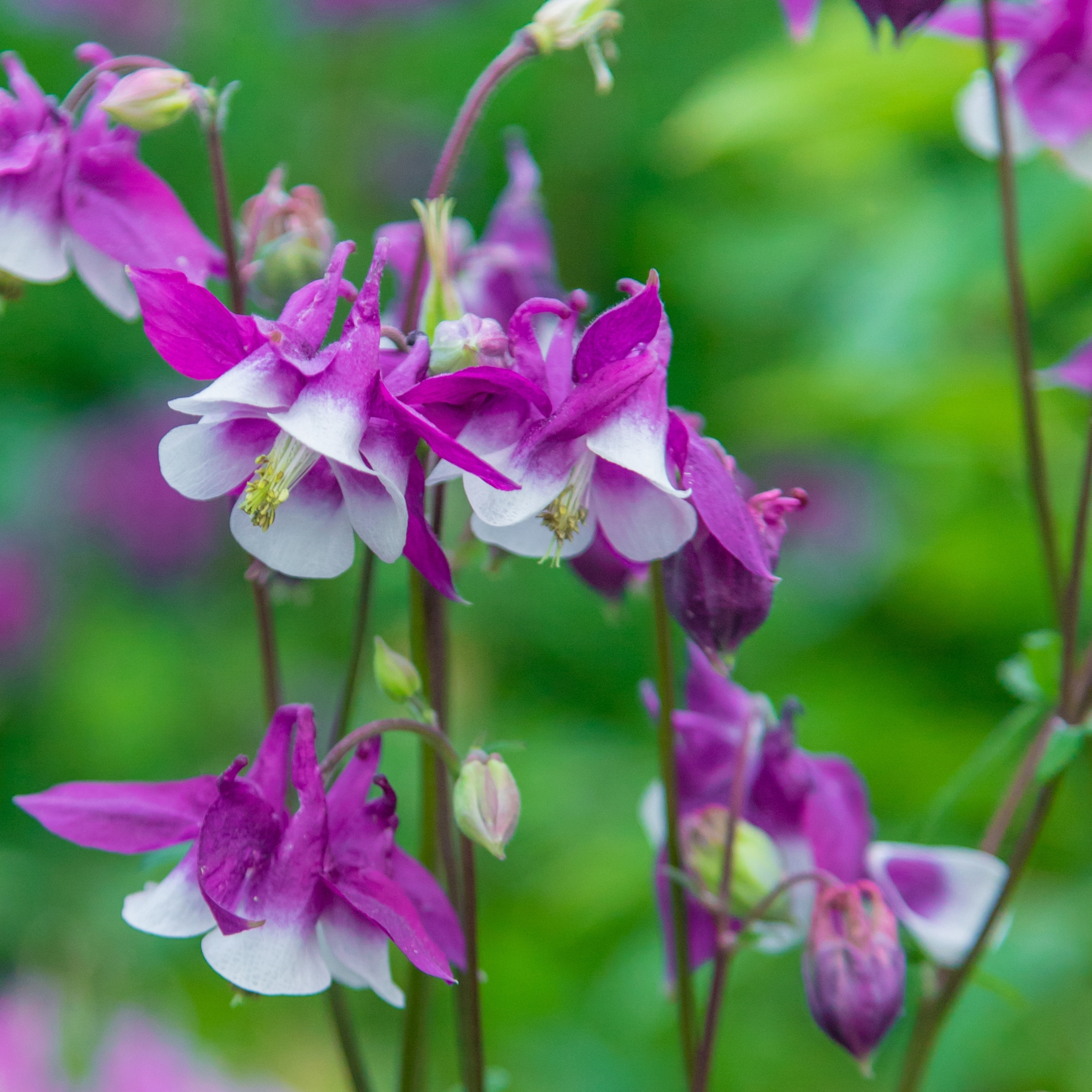
Aquilegia (Columbine)
Aquilegia, commonly known as Columbine or Granny’s Bonnet, is one of the most charming cottage garden perennials. Its delicate, nodding flowers and graceful fern-like foliage bring a light, natural feel to borders, where they happily mingle with other spring and early summer favourites. Available in an impressive range of colours, Aquilegia is equally at home in traditional cottage gardens, informal borders and lightly shaded woodland settings.
One of Aquilegia’s greatest strengths is its ability to self-seed gently around the garden, often creating delightful natural drifts and occasionally producing new colour combinations. Easy to grow and requiring relatively little maintenance, it rewards gardeners with weeks of elegant flowers that are loved by both people and pollinating insects.
When Does Aquilegia Flower?
Aquilegia flowers from May to June, with some varieties continuing into early July depending on the weather and growing conditions.
The distinctive flowers are instantly recognisable, with elegant backward-pointing spurs and nodding heads held above attractive divided foliage.
Flower colours include:
- 💜 Purple
- 💙 Blue
- 💗 Pink
- 🤍 White
- ❤️ Red
- 💛 Yellow
- 🌺 Deep burgundy
- 🌸 Bi-coloured combinations
Individual flowers are typically 4–7cm across and are carried on slender stems that dance gently in the breeze.
Most varieties have little or no fragrance, but their intricate flowers more than compensate with their ornamental appeal.
How to Grow Aquilegia
Choosing the Right Position
Aquilegia is wonderfully adaptable and performs well in a wide range of garden situations.
It grows best in:
- Full sun or partial shade
- Moist but well-drained soil
- Fertile soil enriched with organic matter
- Sheltered or moderately exposed positions
In hotter parts of the UK, plants often appreciate afternoon shade, which helps prolong flowering and keeps the foliage looking fresh.
Planting
Plant container-grown Aquilegia during spring or autumn while the soil is warm and workable.
For best results:
- Improve heavy soils with compost or well-rotted organic matter.
- Plant at the same depth as the nursery pot.
- Space plants approximately 30–45cm apart, depending on the variety.
- Water thoroughly after planting.
- Apply a mulch around the plants to help retain moisture and suppress weeds.
Although they establish quickly, Aquilegia dislikes being disturbed once mature because of its deep taproot.
Caring for Aquilegia
Watering
Once established, Aquilegia is relatively drought tolerant, although it flowers best when the soil remains evenly moist.
- Water newly planted specimens regularly.
- During prolonged dry spells, water deeply rather than little and often.
- Avoid waterlogging during winter.
Feeding
Aquilegia generally requires little feeding.
To encourage healthy growth:
- Apply a balanced fertiliser in early spring.
- Mulch annually with compost or well-rotted manure.
- Avoid excessive nitrogen, which encourages leafy growth at the expense of flowers.
Supporting
Most Aquilegia varieties have naturally sturdy stems and rarely require support.
Very tall varieties growing in exposed locations may benefit from discreet plant supports before flowering begins.
Encouraging More Flowers
To prolong the display:
- Remove faded flowers regularly.
- Water during prolonged dry weather.
- Feed lightly in spring.
- Allow a few seed heads to mature if you would like plants to self-seed naturally.
After Flowering
Deadheading
Deadhead spent flowers to tidy the plant and encourage additional blooms.
If you enjoy a more natural garden, leave some seed heads to ripen. Aquilegia often self-seeds, gradually forming attractive colonies over time.
Foliage
The attractive blue-green foliage remains decorative through much of the growing season.
If leaves become tired or affected by mildew later in summer, they can be cut back to encourage fresh growth.
Autumn and Winter Care
Aquilegia dies back naturally in autumn.
Simply:
- Cut away old foliage after it has died back.
- Apply a light mulch in autumn or early spring.
- Leave crowns undisturbed over winter.
The plants are fully hardy throughout the UK.
Dividing or Propagation
Because of its long taproot, Aquilegia is rarely divided successfully.
Instead, it is best propagated by seed:
- Collect ripe seed in summer.
- Sow fresh seed outdoors or in trays soon after collection for the best germination.
- Alternatively, allow plants to self-seed naturally around the garden.
Many named cultivars produce seedlings that differ from the parent plant, often resulting in attractive variations in flower colour and form.
Common Problems
Aquilegia is generally easy to grow but may occasionally experience a few problems.
Aphids
Young shoots may attract aphids during spring.
Encourage natural predators such as ladybirds or remove infestations with a strong jet of water.
Mildew
Aquilegia can be affected by both downy mildew and powdery mildew, although healthy plants grown in suitable conditions are less likely to experience problems.
Help reduce the risk by:
- Watering during prolonged dry spells to avoid plant stress.
- Allowing good air circulation between plants.
- Removing and disposing of affected leaves promptly.
- Avoiding composting heavily infected foliage.
Most plants recover well with good garden hygiene and appropriate growing conditions.
Leaf Miner
Aquilegia leaf miner can create pale winding tunnels within the leaves.
Affected leaves can simply be removed and disposed of before the pest spreads further.
Healthy plants usually recover well.
Warnings
Aquilegia is considered mildly toxic if eaten and should not be ingested by people, dogs, cats or other pets. The sap may also cause mild skin irritation in sensitive individuals. Simply wearing gardening gloves when handling plants and supervising young children and pets around the garden is usually all that is needed.
Wildlife Benefits
Aquilegia is an excellent choice for wildlife-friendly gardens.
Its nectar-rich flowers attract:
- Bumblebees
- Honeybees
- Solitary bees
- Hoverflies
- Early butterflies
Long-tongued bumblebees are especially well adapted to reaching the nectar hidden within the flower spurs.
Cut Flowers
Aquilegia makes an attractive cut flower, adding a light, airy quality to spring and early summer arrangements.
Harvest stems when several flowers have opened and place them immediately into water for the longest vase life.
Container Growing
Compact Aquilegia varieties grow well in containers.
For successful container displays:
- Use a good-quality peat-free compost.
- Ensure excellent drainage.
- Water more frequently than garden plants during dry weather.
- Feed every few weeks during the growing season with a balanced liquid fertiliser.
Containers are particularly useful for adding colour to patios, courtyards and smaller gardens.
A Beautiful Addition to the Garden
Aquilegia is a delightful perennial that brings elegance, colour and movement to the garden in late spring and early summer. Its distinctive flowers, attractive foliage and easy-going nature make it equally at home in cottage gardens, mixed borders and lightly shaded woodland settings.
Whether planted in groups for a naturalised display or combined with other spring and early summer perennials, Aquilegia provides reliable seasonal interest while attracting a wide range of beneficial pollinating insects. Given the right conditions, it will often self-seed naturally, creating relaxed drifts that add charm and character to the garden year after year.
Visit us in Kington to explore our range of Aquilegia varieties and let our experienced team help you choose the perfect plants to bring lasting colour and interest to your garden.