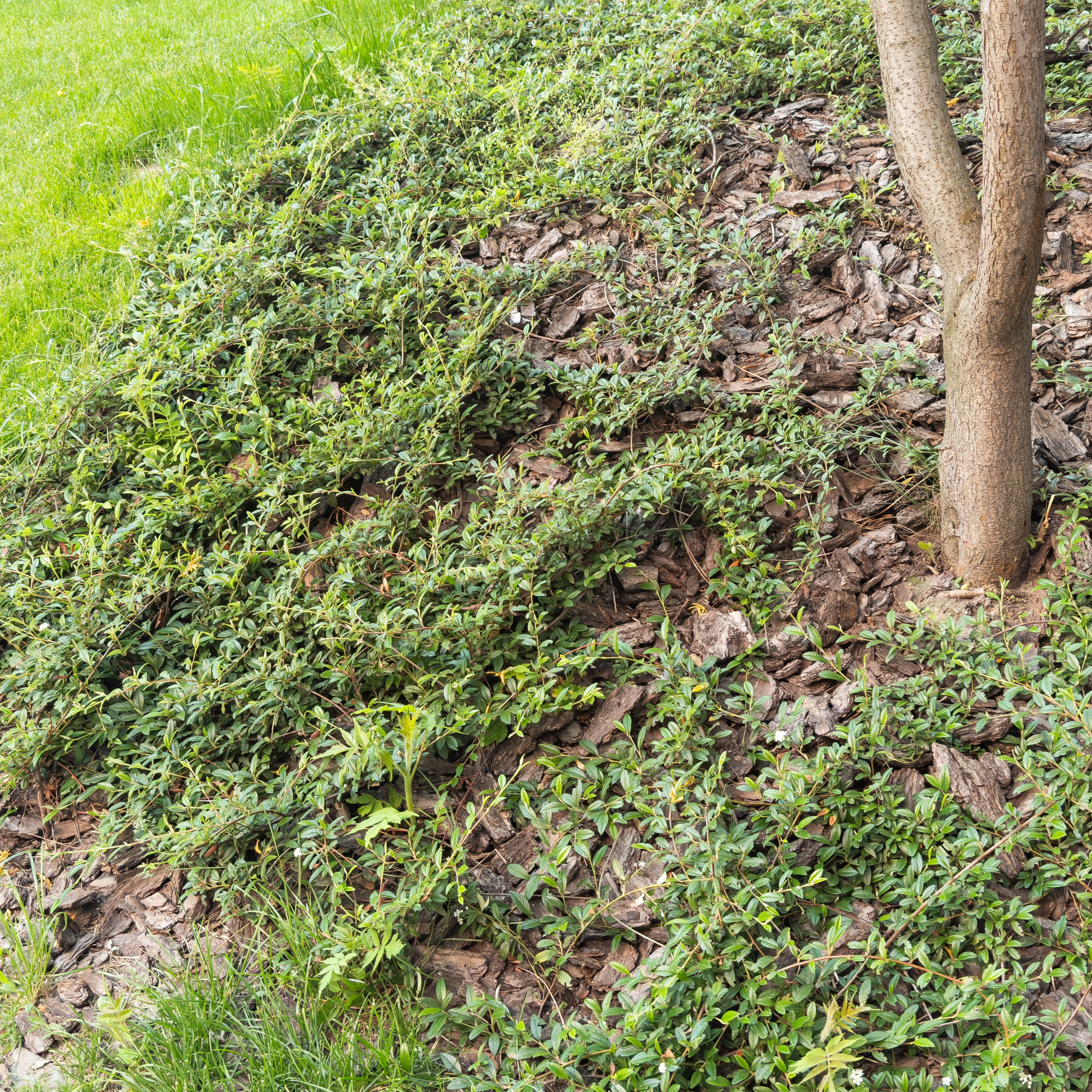
Dry Garden Ideas: How to Create a Resilient and Attractive Garden in Dry Conditions
Many UK gardens contain areas that naturally receive less moisture than others. South-facing borders, gravel gardens, raised beds, containers and the base of walls can all become difficult places to grow plants.
A lack of moisture doesn’t mean you have to compromise on colour or interest. Understanding the principles of dry gardening, improving your soil and choosing suitable plants will help you create attractive planting schemes that thrive with less water.
Working with your garden’s natural conditions is the foundation of successful dry gardening. These Dry Garden Ideas will help you make the most of sunny borders, free-draining soils and other naturally dry areas of the garden. These Dry Garden Ideas will help you make the most of sunny borders, free-draining soils and other naturally dry areas of the garden.
πΏ What Is a Dry Garden?
Why Some Garden Areas Become Dry
Several factors can contribute to dry conditions:
- South or west-facing borders receiving intense sunshine
- Sandy or gravelly soils that drain rapidly
- Raised beds and containers
- Areas beneath large trees and shrubs
- Borders adjacent to walls, fences and buildings
- Sloping gardens where water runs off quickly
Understanding these conditions is the first step towards creating successful planting schemes.
π Identifying Dry Areas in the Garden
Before choosing plants, spend time observing your garden.
A border that looks healthy in spring may become noticeably drier by midsummer. Equally, some areas may receive little rainfall because buildings, fences or trees create a rain shadow.
Signs of a Dry Growing Area
Look for:
- Soil that dries quickly after rain
- Cracks forming during warm weather
- Plants wilting sooner than elsewhere in the garden
- Sparse growth or reduced flowering
- Water running straight through the soil
A simple test is to dig a small hole after rainfall. If the surrounding soil becomes dry again within a day or two, it may be considered a dry planting area.
π Expert Tip: Spend a full growing season observing sunlight patterns before redesigning a border. Understanding how long an area receives direct sun often reveals why certain plants struggle.
π± Soil Preparation and Moisture Retention
One of the biggest mistakes gardeners make is focusing only on plant choice. In reality, healthy soil is often the key to success.
Improving Dry Soil
Even free-draining soils benefit from the addition of organic matter.
Work in:
- Garden compost
- Well-rotted manure
- Leaf mould
These materials improve soil structure and help retain moisture around plant roots while still allowing excess water to drain away.
Mulching for Better Results
Applying a mulch each year helps reduce moisture loss and suppress weeds.
Suitable mulches include:
- Garden compost
- Bark mulch
- Gravel mulch
- Leaf mould
Organic mulches gradually improve soil quality as they break down, while gravel can be particularly effective in sunny borders where plants require excellent drainage.
Watering More Effectively
When plants are establishing, deep watering is more beneficial than frequent light sprinkling.
Watering thoroughly encourages roots to travel deeper into the soil, making plants more resilient and less dependent on regular irrigation.
Expert Tip: Water early in the morning rather than during the heat of the day. More moisture reaches the roots and less is lost through evaporation.
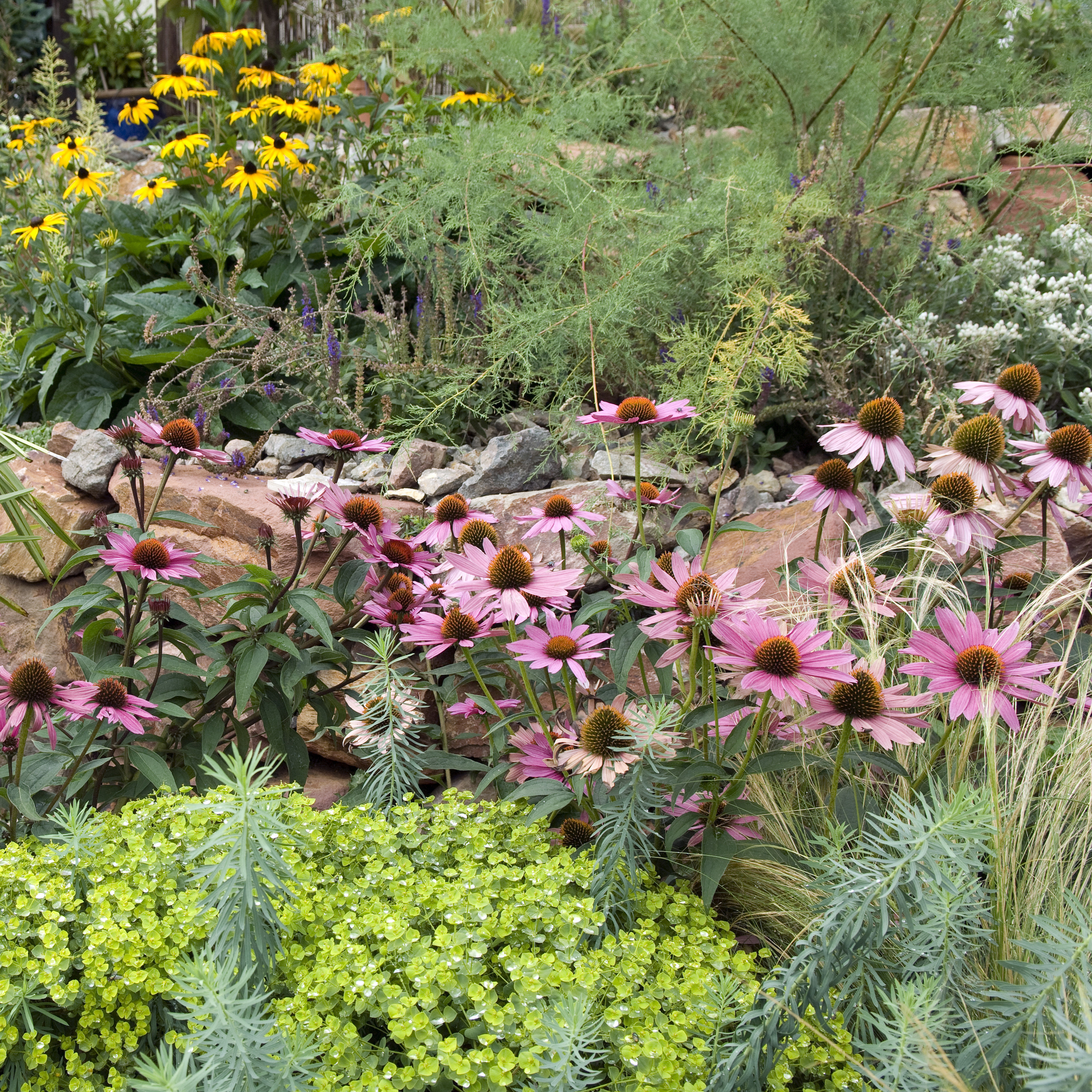
π¨ Designing Resilient Planting Schemes
The most successful dry gardens rely on good design rather than simply selecting a collection of drought-tolerant plants.
Plant in Groups
Repeating plants throughout a border creates a stronger visual impact and makes maintenance easier.
Planting in groups of three, five or seven often looks more natural than using single specimens.
Combine Different Plant Forms
Create interest by mixing:
- Upright plants
- Rounded forms
- Ground cover plants
- Ornamental grasses
This combination helps create a balanced and attractive planting scheme throughout the year.
Leave Space for Growth
Overcrowding is a common problem.
Plants growing in dry conditions need sufficient root space to establish properly and access available moisture.
Use Hard Landscaping Thoughtfully
Gravel paths, decorative stone and permeable surfaces can complement dry planting schemes while helping maintain a cohesive design.
πΌ Suitable Plant Examples
Many attractive garden plants perform exceptionally well in sunny, free-draining locations once established.
Some excellent examples include:
- Agapanthus
- Eryngium
- Lavender
- Achillea
- Echinops
- Nepeta
- Oenothera (Gaura)
These plants offer a mixture of colour, structure, movement and seasonal interest while coping well with drier conditions.
Rather than filling an entire border with one type of plant, combine several varieties to create layers of interest and a more natural appearance.
β οΈ Common Mistakes to Avoid
Even carefully planned dry gardens can struggle if a few basic principles are overlooked.
Choosing Plants Before Assessing Conditions
Always evaluate sunlight, drainage and soil quality before purchasing plants.
Overwatering Established Plants
Too much watering can encourage shallow rooting and make plants less resilient over time.
Ignoring Soil Preparation
Planting directly into poor soil often leads to disappointing results, regardless of plant choice.
Planting Too Densely
Crowded plants compete for moisture and nutrients, increasing stress during dry periods.
Forgetting to Mulch
Mulching remains one of the simplest and most effective ways to improve planting success.
π Expert Tip: Newly planted perennials usually need regular watering during their first growing season. Once established, many become significantly more self-sufficient.
πΏ Visit Our Garden Centre in Kington
Successful dry gardens begin with an understanding of your garden’s natural conditions and choosing plants that are well suited to them. Choosing suitable varieties and improving the soil will help create planting schemes that remain resilient, attractive and easy to care for.
Β Visit usΒ in Kington. Our knowledgeable team can help you choose drought-tolerant plants, suitable composts and practical planting combinations, along with expert advice to help you make the most of dry areas in your garden.