Gardening with Less Water

Gardening with Less Water

Gardening with less water is about making better use of the water available. By improving your soil, watering efficiently and choosing plants suited to your growing conditions, you can create a healthier, more resilient garden that thrives with less intervention.

Whether you have a large garden, a compact courtyard or a collection of containers, adopting smart watering practices can improve plant health while reducing maintenance. With good soil preparation, thoughtful planting and efficient watering techniques, you can enjoy thriving borders, productive vegetable beds and attractive containers without relying on excessive watering.

💧 Why Save Water?

Using water wisely is good for both your garden and the environment. By making better use of the water available, you can reduce waste while encouraging stronger, more resilient plants that cope better during dry weather.

Gardening with less water can help you:

  • Reduce time spent watering
  • Make better use of rainwater and natural soil moisture
  • Reduce water lost through evaporation
  • Encourage healthier, more resilient plants
  • Create a garden better able to cope with dry spells

The key is not simply using less water. It is using the water you have more effectively. The following sections explain how healthier soil, thoughtful planting and good watering practices work together to achieve this.

📌 Expert Tip: Deep watering once or twice a week is often more beneficial than little and often. This encourages roots to grow deeper into the soil where moisture remains available for longer.

🌱 Soil Preparation and Moisture Retention

Healthy soil is the foundation of every moisture-conserving strategy.

Improving Soil Structure

Adding organic matter improves both light sandy soils and heavy clay soils.

Materials such as:

help soil hold moisture more effectively while improving overall structure and fertility.

Sandy soils benefit because they retain water for longer. Clay soils benefit because improved structure allows water to penetrate more effectively rather than running off the surface.

Mulching for Long-Term Moisture Retention

Mulching is one of the most effective ways to conserve moisture.

Apply a layer at least 5cm deep around plants in spring when soil still contains natural moisture. Suitable mulch materials include:

  • Compost
  • Bark chips
  • Leaf mould
  • Well-rotted manure

Mulch reduces evaporation, suppresses weeds and gradually improves soil quality.

Don’t Forget Containers

Container gardening offers great flexibility, but pots and hanging baskets dry out much faster than garden borders, especially during warm or windy weather. Adding water-retaining granules to compost can help maintain moisture levels and reduce watering frequency throughout the growing season.

If container compost becomes very dry, immerse the pot in a bucket of water until air bubbles stop rising to the surface. This allows the entire root ball to rehydrate evenly and is often more effective than repeated watering from above, where water may simply run straight through the compost without being absorbed.

🌿 Designing Resilient Planting Schemes

Good planting design plays a major role in reducing water requirements.

Plant According to Conditions

The most successful gardens match plants to the growing conditions available.

Consider:

  • Soil type
  • Sun exposure
  • Shelter from wind
  • Drainage levels

Where conditions present particular challenges, such as dry soil, deep shade or waterlogged ground, choosing plants suited to those conditions makes gardening much easier.

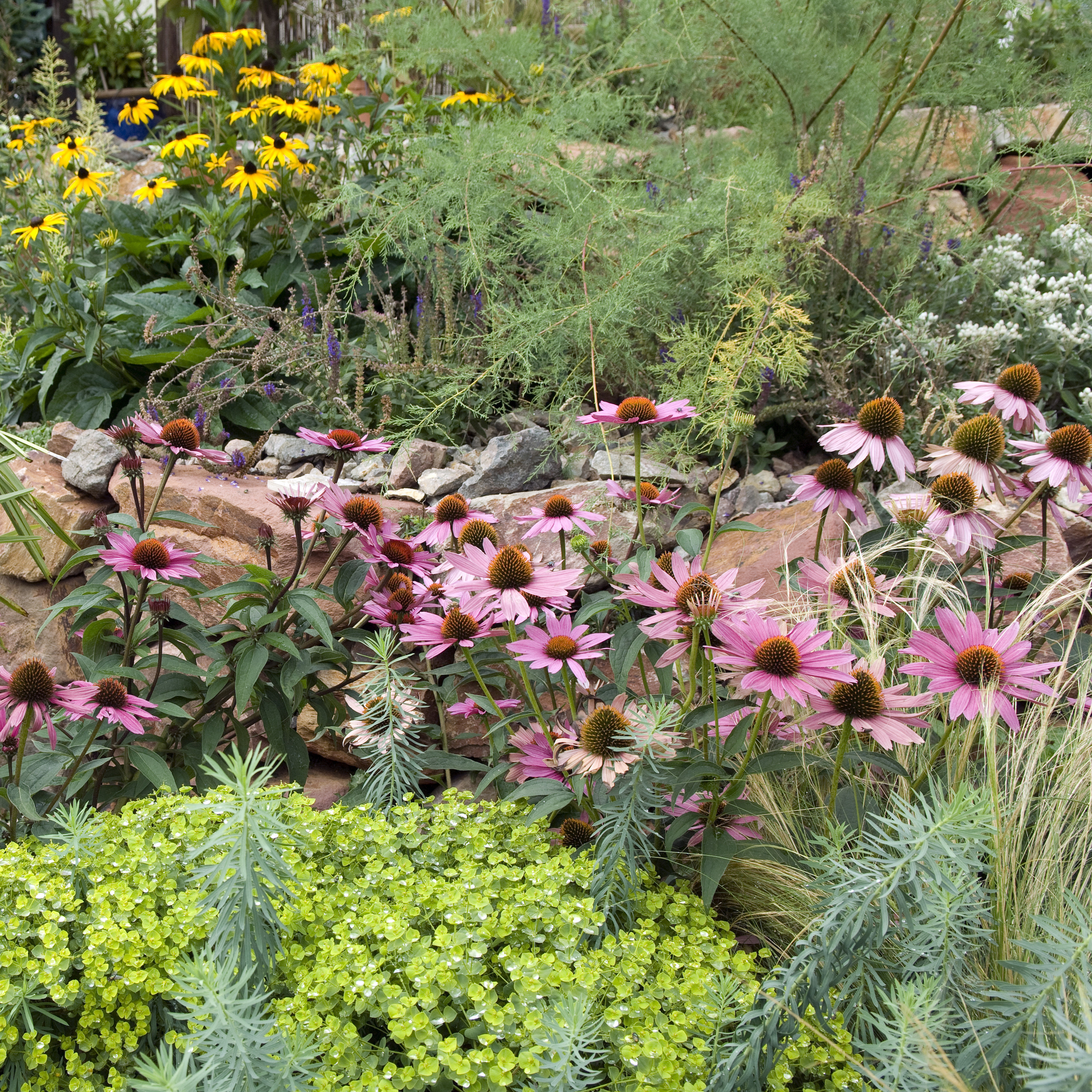
Drought-tolerant ornamental grasses and perennials growing in a water-wise garden designed to thrive with minimal irrigation.

Group Plants with Similar Needs

Placing moisture-loving plants together and drought-tolerant plants together allows watering to be more targeted and efficient.

This prevents overwatering some plants while under-watering others.

Create Layered Planting

Dense planting schemes can help shade the soil surface, reducing moisture loss through evaporation.

📌 Expert Tip: Newly planted trees and shrubs benefit from regular deep soaking during their first growing season. This helps establish strong root systems that support long-term resilience.

🌸 Suitable Plant Examples

Choosing plants suited to your conditions can significantly reduce watering requirements, although plant choice should always be combined with good soil preparation and efficient watering practices.

A few reliable examples include:

  • Lavender • Nepeta • Hardy Geranium • Sedum • Rosemary • Cistus • Perovskia • Eryngium

These plants are valued for their ability to perform well with relatively modest watering once established.

However, even drought-tolerant plants require watering during establishment and will perform best when planted into well-prepared soil.

📌 Expert Tip: Establishment is everything. Even the toughest plants need consistent watering during their first growing season while roots develop.

🚿 Watering Efficiently

Even well-designed, resilient planting schemes will benefit from supplementary watering from time to time, particularly during prolonged dry periods and while new plants are becoming established.

Water at the Right Time

Early morning or evening watering reduces evaporation and allows moisture to soak into the soil before temperatures rise.

Avoid watering during the hottest part of the day when much of the water can be lost before reaching plant roots.

Water the Soil, Not the Leaves

Direct water at the base of plants where it is needed most.

Wet foliage can increase the risk of disease and wastes water that never reaches the root zone.

Consider Drip Irrigation

Drip irrigation systems deliver water directly to the soil around plant roots.

Compared with sprinklers, they provide greater efficiency and significantly reduce water loss through evaporation.

Collect Rainwater

Installing a water butt is one of the simplest ways to make better use of natural rainfall.

Rainwater collected from roofs, sheds and greenhouses provides a free source of water for borders, containers and vegetable plots.

⚠️ Common Mistakes to Avoid

Watering Little and Often

Frequent shallow watering encourages roots to stay near the surface, where soil dries out fastest. Instead, water thoroughly and less frequently to encourage deeper rooting.

Neglecting Soil Preparation

Poor soil loses moisture quickly. Improving soil with compost or other organic matter helps retain water and reduces the need for regular watering.

Choosing the Wrong Plant for the Location

Plants that are unsuited to the soil, sunlight or exposure in a particular area often require more maintenance and watering. Matching plants to the conditions available is an effecive way to reduce watering requirements.

🌿 Visit Our Garden Centre

Gardening with less water starts with understanding your garden and making the most of every drop. Choosing suitable plants, improving the soil and watering efficiently can keep your garden healthy while reducing water use.

👉 Visit us in Kington. Our knowledgeable team can help you choose composts, mulches, water butts, irrigation products and plants suited to your garden, along with practical advice on gardening successfully with less water.