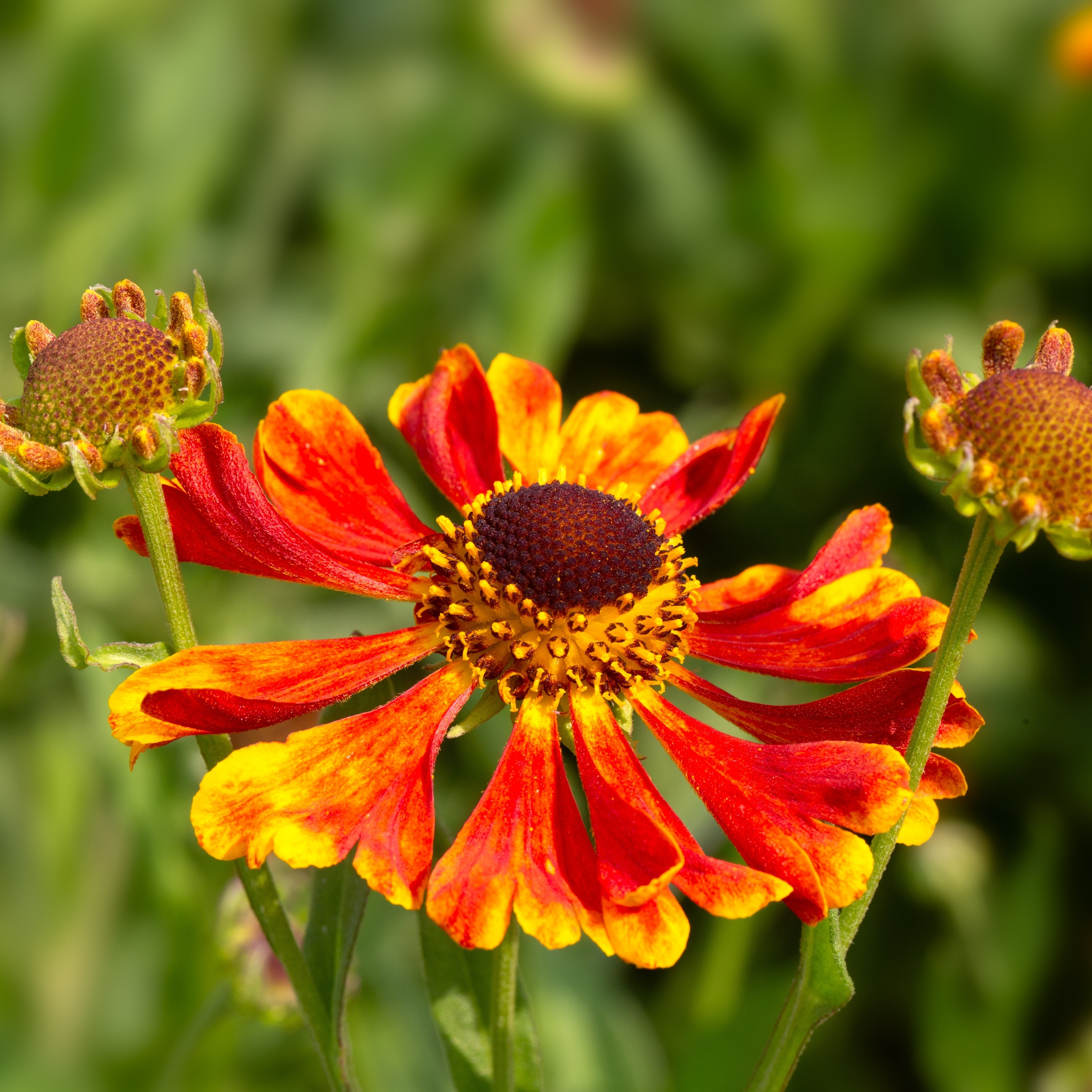
Helenium, commonly known as sneezeweed, is a colourful group of flowering plants valued for their warm, daisy-like blooms and long flowering season. The perennial varieties most often grown in UK gardens produce upright, branching stems topped with flowers in shades of yellow, orange, copper and red.
These hardy, clump-forming perennials are particularly effective in cottage gardens, mixed borders and prairie-style planting schemes. Their cheerful flowers combine beautifully with ornamental grasses, asters and other late-season perennials, bringing colour to the garden as summer moves into autumn.
When Does It Flower?
Helenium typically flowers from July through September, with some varieties continuing into October when conditions are favourable.
The flowers have prominent, rounded central discs surrounded by petals that often curve backwards as they mature.
Colours include:
💛 Yellow: Bright golden and sunshine-yellow flowers that lift late-summer borders.
🧡 Orange: Rich amber, burnt orange and copper shades.
❤️ Red: Deep brick-red and reddish-brown flowers, sometimes edged or streaked with gold.
Many varieties feature contrasting colours within individual flowers.
Plant heights vary considerably, from compact varieties around 40–50cm to taller selections reaching 1.2–1.5m, depending on the cultivar.
How to Grow
Choosing the Right Position
Helenium grows best in a sunny position with fertile soil that retains some moisture without becoming waterlogged.
Sunlight: Full sun is ideal for strong growth and plentiful flowers.
Soil: Fertile, moisture-retentive but well-drained soil.
Watering: Keep the soil consistently moist during establishment and prolonged dry weather.
Shelter: Taller varieties benefit from protection against strong winds.
Although established plants are generally hardy throughout the UK, they can struggle in very dry soil or ground that remains saturated during winter.
Planting
Spring is an excellent time to plant Helenium, allowing roots to establish before the main flowering season. Container-grown plants can also be planted in autumn where soil conditions are suitable.
Improve the planting area with well-rotted compost or organic matter, particularly if the soil dries quickly. Position the plant at the same depth as it was growing in its pot, firm gently and water thoroughly.
Allow enough space for the mature clump to develop, using the cultivar’s expected spread as a guide.
Caring for Helenium
Apply an organic mulch in spring to help retain moisture and improve soil conditions, keeping it clear of the emerging stems.
Water during prolonged dry spells, especially while flower buds are developing. In reasonably fertile garden soil, additional feeding is rarely necessary.
Taller varieties may need discreet supports. Position these in spring so the growing stems can develop naturally through them.
Encouraging More Flowers
A little attention during the growing season can help Helenium produce a longer, more colourful display.
Deadheading: Remove faded flower heads regularly, cutting back to a healthy side shoot or developing bud where possible. This can encourage further flowering.
Cutting back: For taller varieties, cut some stems back by approximately one-third to one-half in late May, leaving others untouched. This can encourage bushier growth and reduce the need for staking. The shortened stems generally flower later than those left untouched, helping to extend the overall display.
Cutting back is optional, particularly for compact varieties that naturally maintain a tidy shape.
After Flowering
Once flowering finishes, the stems and foliage gradually die back as the plant enters winter dormancy.
You can remove dead growth in autumn or leave some stems standing for winter structure before cutting them down in late winter or early spring.
Avoid leaving plants in persistently waterlogged soil during winter, as good drainage helps protect the crowns.
Dividing and Propagation
Helenium benefits from division approximately every two to three years to maintain vigorous growth and flowering.
Spring, when fresh shoots are emerging, is usually the most convenient time.
Lift an established clump carefully and separate it into smaller sections, ensuring each has healthy roots and growing shoots. Replant promptly into prepared soil and water thoroughly.
Helenium can also be propagated from young shoots emerging at the base of the plant in spring. Select healthy shoots approximately 7–10cm long and take cuttings close to the crown, ideally with a small piece of the base attached. Afterward, follow the softwood cuttings method in our How To Take Plant Cuttings guide.
Common Problems
Helenium is generally trouble-free when grown in suitable conditions, although a few issues can occur.
Powdery mildew: A white coating on leaves may develop, particularly when plants are stressed. Maintain good airflow and water the soil rather than the foliage.
Slugs and snails: Young spring shoots may need protection from feeding damage.
Flopping stems: Tall plants can lean or collapse in exposed positions. Provide support early in the season or cut back selected stems in late May to encourage sturdier growth.
Poor flowering: Insufficient sunlight, dry soil or overcrowded clumps can reduce flowering performance.
Wildlife Benefits
Helenium is a useful addition to a wildlife-friendly garden, particularly because its flowers provide resources during late summer.
🐝 Bees: Nectar and pollen from open flowers attract foraging bees.
🦋 Butterflies: The accessible flower heads can provide nectar for visiting butterflies.
🌼 Other pollinators: Hoverflies and other beneficial insects may also visit the flowers.
Why Grow Helenium?
Helenium brings rich, glowing colour to the garden at a time when many earlier perennials are fading. Its long flowering season, upright habit and attractive flowers make it a valuable choice for sunny borders.
With moisture-retentive soil, occasional division and a little seasonal care, perennial Helenium can provide a dependable display year after year.
For advice on choosing flowering perennials for your garden, Visit us in Kington.
We use cookies to ensure that we give you the best experience on our website. If you continue to use this site we will assume that you are happy with it.